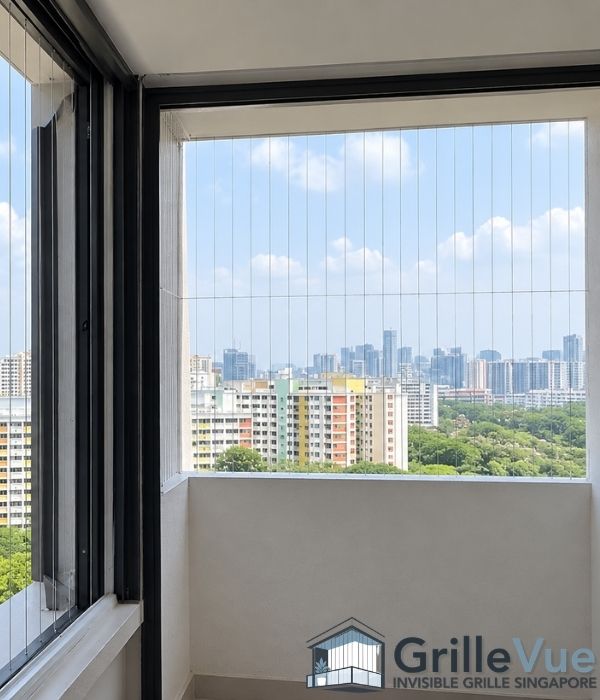
If you are considering invisible grilles for a home in Singapore, the installation process is usually straightforward, but it should still be planned carefully. The installer is working with a specific opening — such as an HDB window, a condominium balcony, or a landed-home opening — and the method depends on the frame, access, fixing points and the size of the area to be covered. Understanding what is actually installed, and how it is fitted, helps you ask the right questions before you commit.
What an Invisible Grille Installation Actually Involves
An invisible grille is not a conventional metal grille with bars. It is typically made up of fine tensioned stainless-steel cables fixed across a window or balcony opening. The cables are anchored to the surrounding structure at carefully positioned fixing points, then tensioned so they remain neat and aligned across the opening.
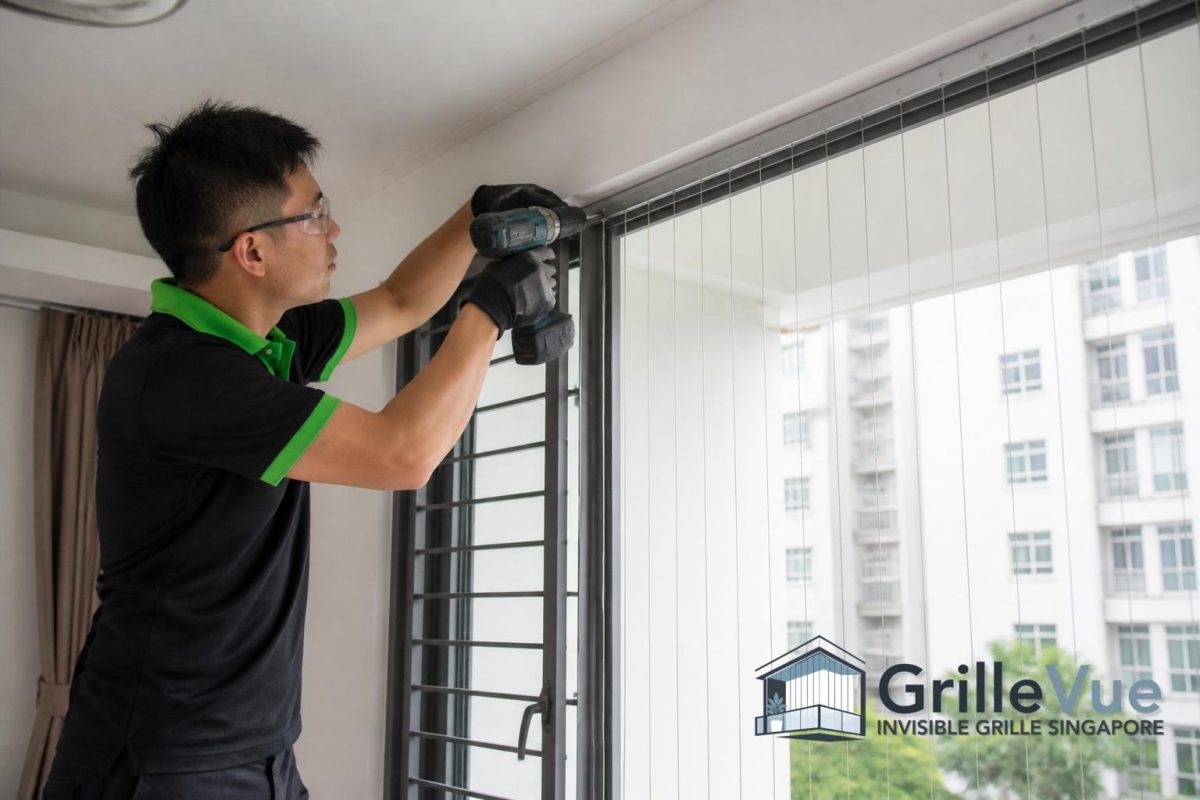
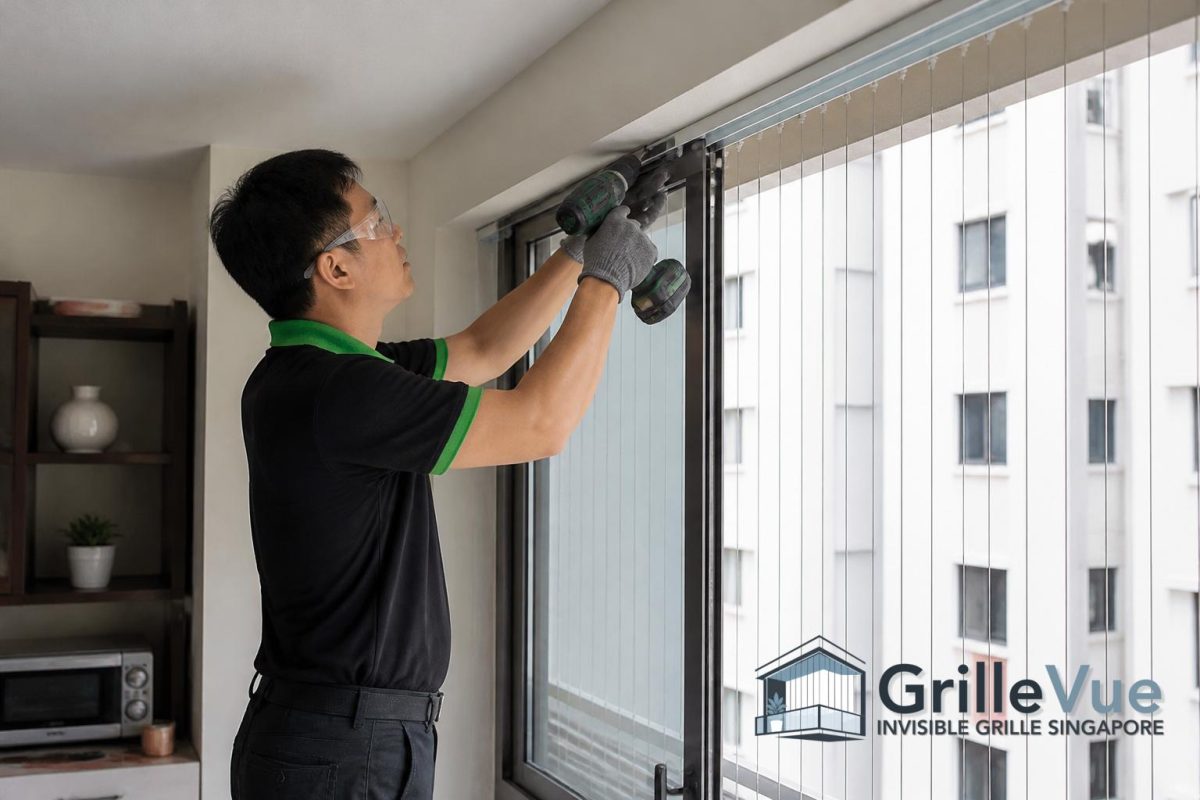
In practical terms, the installer is not “placing” a screen panel into the opening. Instead, they are measuring the span, marking the fixing positions, drilling where necessary, securing the anchor points, and then running the cables across the opening before tightening them to the correct tension. The final result should sit visually discreetly while still forming a clear barrier across the opening.
Site Assessment and Measurement of the Opening
The process normally begins with an on-site assessment. For an invisible window grille, the installer will look at the window type, the surrounding frame, the wall material, and whether there is enough surface for secure fixing. For an invisible balcony grille, the same check is made for the balcony opening, railing area, edge conditions and any columns or beam lines that may affect the layout.
Measurement is important because invisible grilles are fitted to the actual opening rather than supplied as a one-size-fits-all product. The installer usually records width, height, and the position of existing fixtures such as handles, hinges, sliding panels or ledges. If the opening is irregular, the fixing plan may need adjusting so the cables are evenly spaced and the access to windows or balcony doors remains usable.
This is also the stage where homeowners should mention the property type clearly: HDB, condominium or landed home. The structure and access conditions may differ, and that affects the fitting approach. A good assessment should also consider whether you want the cables vertical or horizontal, and whether any section needs to remain openable for maintenance or ventilation.
Fixing Points, Anchors and Structural Suitability
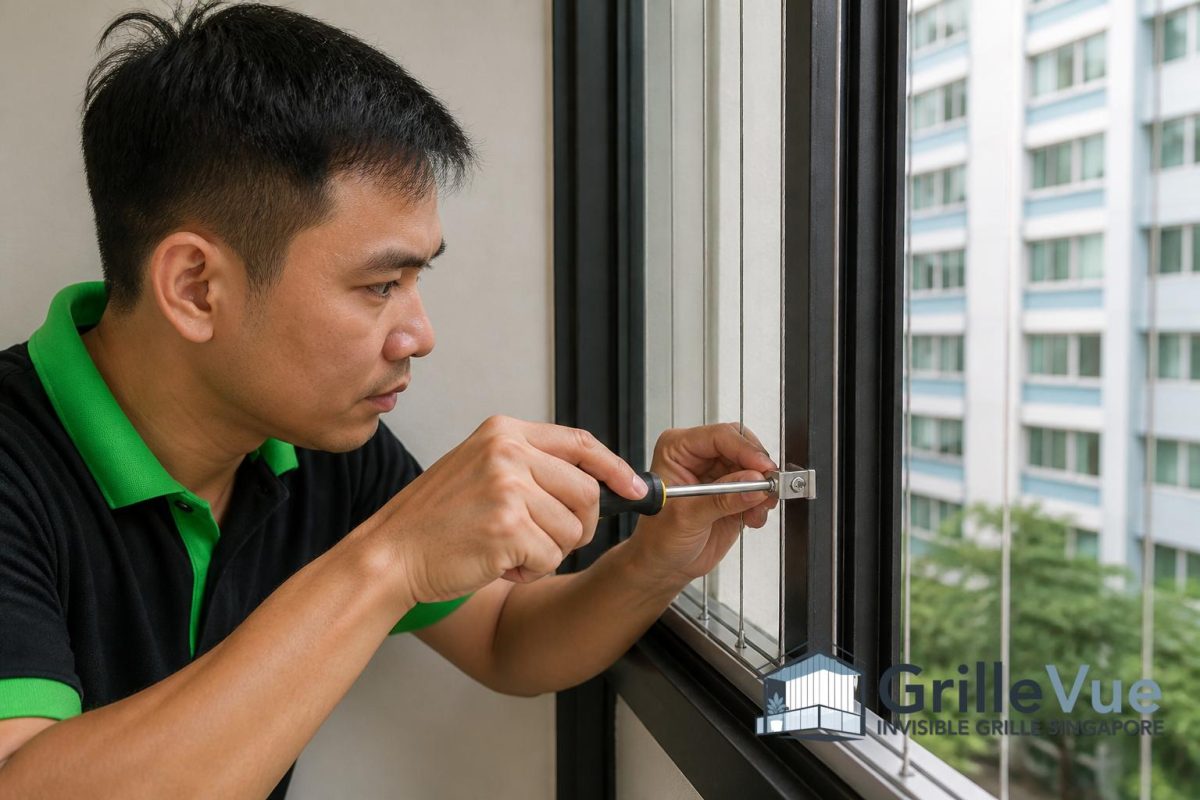
The key part of the installation is the fixing system. The cables need secure anchors at each end, and sometimes at intermediate points depending on the opening size and layout. These fixing points are usually installed into suitable surrounding surfaces so that the cables can be properly tensioned and kept stable in daily use.
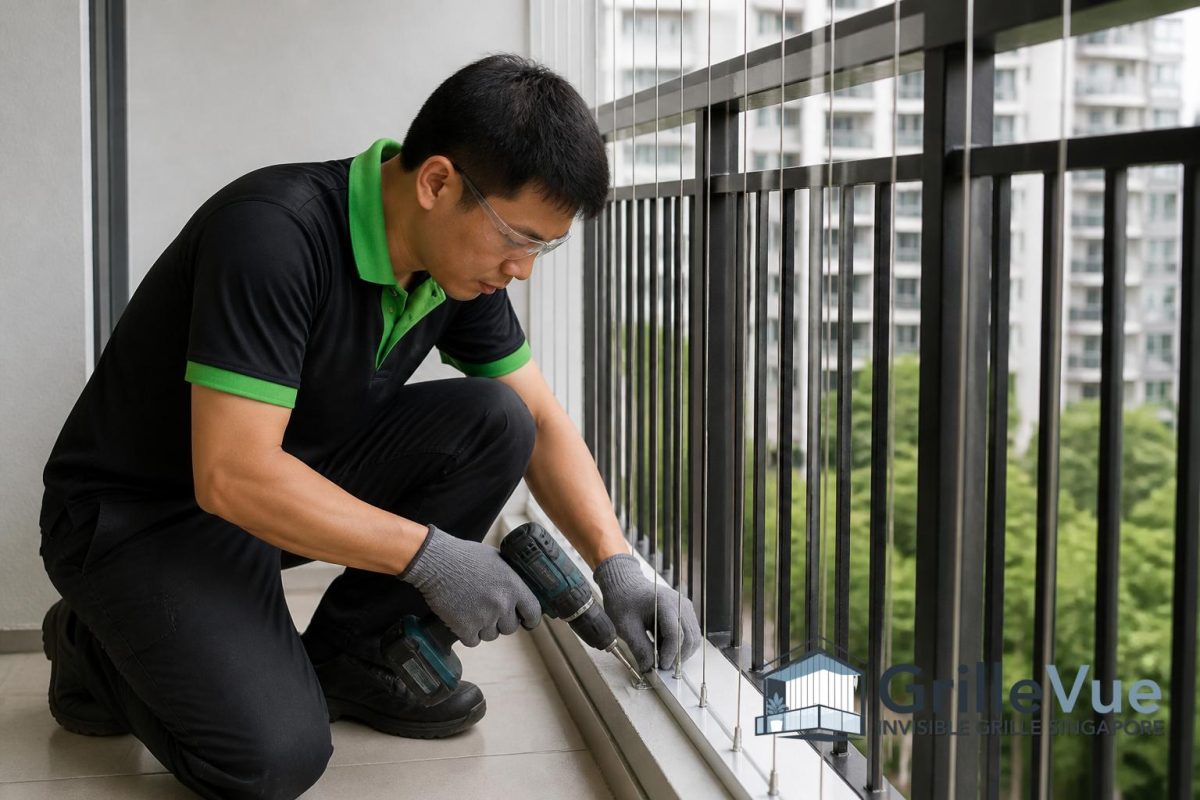
For window grilles in Singapore homes, the installer will typically work around the window frame and adjacent wall surfaces. For balcony grilles, the installer may also need to account for the balcony edge, side walls, ceiling lines or nearby structural members. The aim is to place the anchors where they can support the cable system without interfering with the opening’s normal function.
Homeowners should ask where the fixing points will be located, whether the installation will require visible drilling, and how the installer plans to avoid obstructing opening panels or access routes. These details matter more than the grille’s appearance alone, because the durability and alignment depend on correct anchoring.
How the Cables Are Installed and Tensioned
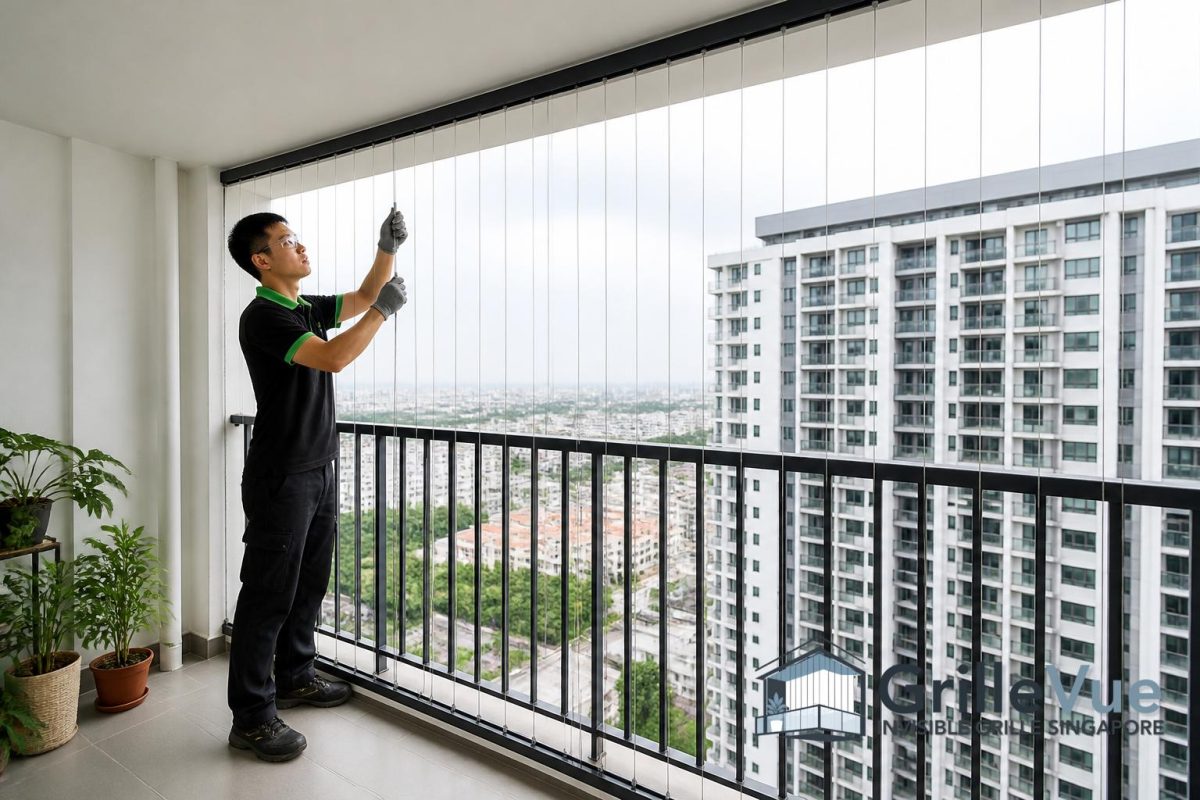
Once the fixing points are ready, the cables are run across the opening. Each cable is then tightened until it sits evenly and securely. This tensioning step is what gives the invisible grille its finished look and its functional structure. If the tension is uneven, the lines may look irregular or feel less stable.
A careful installer will check that the cables are aligned consistently from top to bottom or side to side, depending on the layout chosen. They should also verify that the spacing is suitable for the opening and that the cable set does not interfere with normal use of the window or balcony area. At the end of the process, tension checks are important so the installer can confirm the cables are properly secured and not overly slack.
If you are choosing an invisible balcony grille, the cable arrangement may need extra attention because the opening is usually larger and the installation may have to cope with more exposure to movement, airflow and access usage. The exact setup depends on the site conditions rather than a standard pattern applied to every home.
Installation Considerations for HDB Windows, Balcony Openings and Landed Homes
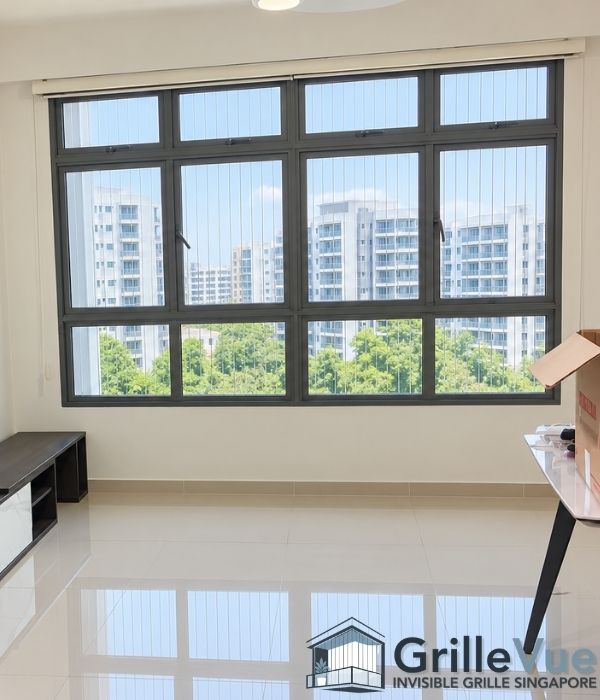
For HDB invisible window grilles, the installation normally focuses on the window opening and the surrounding frame or wall area. The installer must work within the dimensions of the window and the available fixing surfaces, especially where the opening is part of a service yard, kitchen, or bedroom window layout.
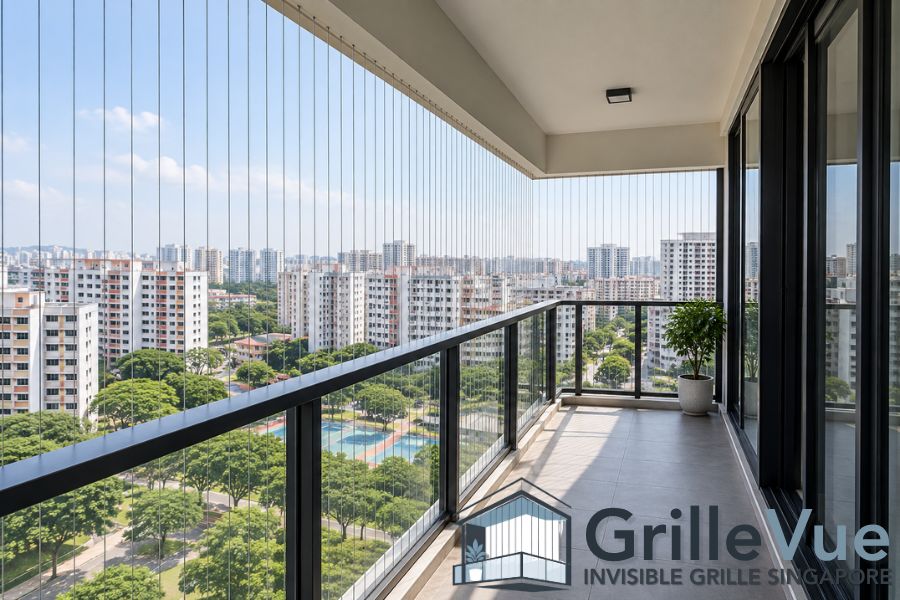
For condominium balcony grilles, the opening is often wider and may involve more complex access. The installer may need to work around balcony doors, side walls, drainage details, or built-in architectural features. Because balconies are exposed spaces, the layout should be planned so the grille does not unnecessarily block movement or maintenance access.
In landed homes, the opening may be more varied. An outdoor opening, terrace edge, or upper-floor window can require a more customised fixing plan. What matters is not a generic “standard size”, but whether the structure and access allow the invisible grille to be fitted neatly and securely to the specific opening.
What to Check Before Installation Day
Before the installer arrives, homeowners should clear the area as much as possible and confirm access to the exact opening. It helps to remove movable furniture, secure fragile items, and make sure the installer can reach the frame or balcony edge without obstruction. If there are existing fixtures such as curtain rails, blinds, hooks or shelves, mention them early so the installer can plan around them.
You should also ask what type of cable arrangement will be used, where the anchors will be fixed, and whether the installation will affect window operation or balcony access. If the opening has unusual dimensions, ask how the installer will manage alignment and spacing. These practical questions are often more useful than simply asking for a general quotation.
For any homeowner comparing options, it also helps to be clear about the intended purpose: safety around children or pets, unobstructed view, or a discreet barrier for an open balcony. Invisible grilles do not function the same way as conventional security bars, and the installer should explain the limits of the product honestly.
Maintenance and After-Installation Care
After installation, invisible grilles usually need only simple maintenance. Homeowners can check the cables visually from time to time to make sure they remain neat and undamaged. Light cleaning is generally enough, although the method may vary depending on the surrounding window or balcony finish.
If the cables appear loose, uneven or damaged, the installer should be contacted for inspection. It is sensible to avoid hanging heavy items on the cables or using them in ways they were not intended for. For balcony and outdoor openings, you may also want to keep an eye on dust build-up and weather exposure, especially if the opening is near the sea or receives strong sun and rain.
If you would like help assessing your exact window, balcony or outdoor opening, WhatsApp GrilleVue Invisible Grille Singapore – Windows & Balconies with your property type, approximate dimensions, product preference and any existing fixtures so they can advise on the installation approach and quotation.
Conclusion
The installation process for invisible grilles in Singapore is centred on accurate measurement, suitable fixing points, proper cable tensioning and careful alignment to the specific opening. Whether it is an HDB window, a condominium balcony or a landed-home space, the most important part is matching the installation method to the structure and access conditions of that exact opening. When you understand how the system is fixed and tensioned, it becomes easier to judge whether the proposed layout is practical, neat and appropriate for your home.
Choose GrilleVue Invisible Grille Singapore – Windows & Balconies
GrilleVue Invisible Grille Singapore provides window, balcony, and outdoor space solutions for HDB, condominium, and landed homeowners across Singapore. Our invisible grille installations are designed to improve safety while maintaining a cleaner and more open appearance around the home. Depending on the area and layout, homeowners can choose from invisible window grille, invisible balcony grille, window grilles, and balcony grille solutions suited to different residential requirements.
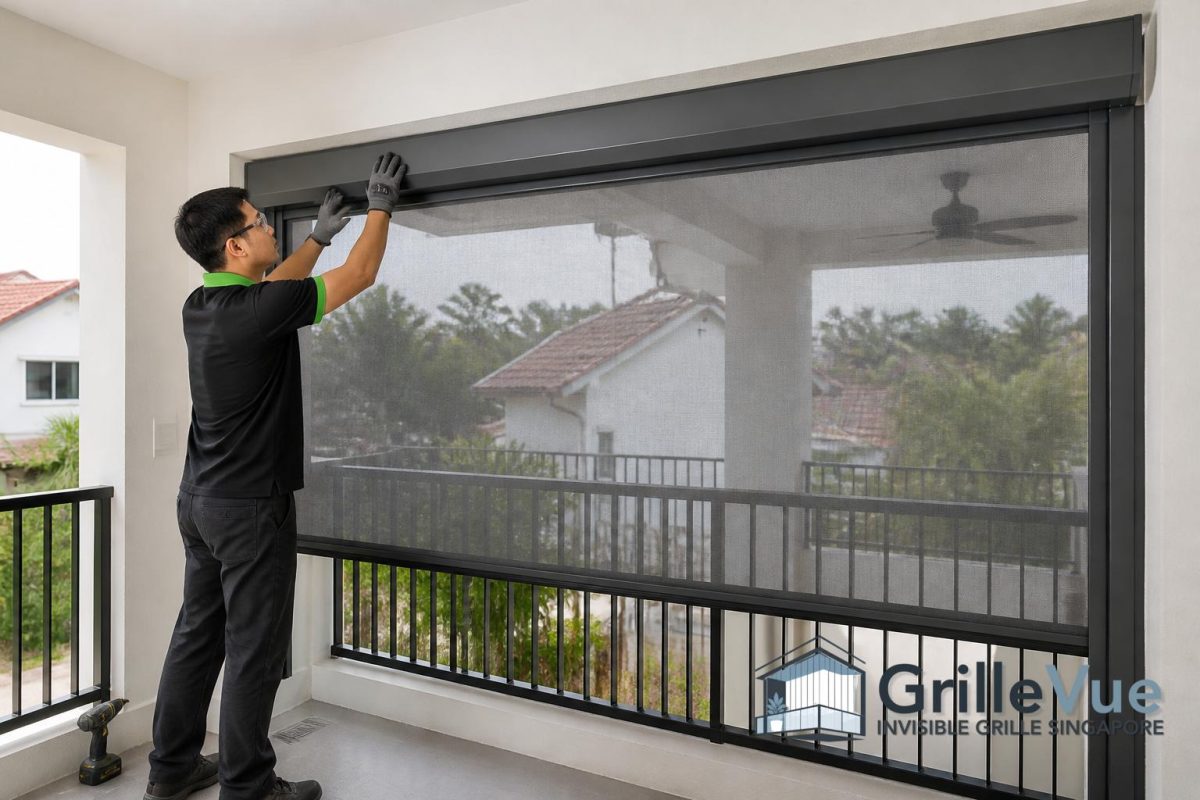
Our other services also include Zip Track and Zip Track blinds for balconies and other exposed areas where homeowners may want more flexibility in managing sun, rain, and everyday use of the space. Whether you are considering an invisible grill for balcony or practical zip track blinds, we can recommend a suitable installation based on the dimensions, layout, and intended use of the area.
If you are comparing grille and balcony solutions for your home, browse our blog for practical information or view our completed projects to see how different installations can be applied to Singapore homes. Contact us via WhatsApp at +65 8241 0032 to discuss your requirements and request a quotation.
Frequently Asked Questions
How long does invisible grille installation usually take?
The time needed depends on the number of openings, site access, fixing conditions and the complexity of the layout. A simple window installation may be quicker than a larger balcony opening, but the installer should confirm the expected process after inspection rather than giving a general estimate without seeing the site.
Can invisible grilles be installed on both windows and balconies?
Yes, but the method may differ. Window grilles are usually planned around the window frame and surrounding wall surfaces, while balcony grilles must account for wider openings, access needs and any nearby structural elements. The installation should suit the specific opening, not a one-size-fits-all layout.
Do invisible grilles need maintenance after installation?
They usually require only light maintenance and occasional inspection. It is sensible to check for cable tension, dirt, and any signs of wear over time. If anything looks loose or damaged, a professional should inspect the installation to confirm the anchors and cable lines are still secure.