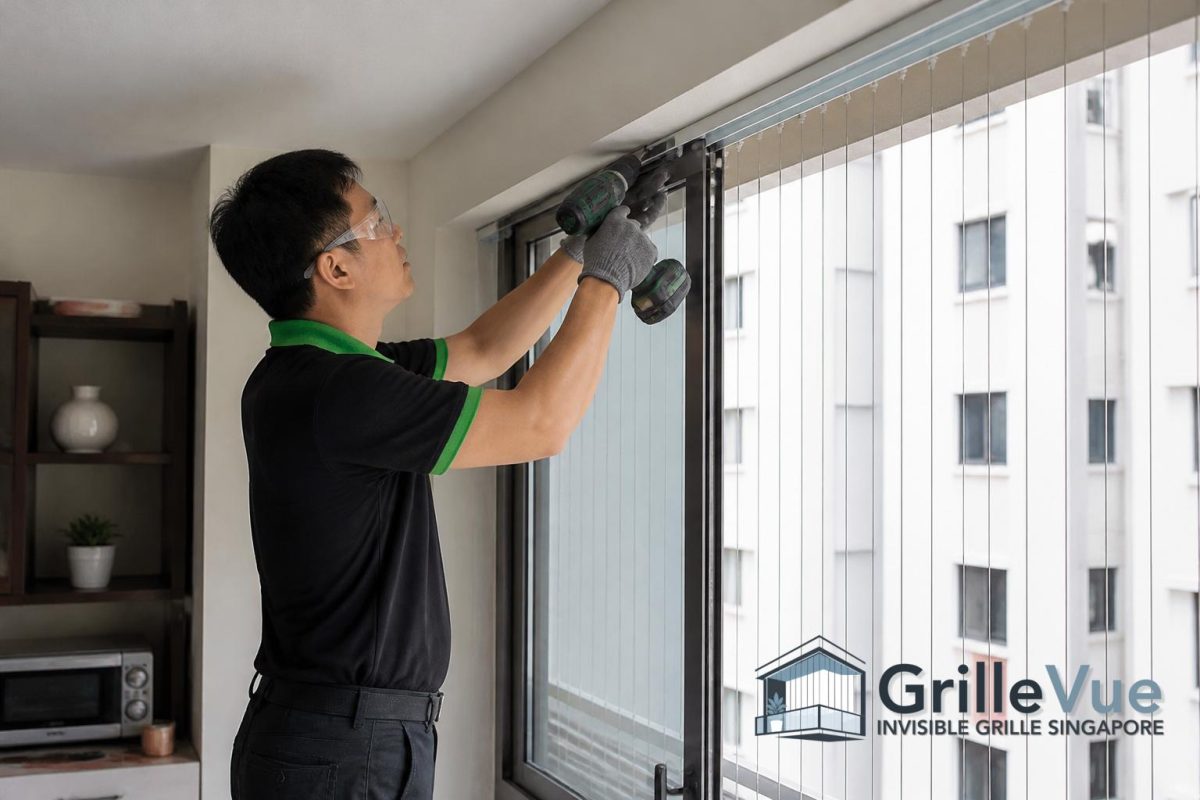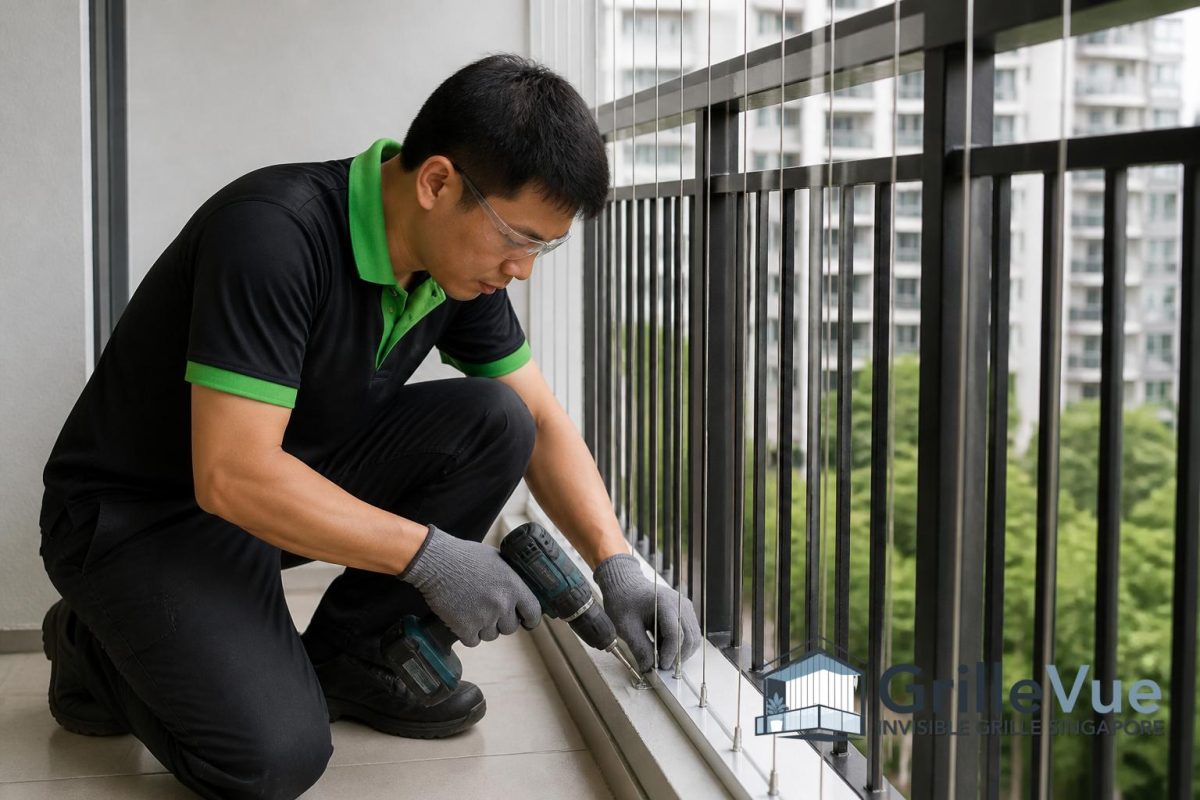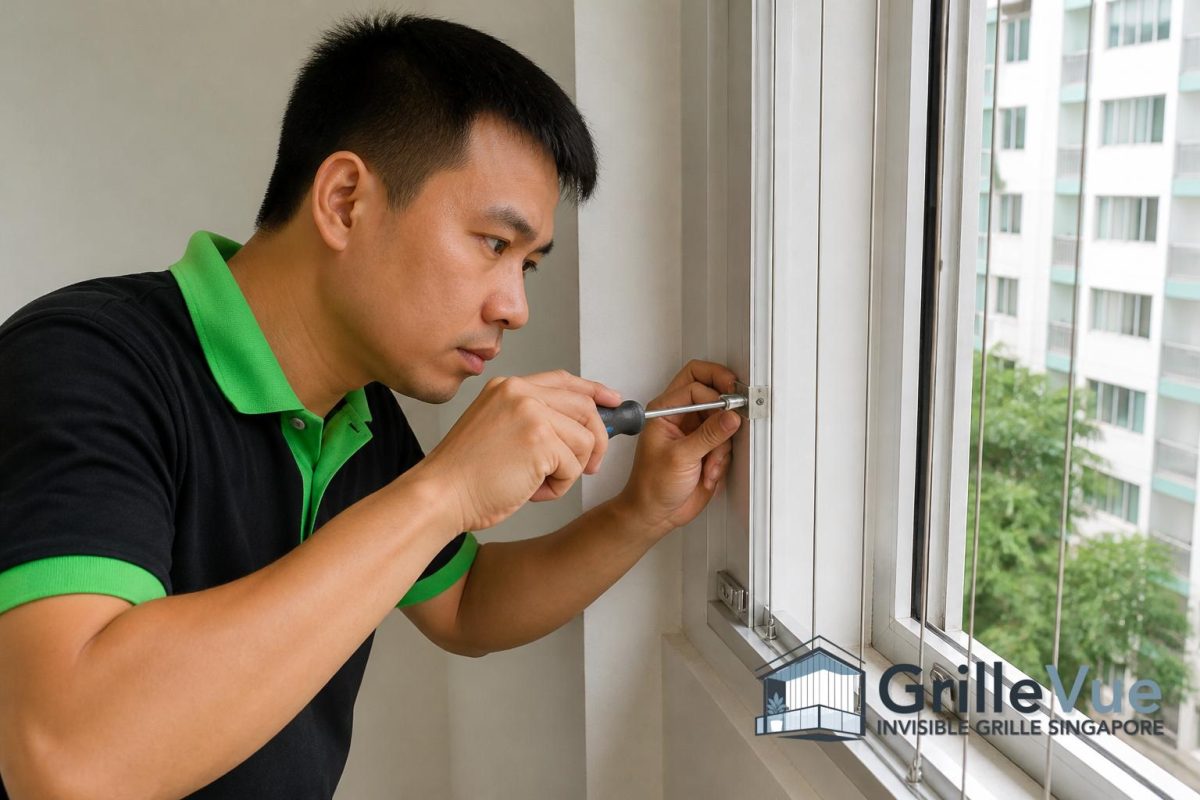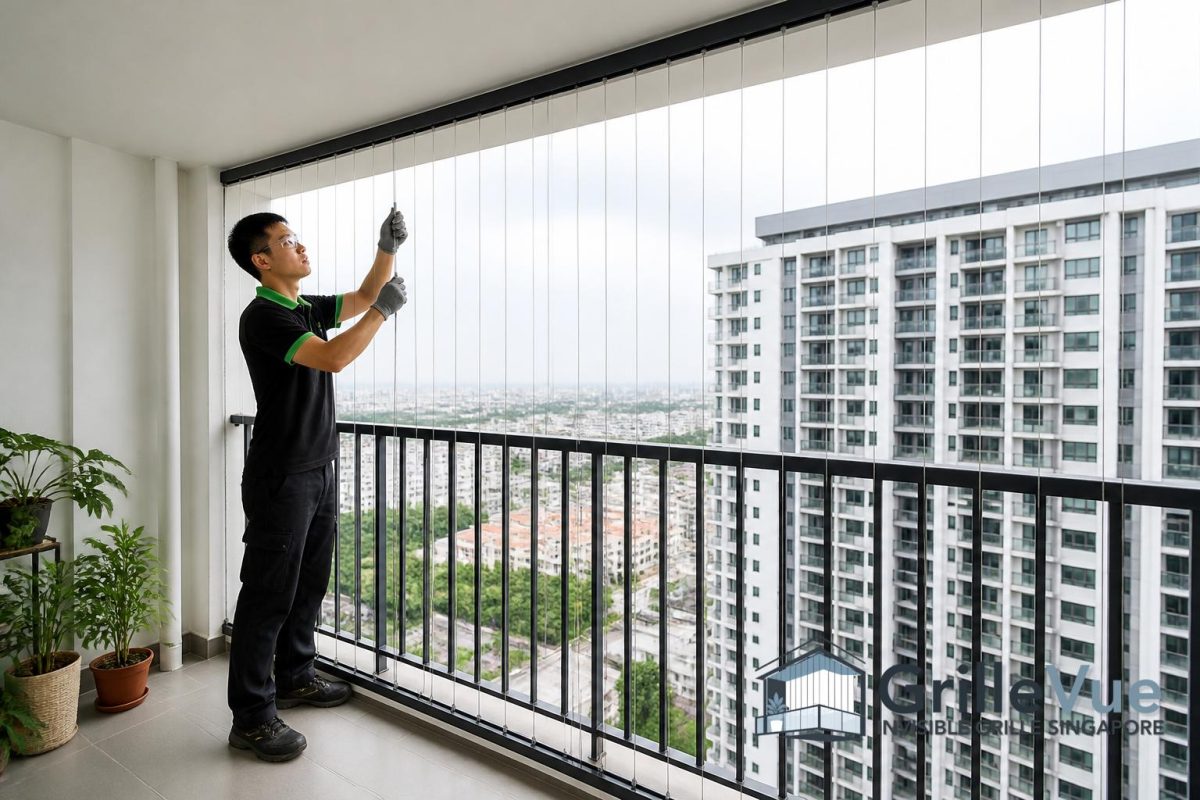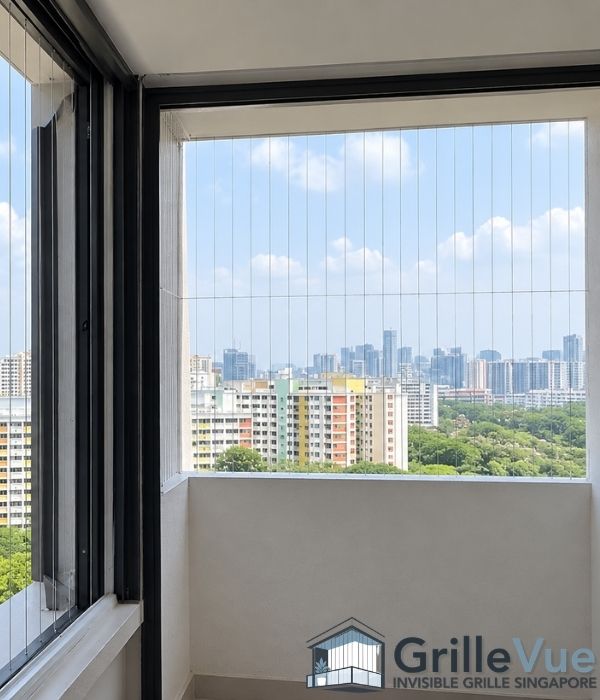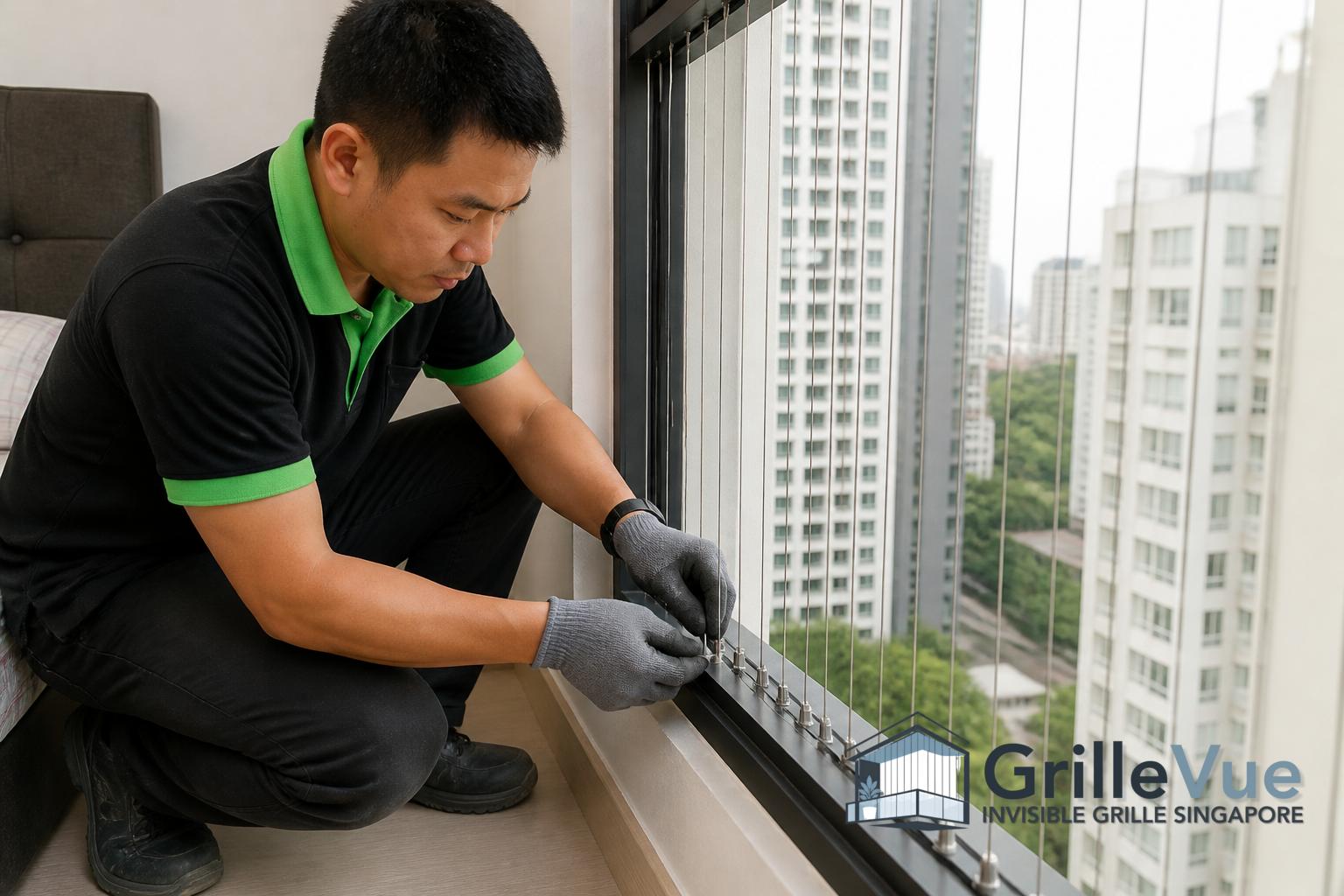
If you already have HDB windows in place and are considering an invisible window grille, the installation is usually less about replacing the window and more about fixing a fine tensioned cable system to the existing opening. The installer works around the current frame, wall returns, and any nearby hardware, so the process depends heavily on the window type, available fixing points, and how much clearance there is for drilling, anchoring and cable tensioning.
What an invisible window grille installation involves
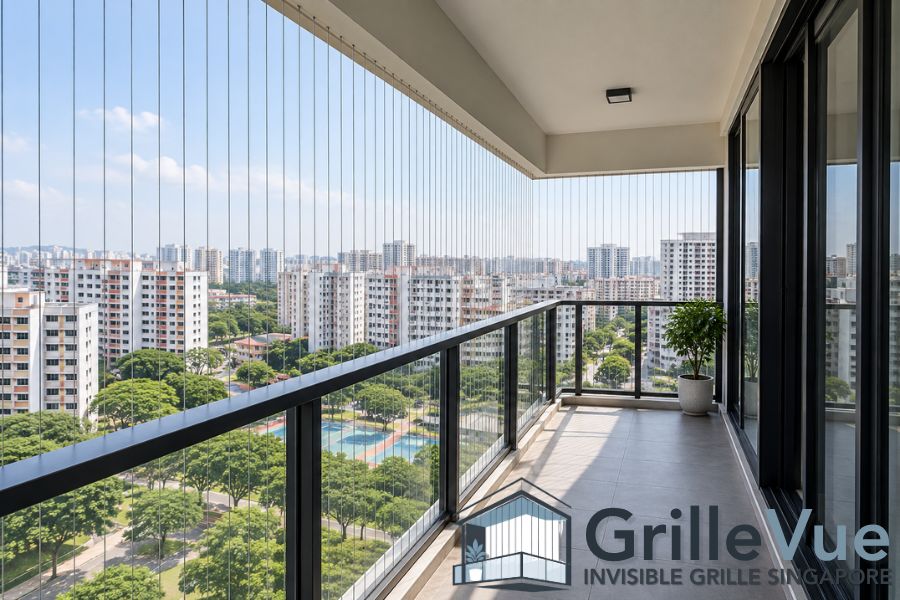
An invisible window grille is not a conventional metal grille or a security bar set. It is usually made from slim, high-tension stainless steel or similar safety cables installed across the opening, with anchoring points fixed to suitable parts of the window frame or surrounding structure. The aim is to create a discreet barrier that preserves airflow and outward visibility while adding a safety layer for homes with children, pets, or higher-floor windows.
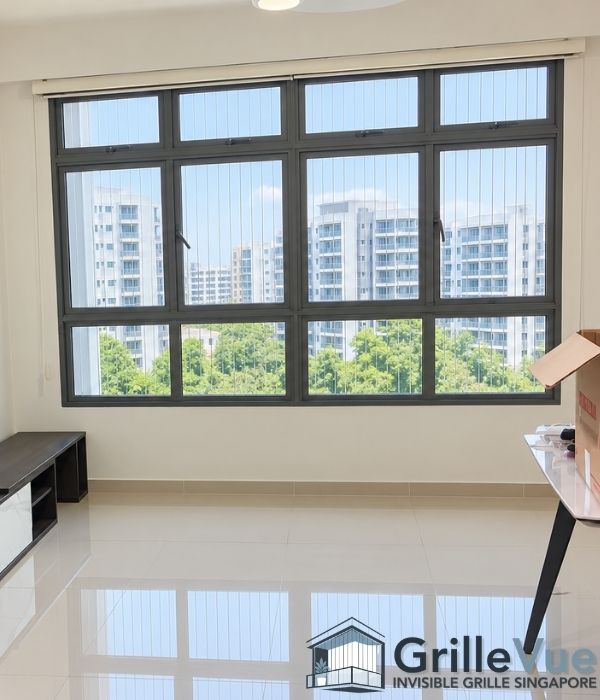
For existing HDB windows, the installer typically assesses the current frame profile first. The exact fixing method depends on whether the window is casement, sliding, top-hung, or part of a more complex opening arrangement. The installer needs to determine where the cables can run cleanly without obstructing the opening function or interfering with handles, locks, hinges, or sliding tracks.
How the installer assesses an existing HDB window
The first step is usually a site assessment. The installer checks the window opening, the surrounding wall surfaces, and any adjacent features such as curtains, window ledges, air-conditioner trunking, or decorative trims. This matters because invisible grille fittings require secure anchor points and enough working room for the cables to be aligned neatly and tensioned properly.
At this stage, measurements are taken for width, height, and any irregularities in the opening. Existing windows are rarely perfectly uniform across every edge, especially if there are past renovation works or changes to the frame. The installer also notes whether the opening needs to remain fully operable, partially operable, or is fixed in place. These details affect cable spacing, fixing positions, and the final appearance.
Measuring the opening and planning the fixing points
Accurate measurement is central to a good installation. The installer does not simply measure the visible glass area; they usually measure the usable opening and the structural areas that can accept fixings. On an existing HDB window, this often means working with the frame perimeter and ensuring the grille layout suits the actual opening rather than an idealised drawing.
Fixing points are planned so the cables remain taut and evenly spaced. Depending on the window design, the installer may use side frames, top and bottom anchor points, or other approved structural fixing locations that suit the site. The position of each anchor affects cable alignment, edge clearance, and whether the grille can be fitted without compromising normal window use.
What happens during installation on the day
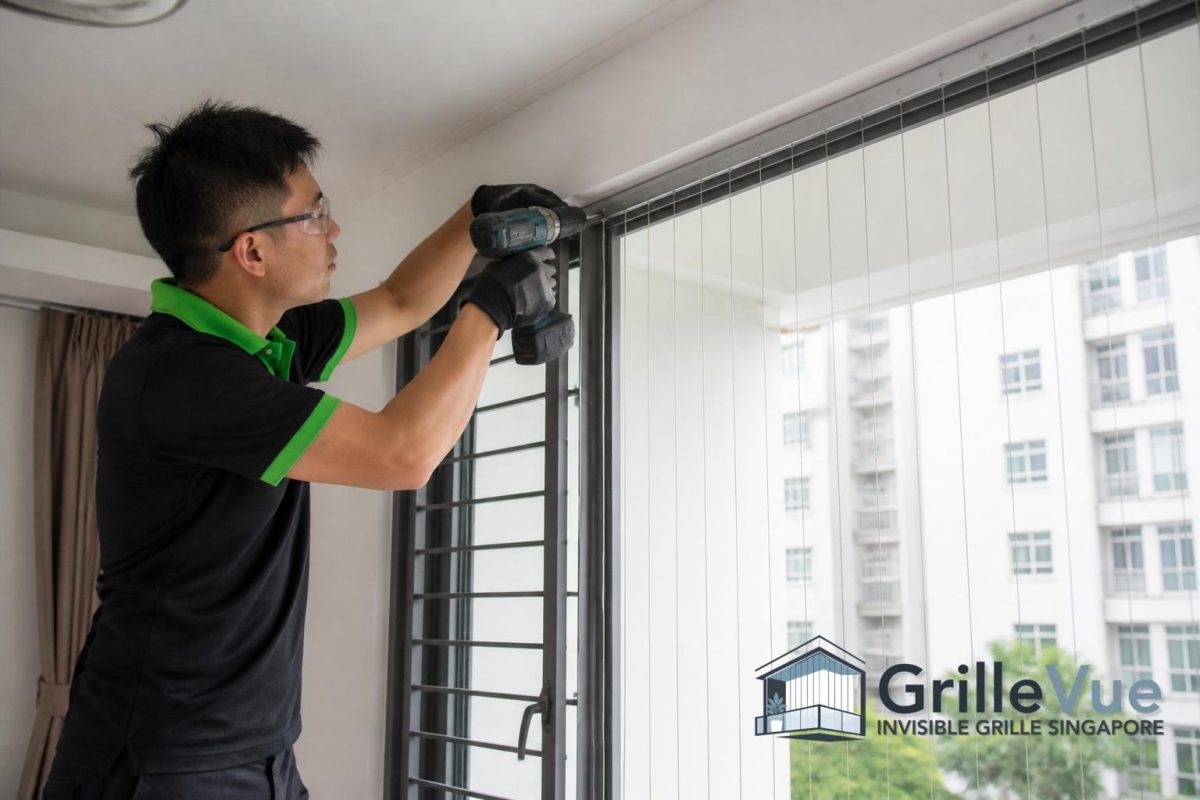
Once the measurements are confirmed and the cable layout is agreed, the installer prepares the fixing locations. This usually involves marking the anchor positions carefully, drilling where required, and fitting the anchors or brackets that will hold the tensioned cables. The work is typically done with attention to the existing frame so the grille sits neatly over the window opening.
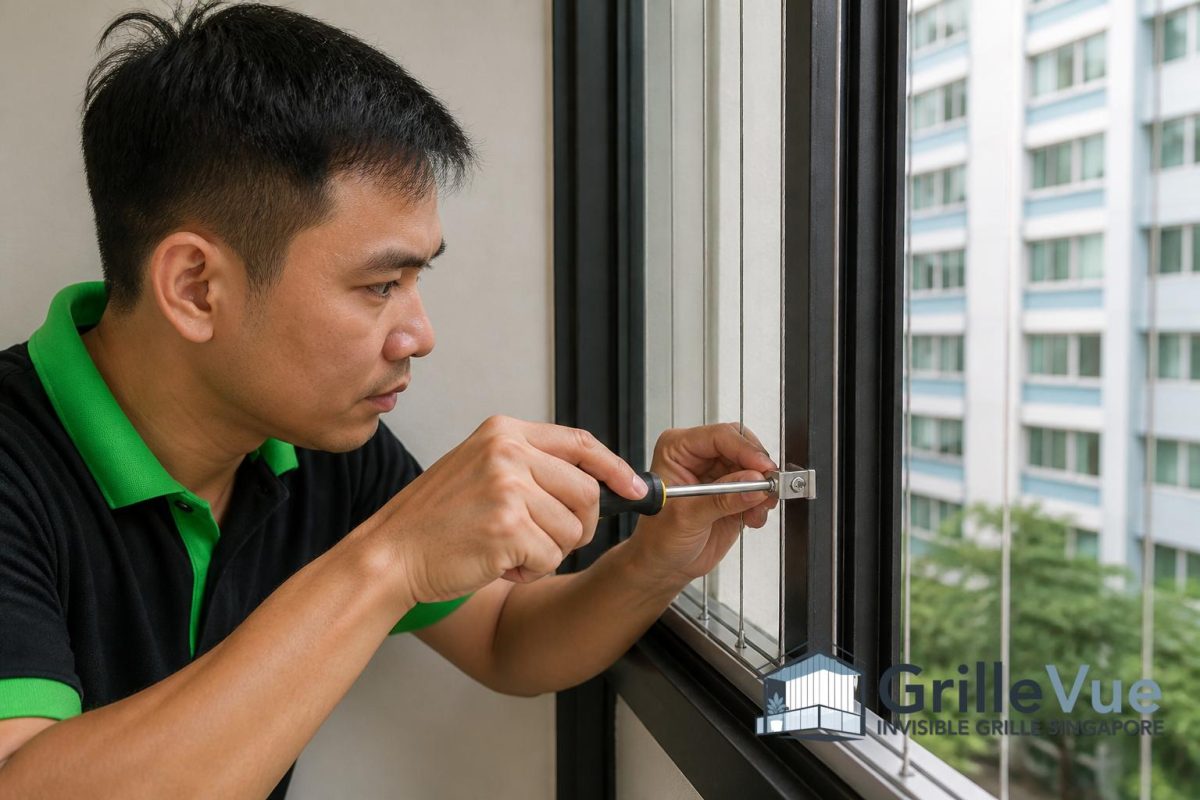
The cables are then installed across the opening and tensioned. Tensioning is important because the grille should be firm and stable rather than loose or uneven. The installer checks the spacing, the alignment of each cable, and the overall finish. If the system includes a framed perimeter or additional support members, these are also checked to make sure the whole assembly is secure and visually straight.
After installation, the window should still function as intended within the limits of the grille layout. The installer will usually demonstrate how the opening operates, what areas should not be forced, and how to inspect the system periodically for signs of wear, loosening or damage.
Why existing HDB windows need careful planning
With existing HDB windows, the main challenge is not just the grille itself but the fact that the window is already part of a finished opening. The installer has to work around paint, tiles, existing sealant, previous accessories and the built-in frame. If the opening is cramped or surrounded by other fittings, cable placement and drill access may need more careful planning.
This is also why one-size-fits-all installation descriptions are not very helpful. A sliding window and a top-hung window do not present the same fixing conditions. The grille layout may need to avoid moving parts, and the installer must confirm that the cables will not interfere with cleaning access, ventilation, or the way the window is opened and closed.
What homeowners should ask before installation
It is useful to ask what fixing method will be used, where the anchors will go, and whether the cables will affect the full movement of the existing window. If you have a particular concern, such as keeping a certain section open for airflow or ensuring access for cleaning, raise it before work begins rather than after drilling.
You may also ask how the cable tension will be checked, whether the system can be adjusted later if needed, and what access the installer requires on installation day. If there are nearby window grilles, curtains, blinds or external fittings, the installer should explain how these may affect the layout. For households with children or pets, it is sensible to clarify exactly how the grille is intended to function as a safety barrier, without assuming it replaces supervision.
Maintenance and long-term care after installation
Invisible grilles are generally chosen because they preserve the view and are visually light, but they still need basic care. Over time, cables should be checked for consistent tension and the fixing points should be inspected for any signs of movement, rust, or wear. In Singapore’s climate, regular visual checks are useful, especially for windows exposed to rain, sun and humidity.
Cleaning is usually straightforward, but it should be done carefully so the cables are not bent or pulled. If the window area is being repainted or renovated later, the grille should be protected from accidental damage. If you notice a cable loosening or a fitting shifting, it is better to have it looked at promptly rather than waiting for the issue to worsen.
If you are planning an invisible window grille for an existing HDB window, WhatsApp GrilleVue Invisible Grille Singapore – Windows & Balconies with your property type, approximate opening dimensions, existing window fixtures and access details so they can assess the opening and prepare a suitable quotation.
Conclusion
Installing invisible window grilles on existing HDB windows is mainly a matter of careful assessment, precise measurement, secure anchoring and proper cable tensioning. The installer must work with the current window structure, not against it, so the result fits the opening cleanly and allows the window to function as intended. For homeowners, the most useful approach is to understand the opening type, ask how the grille will be fixed, and confirm how the finished system will affect daily use, cleaning and maintenance.
Choose GrilleVue Invisible Grille Singapore – Windows & Balconies
GrilleVue Invisible Grille Singapore specialises in residential grille and balcony solutions that help homeowners improve safety and make better use of windows and outdoor areas without unnecessarily enclosing the space. We provide invisible grille, invisible window grille, invisible balcony grille, window grilles, and balcony grille installations for HDB flats, condominiums, and landed properties, with each solution planned around the opening, layout, and requirements of the home.
Our other services also cover Zip Track and Zip Track blinds for homeowners who want greater control over balcony and outdoor areas. An invisible grill for the balcony can help retain visibility while adding a safety barrier, while zip track blinds can provide a more sheltered and adaptable space depending on weather conditions and daily use.
For more information on suitable window and balcony solutions, explore our blog for useful guides or browse our completed projects for examples of previous installations. Contact us via WhatsApp at +65 8241 0032 to discuss your home, installation needs, and available options.
Frequently Asked Questions
Can an invisible grille be installed on most existing HDB windows?
In many cases, yes, but the suitability depends on the window type, the condition of the frame, and whether there are secure fixing points available. The installer should inspect the opening first to confirm the layout and practical installation method.
Will the installation affect how my window opens?
It should not interfere with normal use if the grille is planned correctly, but this depends on the specific window design. The installer needs to position the cables and anchors so they do not block handles, hinges, locks or sliding movement.
How do I know if my HDB window is suitable for this type of grille?
The best way is to have the opening measured and assessed on site. Factors such as frame condition, surrounding finishes, and access for drilling all affect suitability, so the installer should confirm whether the opening can support the chosen invisible grille layout.