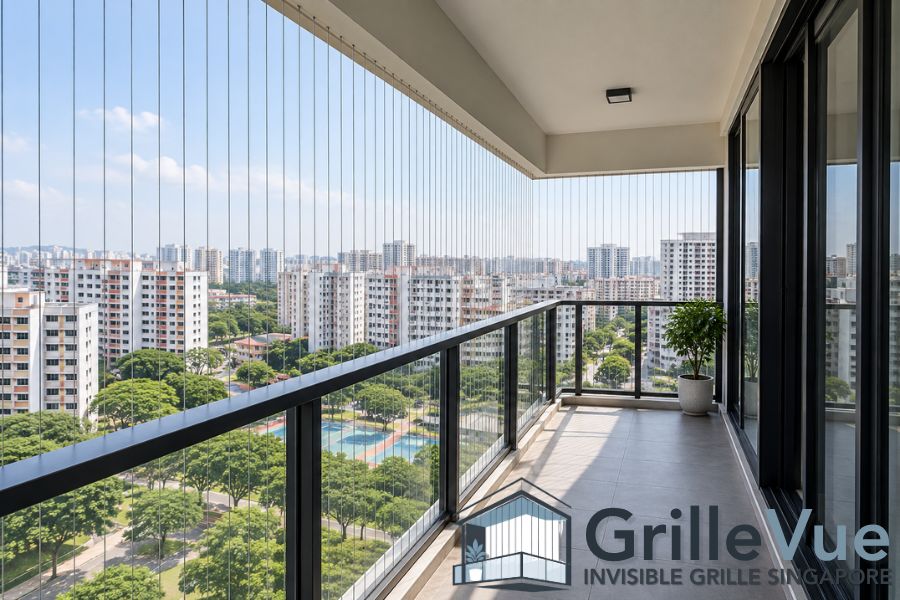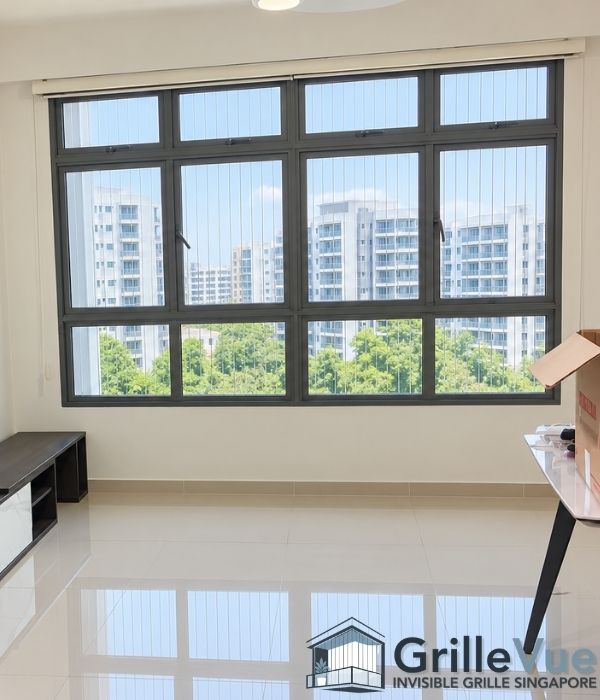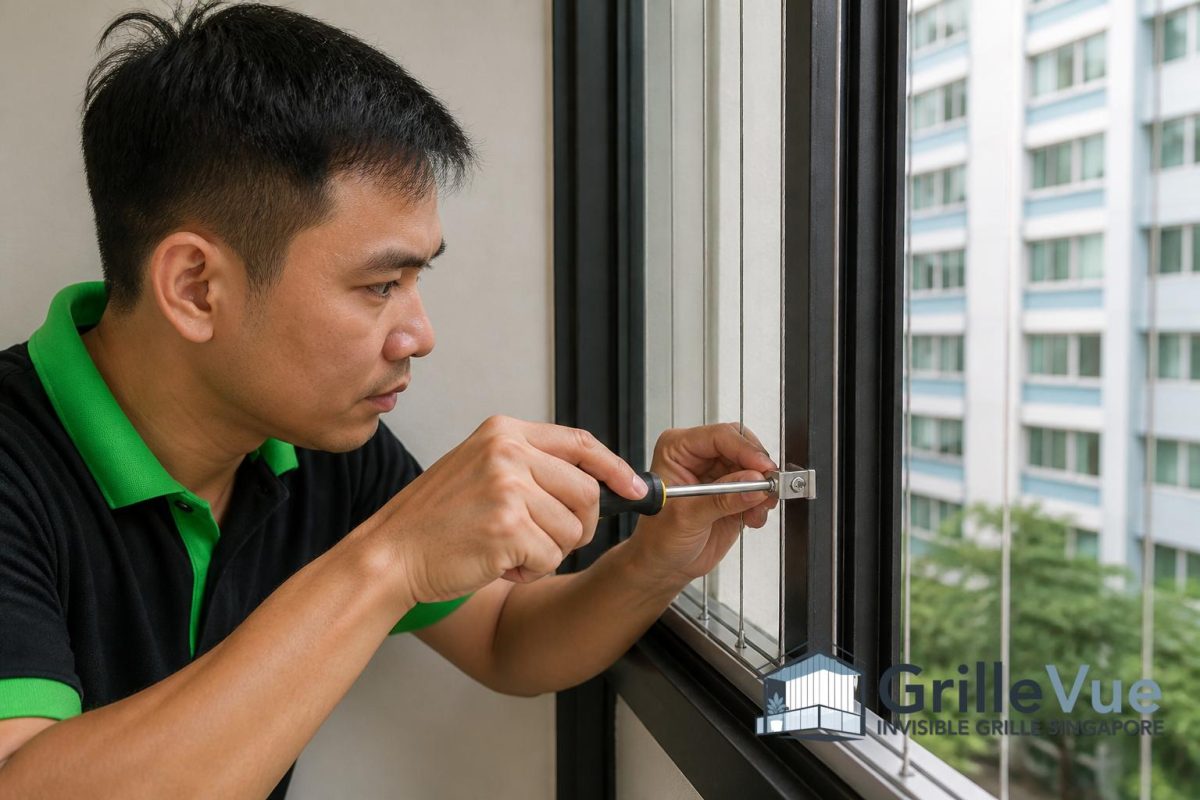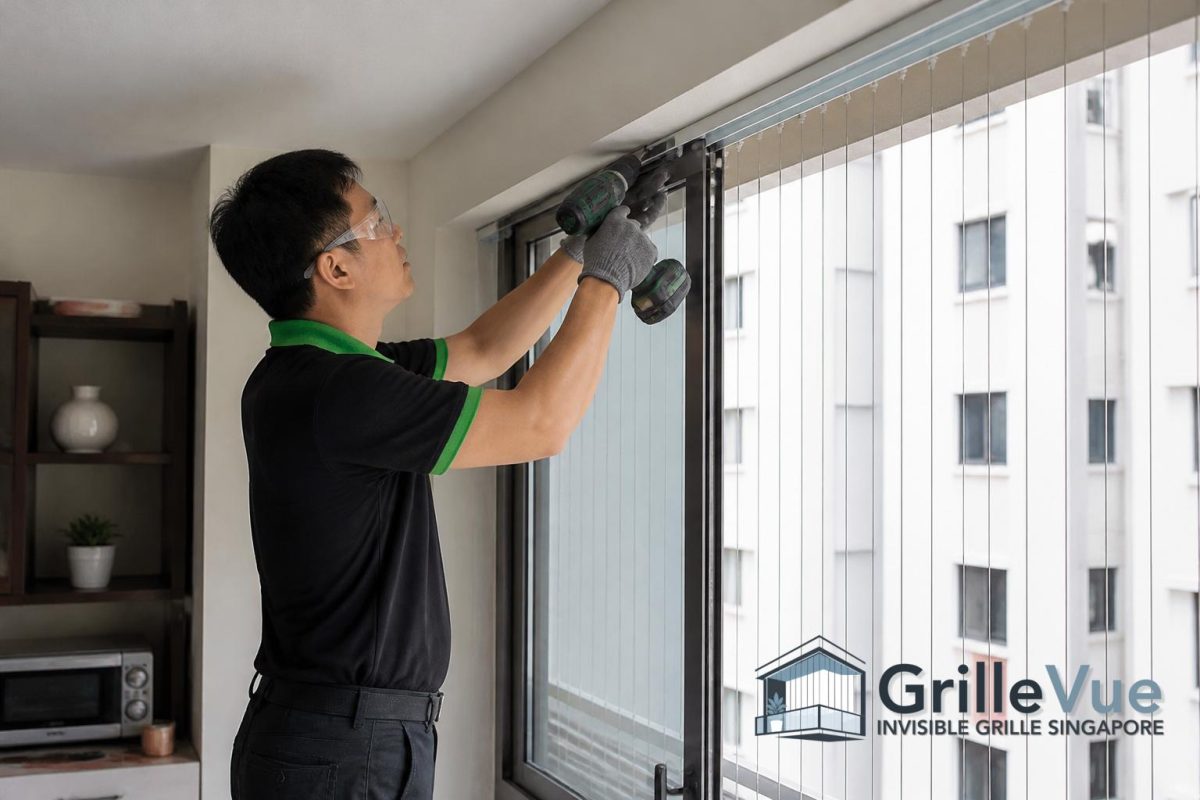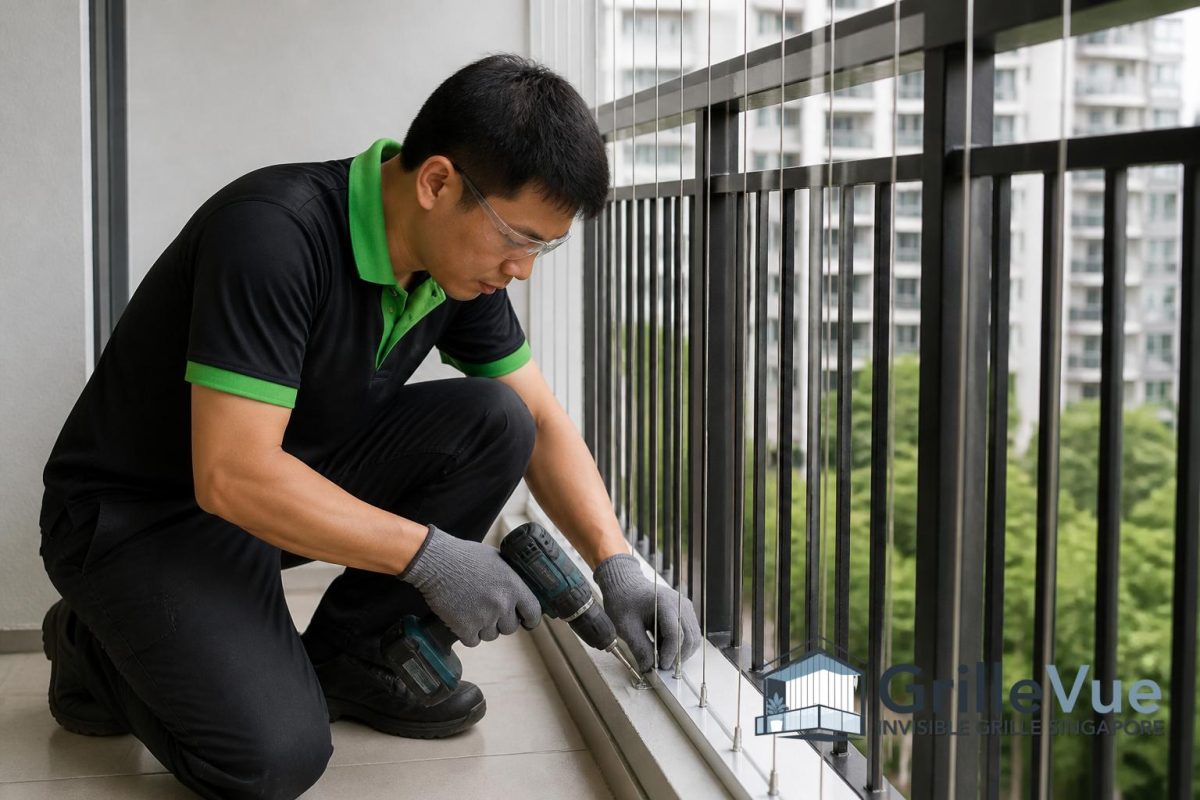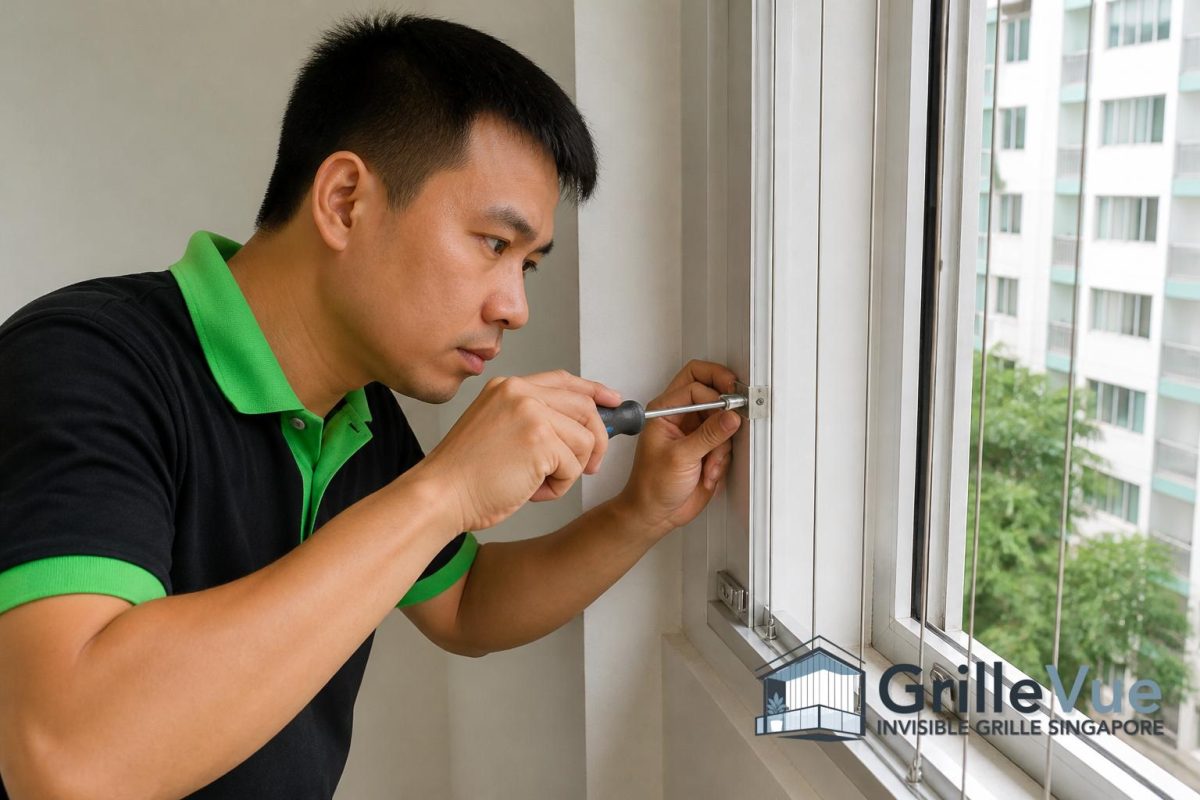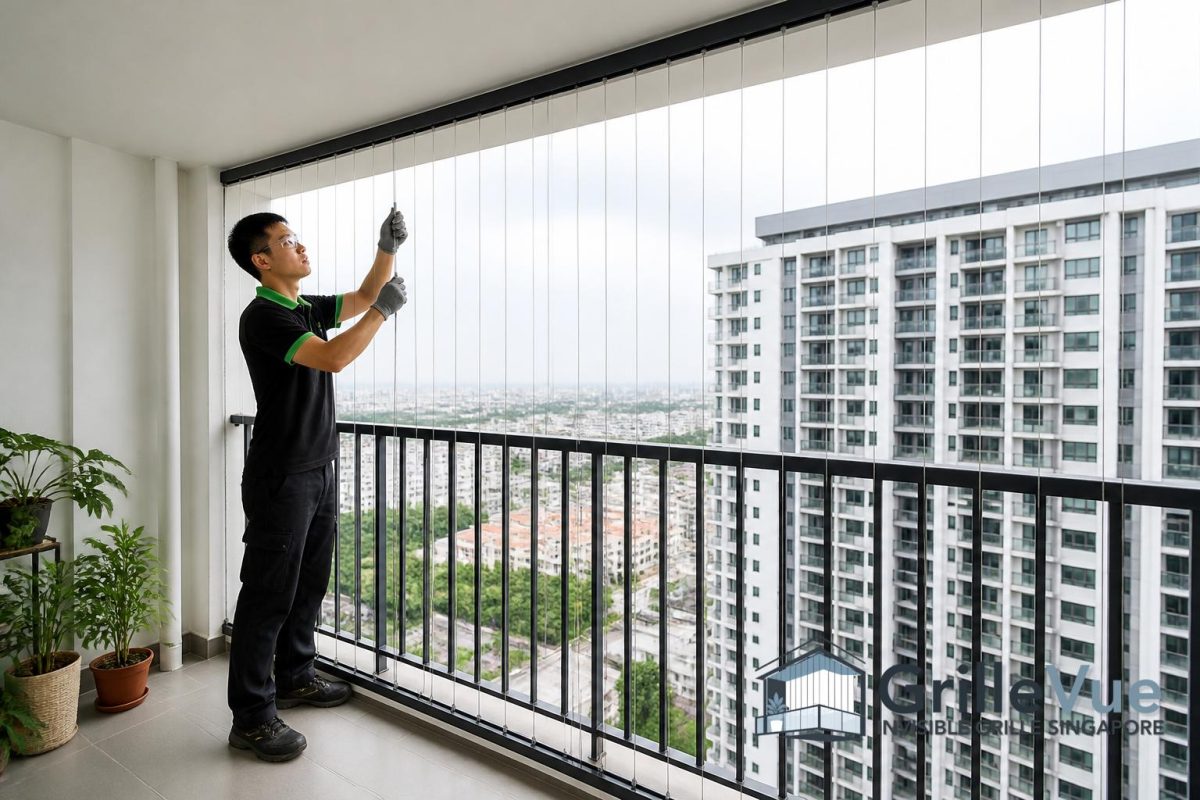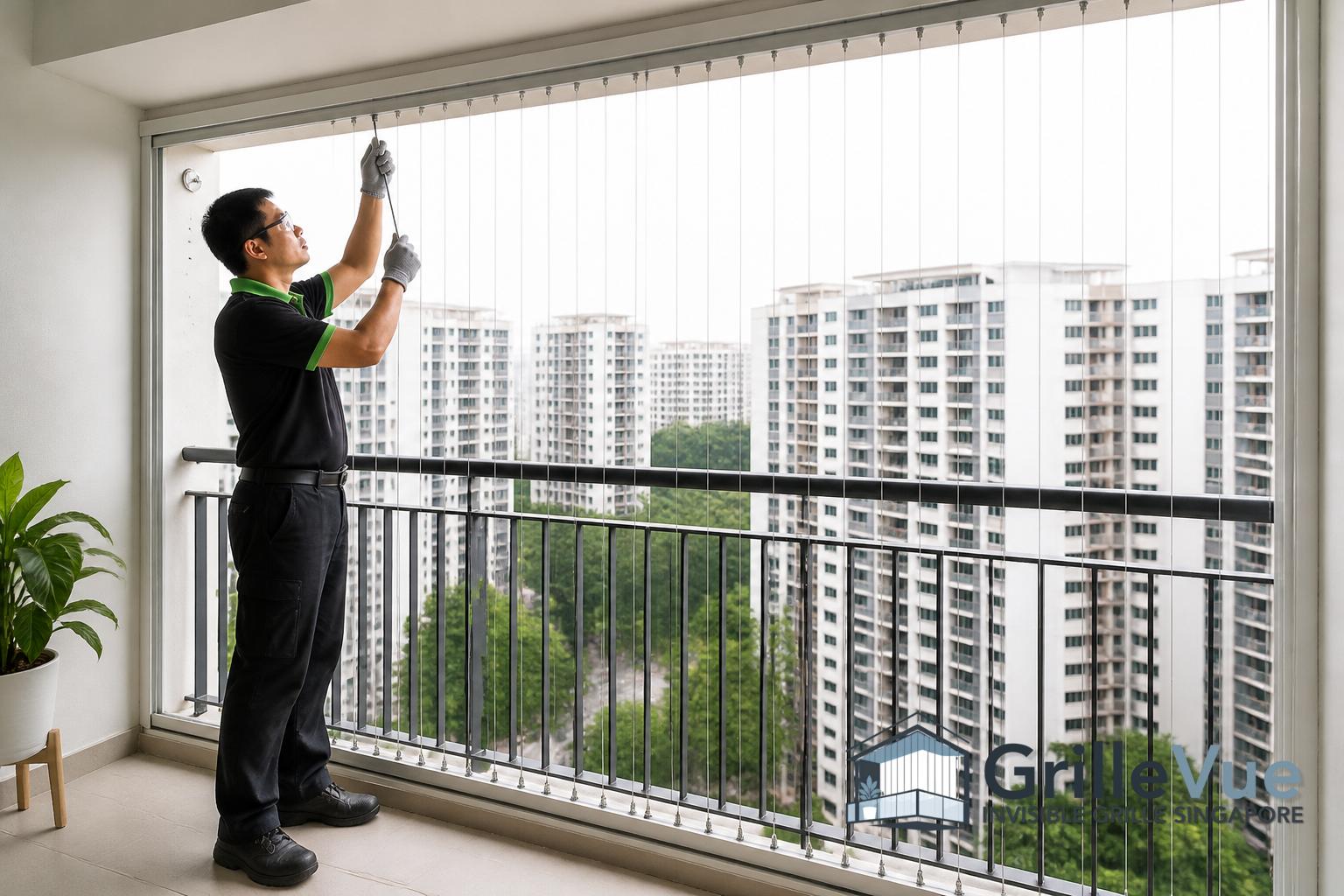
Invisible balcony grilles in Singapore condos are typically installed as a tensioned cable safety system across the balcony opening, designed to keep the view as open as possible while still providing a physical barrier. The process is not the same as fitting outdoor blinds or conventional metal railings: it involves careful measurement of the balcony opening, secure fixing points on suitable structural surfaces, cable routing, and tension checks so the grille sits neatly and functions as intended.
What an Invisible Balcony Grille Actually Is
An invisible balcony grille uses fine metal cables rather than thick bars. These cables are stretched horizontally or vertically across the balcony opening and anchored at fixed points along the frame, ceiling, wall, or other appropriate structural surfaces. The exact layout depends on the balcony shape, access route, and the surrounding construction.
Because the cables are slim, they are chosen by condo owners who want a safety barrier without closing off the balcony visually. In Singapore, this is especially useful where residents want to preserve airflow and the view from a high-rise unit, while adding a practical layer of protection around the balcony opening.
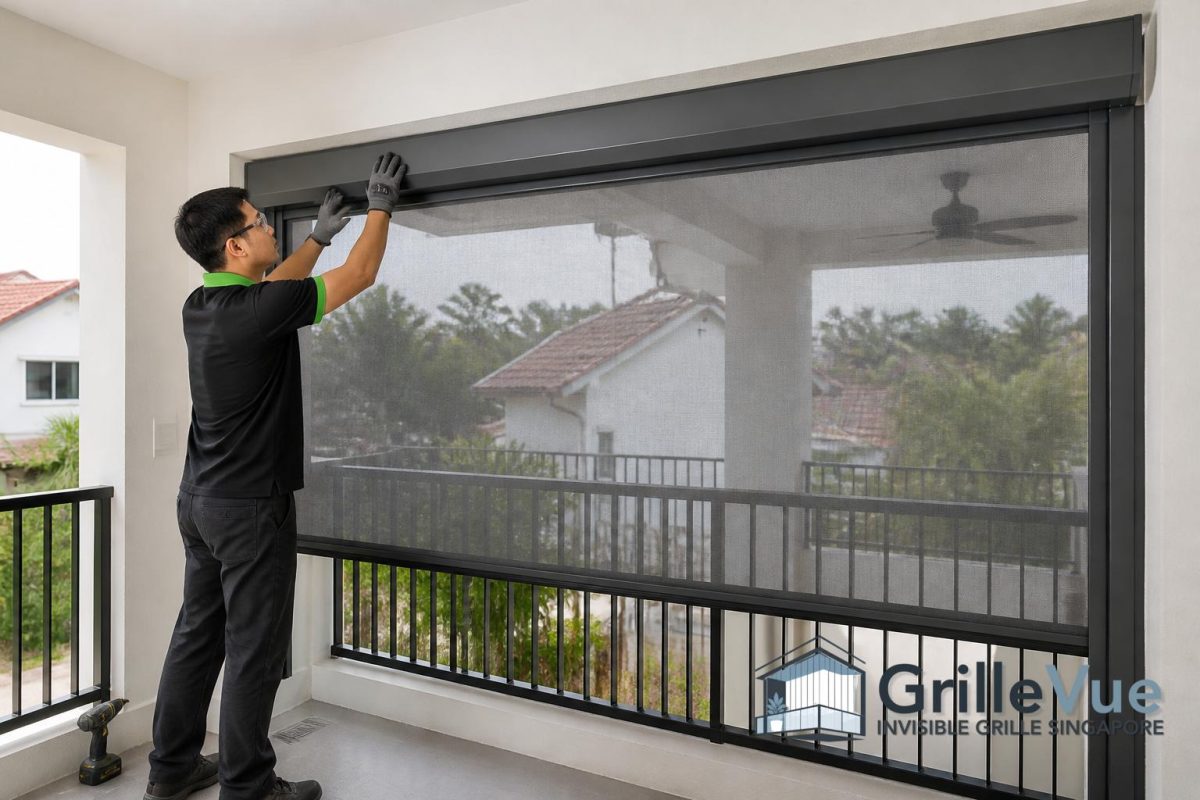
It is important to distinguish this from Zip Track or Ziptrak blinds. Those are guided outdoor screen systems made of fabric, side tracks, a headbox and a bottom bar, and they are installed for shading or screening rather than as tensioned safety cables.
How the Balcony Opening Is Assessed Before Installation
The installation process starts with a site assessment. For condo balconies, the installer will look at the width and height of the opening, the position of columns, beams, balustrades, sliding doors and any other fixtures that may affect cable placement. The assessment also helps identify whether the balcony requires a full opening span or only a partial section to be covered.
Good measurement is essential because balcony openings are rarely simple rectangles. Some condos have recessed balconies, corner units, curved edges, or different levels of access around the edge. The installer must measure the exact fixing zones and plan where the cables can be anchored without interfering with doors, drainage points or everyday use of the balcony.
Homeowners should also be ready to explain how they use the balcony. For example, a family may want a grille layout that leaves space for planters or outdoor furniture, while another owner may prioritise the clearest view possible. These details affect the final cable arrangement and spacing.
Where the Fixing Points Are Placed
The fixing points are the most important part of the installation, because they hold the tension of the cables. Depending on the balcony design, these points may be fixed to side walls, a top beam, the underside of a slab, or other suitable structural locations. The installer will usually avoid placing fixings on weak decorative finishes that cannot properly support the load.
For a condo balcony, the layout has to work with the opening itself. If the balcony has a front parapet or existing railing, the grille may be installed in front of, above, or within the usable opening depending on the design. The goal is to create a neat, stable barrier without obstructing the balcony’s function more than necessary.
Careful alignment is just as important as strength. Even when the fixings are secure, a poorly aligned installation can look uneven, create inconsistent cable spacing, and affect how the grille appears from inside the home. A tidy finish usually depends on accurate marking, drilling, anchoring and a final visual check.
How the Cables Are Installed and Tensioned
Once the fixing points are ready, the cables are run across the opening and secured into place. Each cable must be tensioned properly so it stays taut and evenly spaced. This is the stage that gives the invisible balcony grille its neat appearance and functional structure.
Tension checks are important because cables that are too loose may look untidy or behave differently under use, while cables that are overtightened may place unnecessary strain on the anchoring points. Installers normally test the tension across the full span and make fine adjustments until the grille is balanced and consistent.
The number of cables and the spacing between them depend on the balcony size, the opening layout and the intended use. A wider balcony opening may require more cable runs or additional support points to maintain a clean and uniform result.
What Happens During the Installation Day
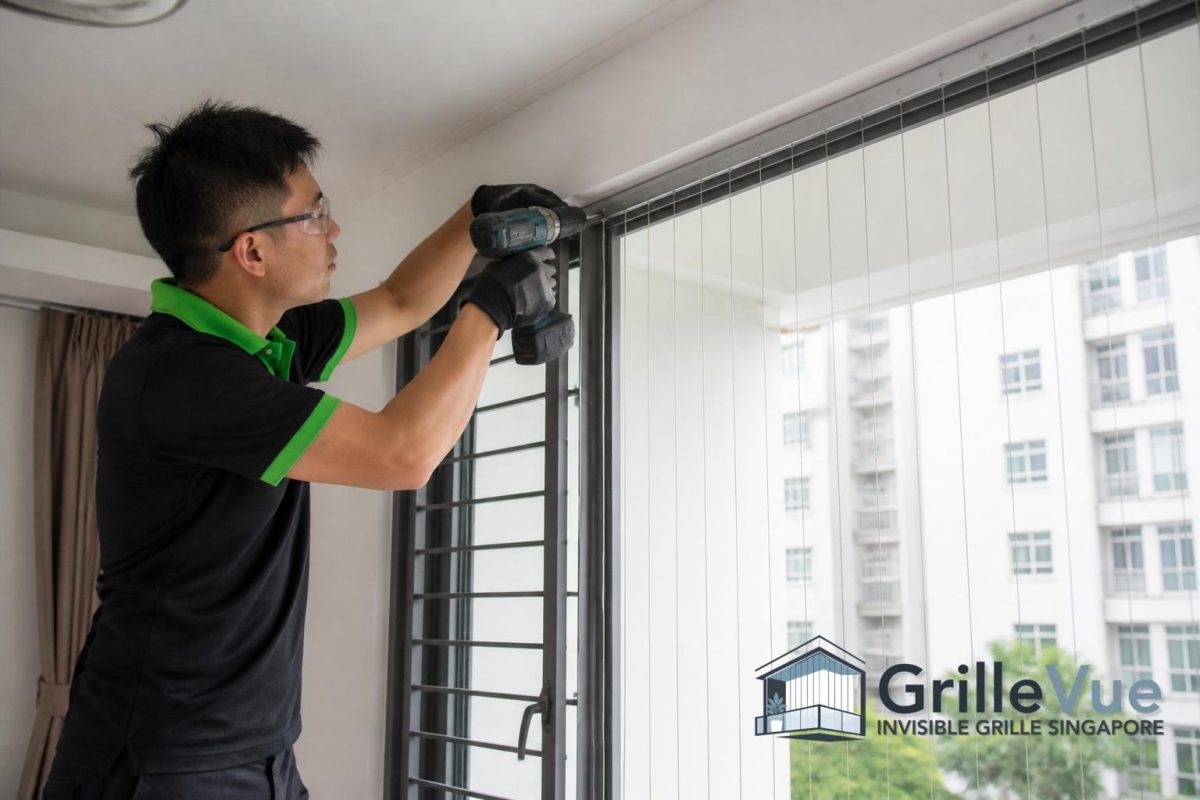
On the day of installation, the team will usually begin by marking the agreed fixing positions and checking that the planned layout still suits the actual balcony conditions. This matters because site realities such as surface irregularities, existing fittings, or access limitations can affect the final arrangement.
After marking, the fixings are drilled and secured, then the cables are installed and tightened. The installer may make several rounds of adjustment to ensure that the lines are straight and the tension is even. A final inspection normally includes checking the visual alignment, cable security and the overall finish from both inside the unit and the balcony side.
For condos, access can influence the sequence of work. Some installations are easier when there is clear access to the balcony edge, while others may need extra care because of furniture, planter boxes or tight circulation space. Homeowners should clear the area beforehand so the installer can work safely and accurately.
Invisible Balcony Grille Versus Balcony Screen Blinds
Many Singapore homeowners compare invisible balcony grilles with Zip Track blinds, but the two products serve different purposes. An invisible grille is a cable-based safety barrier that preserves openness and visibility. A Zip Track blind is a guided fabric screen used to reduce glare, soften sunlight, and add weather screening depending on the material chosen.
If the main goal is safety with an unobstructed view, the invisible balcony grille is the relevant product. If the main goal is shade, privacy or protection from rain-splashed areas, then Zip Track or Ziptrak blinds may be considered instead. In some homes, both may be used for different parts of the same outdoor area, but they should not be confused with one another.
Homeowners should also remember that weather screening depends on the screen material and the conditions at the balcony. No fabric blind should be described as providing total waterproofing or complete wind protection unless the supplier has clearly specified the limits of the product and installation.
What Condo Owners Should Ask Before Installation
Before proceeding, ask the installer what surfaces will be used for fixing, how the cable spacing will be planned, and whether the balcony opening has any access constraints that might affect the result. It is also sensible to ask how the cables will be tensioned and checked after installation, and whether the final layout will suit the way you use the balcony.
If you are comparing options, ask whether the proposed system is for an invisible grille, a conventional grille, or a screen blind. This helps avoid confusion between safety cable work and guided fabric systems such as manual Zip Track blinds or motorised Zip Track blinds.
For motorised Zip Track installations on balconies, the blind mechanism itself is different from an invisible grille, and the power connection may require a suitably qualified electrician. That electrical requirement does not apply to a standard invisible grille installation unless a separate product or accessory is involved.
If you are planning an invisible balcony grille for your condo, you can WhatsApp GrilleVue Invisible Grille Singapore – Windows & Balconies with your property type, approximate balcony opening dimensions, existing fixtures and installation access for assessment and quotation: Send Enquiry
Conclusion
Invisible balcony grilles in Singapore condos are installed by assessing the balcony opening, choosing suitable fixing points, stretching fine metal cables across the span, and checking the final tension and alignment. The process is practical and site-specific, and it works best when the installer understands the shape of the balcony, the existing fittings, and the homeowner’s priorities for safety and visibility.
If you are comparing invisible grilles with Zip Track blinds or conventional grilles, start with the function you actually need. Safety cable grilles, guided fabric blinds and metal grilles each solve different problems, so the correct installation method depends on the opening and the intended use.
Choose GrilleVue Invisible Grille Singapore – Windows & Balconies
GrilleVue Invisible Grille Singapore specialises in residential grille and balcony solutions that help homeowners improve safety and make better use of windows and outdoor areas without unnecessarily enclosing the space. We provide invisible grille, invisible window grille, invisible balcony grille, window grilles, and balcony grille installations for HDB flats, condominiums, and landed properties, with each solution planned around the opening, layout, and requirements of the home.
Our other services also cover Zip Track and Zip Track blinds for homeowners who want greater control over balcony and outdoor areas. An invisible grill for the balcony can help retain visibility while adding a safety barrier, while zip track blinds can provide a more sheltered and adaptable space depending on weather conditions and daily use.
For more information on suitable window and balcony solutions, explore our blog for useful guides or browse our completed projects for examples of previous installations. Contact us via WhatsApp at +65 8241 0032 to discuss your home, installation needs, and available options.
Frequently Asked Questions
Can invisible balcony grilles be installed on every condo balcony?
Not every balcony has the same structure or fixing conditions, so suitability depends on the actual opening, available surfaces and access around the balcony. A site assessment is usually needed to determine whether the cables can be anchored neatly and securely.
Do invisible balcony grilles block the view?
They are designed to be visually light, so they generally preserve the view better than conventional bars or bulky grilles. However, the final appearance still depends on cable spacing, the number of runs and the angle from which the balcony is viewed.
Is an invisible balcony grille the same as a Zip Track blind?
No. An invisible balcony grille uses tensioned metal cables as a safety barrier, while a Zip Track blind uses guided fabric in side channels for shading and screening. They are different systems with different installation methods and different purposes.