If you are asking how Zip Track blinds are installed in Singapore, the short answer is that the installer first checks the opening, then measures the span accurately, fixes the headbox and side tracks, fits the fabric and bottom bar, and finally tests how smoothly the blind runs. In local homes, the process can vary slightly depending on whether the opening is an HDB balcony, a condominium patio, or a landed-home outdoor space, and whether you are choosing a manual or motorised Zip Track system.
What a Zip Track blind system actually includes
Zip Track blinds, also written as Ziptrak, Zip Trak or Zipblinds, are guided outdoor screen blinds rather than grilles or curtains. The main parts are the headbox, the side tracks, the fabric panel and the bottom bar. The fabric runs within the side channels so it stays guided as it moves up and down, creating a neat screen across an outdoor opening.
In Singapore, homeowners often use Zip Track blinds for balcony screening, patio shade or rain-and-glare reduction. They are not the same as invisible grilles, which are tensioned metal safety cables fixed across a window or balcony opening. Zip Track blinds are about screening and comfort; invisible grilles are about unobstructed safety barriers. Keeping that distinction clear is important when planning installation.
Step 1: Site assessment and suitability check
The installation process usually begins with a site assessment. The installer looks at the opening size, the surrounding structure, the available fixing points and whether there is enough clearance for the headbox and tracks. For a balcony, this may include checking the soffit, side walls and floor line. For landed homes, the installer may also assess whether the opening is exposed to direct weather or has uneven surfaces that affect alignment.
This stage is also where the homeowner should discuss how the blind will be used. For example, do you want shade from afternoon sun, a visual screen for privacy, some shelter from light rain, or a more enclosed outdoor area? The intended use affects the choice of fabric, openness, colour and whether a manual or motorised system makes more sense. A good installer will explain what the blind can do in practice, rather than overpromising on waterproofing or storm protection.
Step 2: Measuring the opening correctly
Accurate measurement is critical because Zip Track blinds depend on the tracks being aligned to the opening. The installer measures the width, height and any obstructions such as railings, column edges, light fittings, pipes or uneven tiles. On a balcony, the exact fixing line may need to be adjusted so the blind sits properly and runs straight.
In Singapore homes, the measurement also needs to reflect the actual installation method. Some openings can take a full-height screen, while others may only suit a partial-screen solution depending on the structure. The installer will usually take into account any existing fixtures that cannot be moved, because the blind must operate freely without rubbing against the side wall or floor.
Step 3: Choosing the fabric and operation type
Before installation begins, the homeowner normally chooses the fabric type and the operating method. Fabric selection matters because different materials offer different levels of shade, outward visibility and weather screening. A darker screen may reduce glare more effectively, while a lighter option can feel less visually heavy. The installer should explain how each option affects day-to-day use in Singapore’s climate.
At the same time, decide between manual and motorised operation. Manual Zip Track blinds are operated by hand, while motorised Zip Track blinds use a motor inside the system. If motorisation is chosen, ask whether a qualified electrician is needed for the power supply connection. Not every installation requires electrical work, but a motorised setup must be planned with the power point and cabling in mind from the start.
Step 4: Preparing the mounting points and tracks
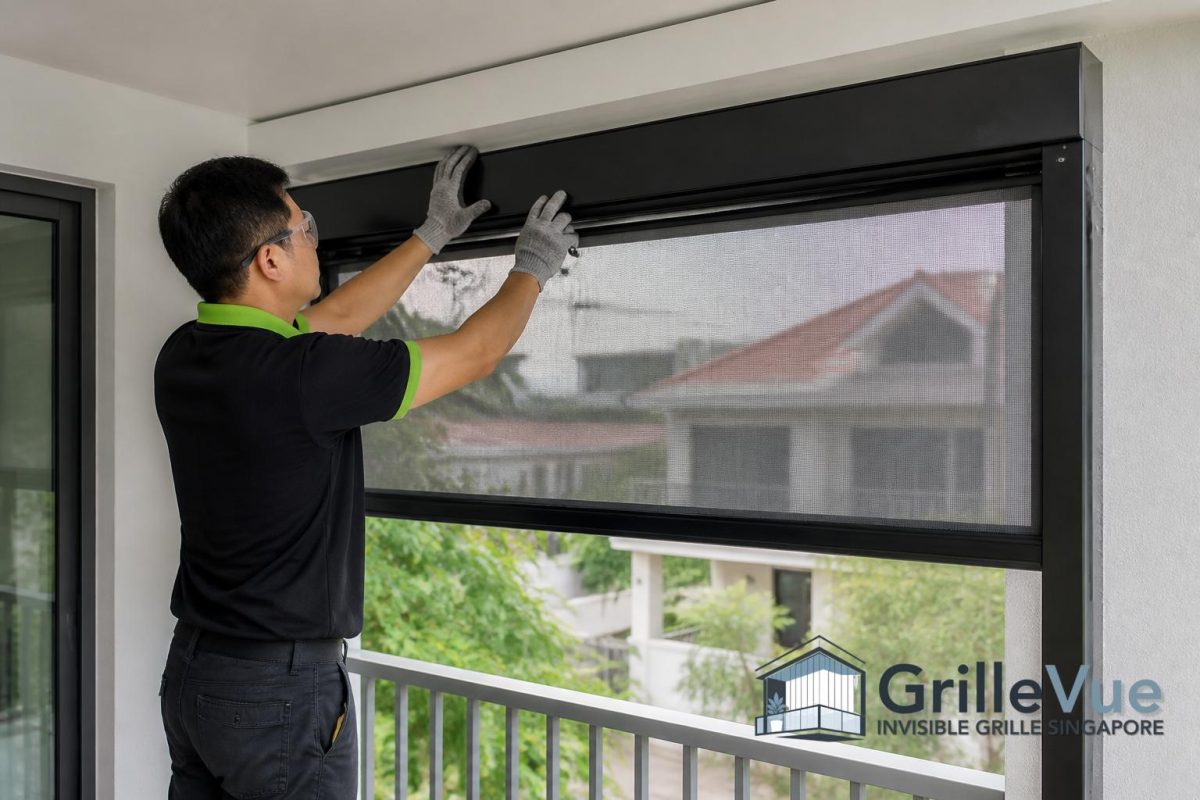
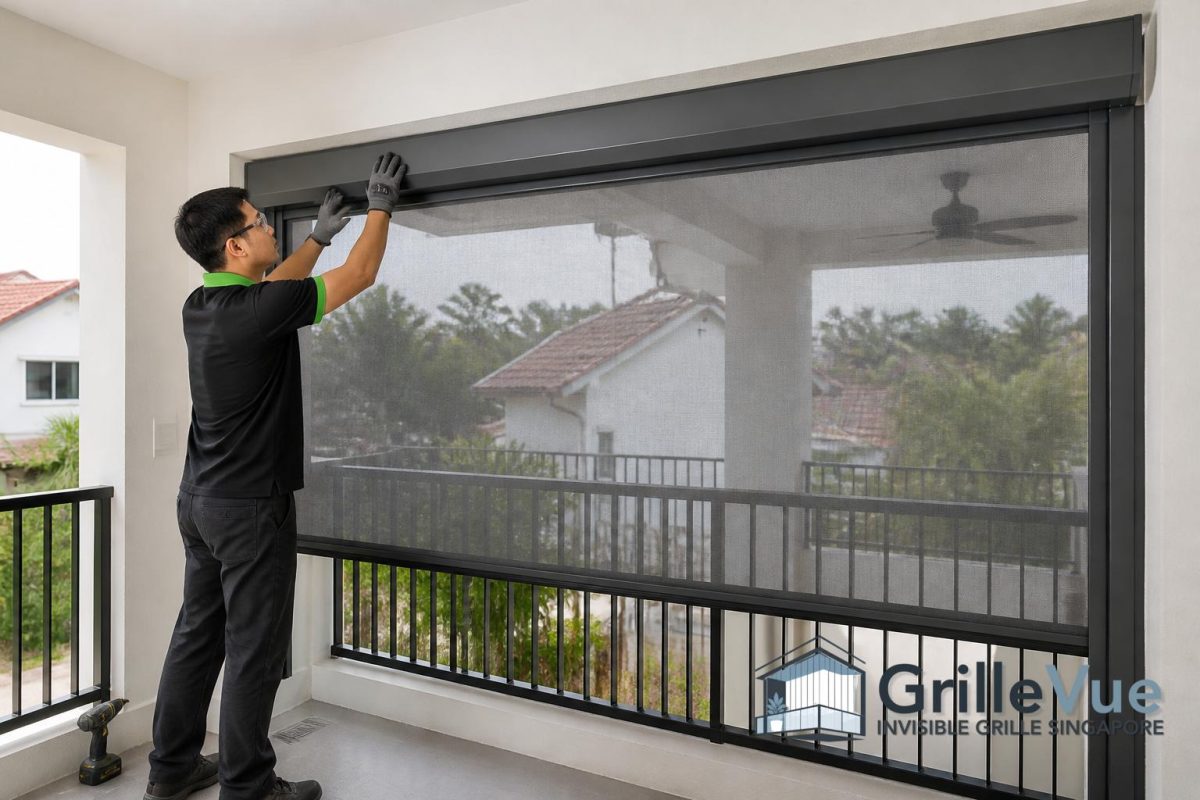
Once the design is confirmed, the installer marks out the fixing points for the headbox and side tracks. This is the stage where precision matters most, because the tracks must be level and parallel for the fabric to move correctly. Any small misalignment can affect how the blind glides or seals within the guide channels.
The headbox is then mounted at the top of the opening, followed by the side tracks. Depending on the structure, the installer may drill into concrete, masonry or reinforced surfaces, using suitable fasteners for a secure hold. In a balcony or patio setting, care is taken to position the tracks so they do not interfere with doors, railings or everyday access.
Step 5: Installing the fabric and bottom bar
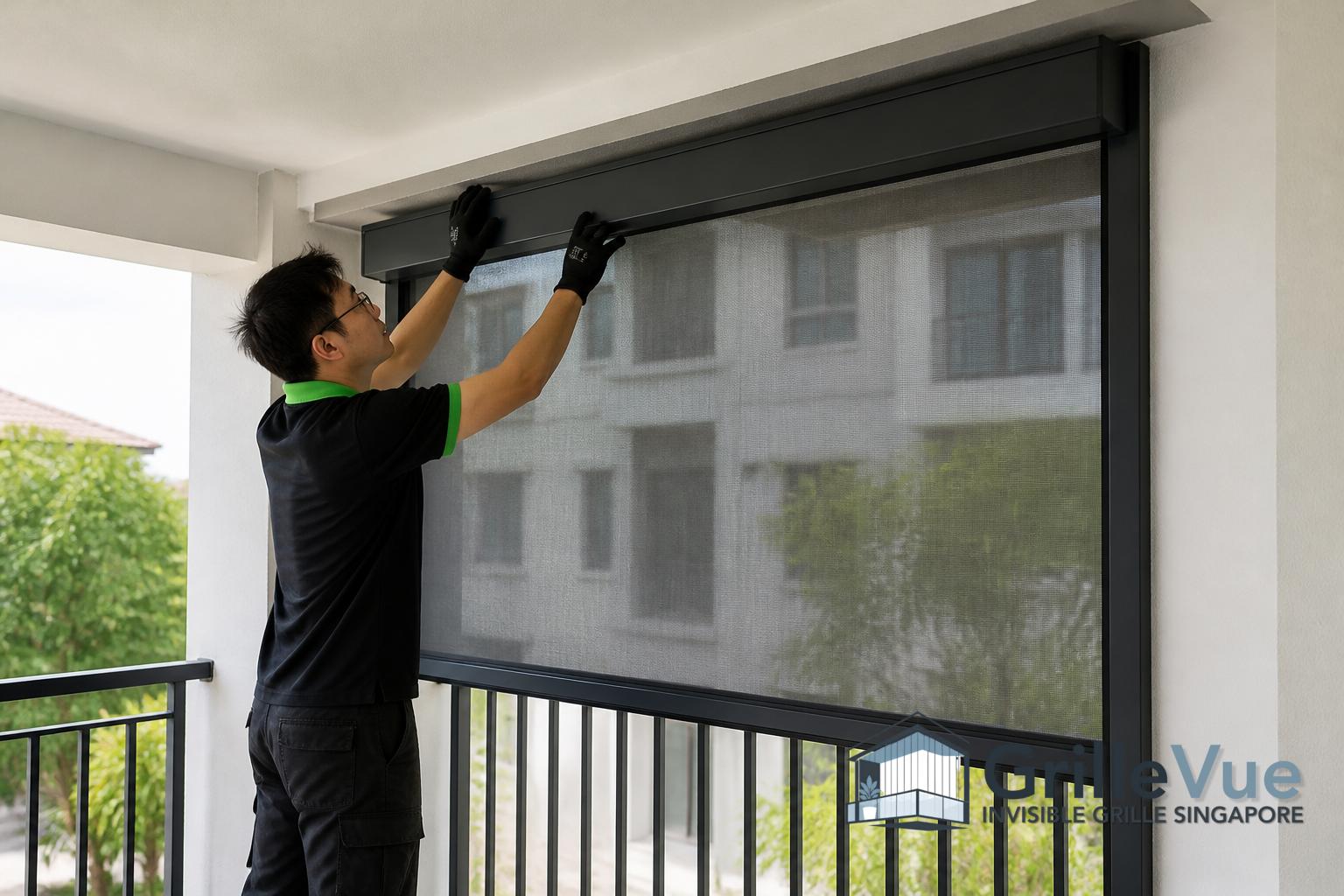
After the tracks are secured, the fabric panel is fitted into the system. The bottom bar is attached so that the blind can move up and down in a controlled way. This is the stage where the guided track design becomes visible: the fabric should sit neatly within the side channels without excessive slack or resistance.
The installer then tests the movement across the full height of the opening. This is not just about whether the blind moves; it is also about how evenly it travels, whether it stops cleanly, and whether the fabric remains properly seated in the tracks. If the blind is motorised, the installer will also check the motor function and confirm that the controls work as intended.
Step 6: Alignment, tension and final testing
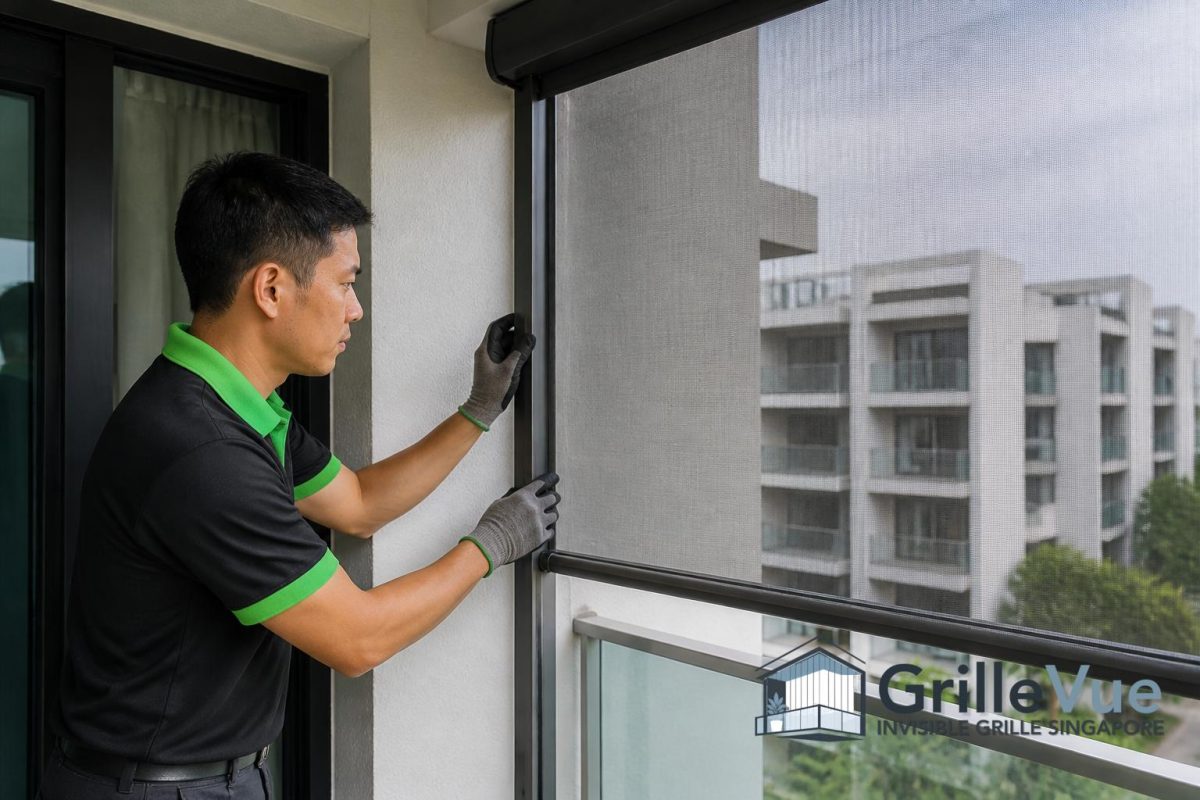
Final testing is a key part of the process. The installer checks that the side tracks are aligned, the fabric is travelling smoothly, and the bottom bar sits correctly when the blind is lowered. If the system includes any tension or guided components, they are checked so the blind performs consistently during normal use.
The homeowner should use this stage to ask practical questions: How should the blind be cleaned? What should be avoided when operating it? How should it be retracted during strong weather? For motorised systems, ask how to use the remote or switch safely, and confirm who handles the power connection if electrical work is required. Good installers will also explain routine maintenance, such as keeping the tracks clear of dust and debris.
What homeowners should clarify before installation day
Before installation, it helps to confirm a few details so the job runs smoothly. Ask what exact opening will be covered, where the tracks will be fixed, and whether the finished blind will affect door movement, balcony access or furniture placement. If you live in an HDB flat, condominium or landed property, make sure the installer has viewed the actual site rather than relying only on rough measurements.
You should also clarify the expected look and function of the blind. For instance, if your priority is a more sheltered balcony for everyday use, the installer may recommend a different fabric or configuration from someone who only wants sun shading. If your opening is unusually wide or has structural columns, the system may need a tailored layout to achieve proper alignment and neat operation.
If you would like advice on a specific opening, you can WhatsApp GrilleVue Invisible Grille Singapore – Windows & Balconies with your property type, approximate dimensions, product preference and any existing fixtures so the team can assess the installation and provide a quotation.
Conclusion
The process for installing Zip Track blinds in Singapore is straightforward when each step is handled properly: assess the opening, measure accurately, choose the right fabric and operation type, install the headbox and side tracks, fit the blind, and test the movement carefully. The most important point is to treat Zip Track blinds as a guided outdoor screening system, not as an invisible grille or a curtain, because the design, function and installation method are different.
For Singapore homes, the best results usually come from a site-specific approach that considers the balcony, patio or outdoor opening as it is, including the surrounding structure, access and daily use. That way, the finished blind looks neat, operates smoothly and suits the space it is meant to serve.
Choose GrilleVue Invisible Grille Singapore – Windows & Balconies
GrilleVue Invisible Grille Singapore provides window, balcony, and outdoor space solutions for HDB, condominium, and landed homeowners across Singapore. Our invisible grille installations are designed to improve safety while maintaining a cleaner and more open appearance around the home. Depending on the area and layout, homeowners can choose from invisible window grille, invisible balcony grille, window grilles, and balcony grille solutions suited to different residential requirements.
Our other services also include Zip Track and Zip Track blinds for balconies and other exposed areas where homeowners may want more flexibility in managing sun, rain, and everyday use of the space. Whether you are considering an invisible grill for balcony or practical zip track blinds, we can recommend a suitable installation based on the dimensions, layout, and intended use of the area.
If you are comparing grille and balcony solutions for your home, browse our blog for practical information or view our completed projects to see how different installations can be applied to Singapore homes. Contact us via WhatsApp at +65 8241 0032 to discuss your requirements and request a quotation.
Frequently Asked Questions
Can Zip Track blinds be installed on most Singapore balconies?
In many cases, yes, but the opening must be checked first. The installer needs to confirm that there is enough structure for the headbox and side tracks, and that the blind can move without obstruction from railings, walls or fixtures. The exact suitability depends on the opening rather than on a generic rule.
Do motorised Zip Track blinds always need electrical work?
Not always, but they do need a suitable power setup. Some installations may require a qualified electrician to handle the connection, depending on how the system is powered and where the power source is located. It is best to clarify this before installation begins.
Are Zip Track blinds waterproof?
They are best thought of as outdoor screening blinds rather than full weatherproof enclosures. Depending on the fabric and conditions, they may help reduce sun, glare and some light rain exposure, but they should not be treated as a guarantee against water, wind or severe weather.