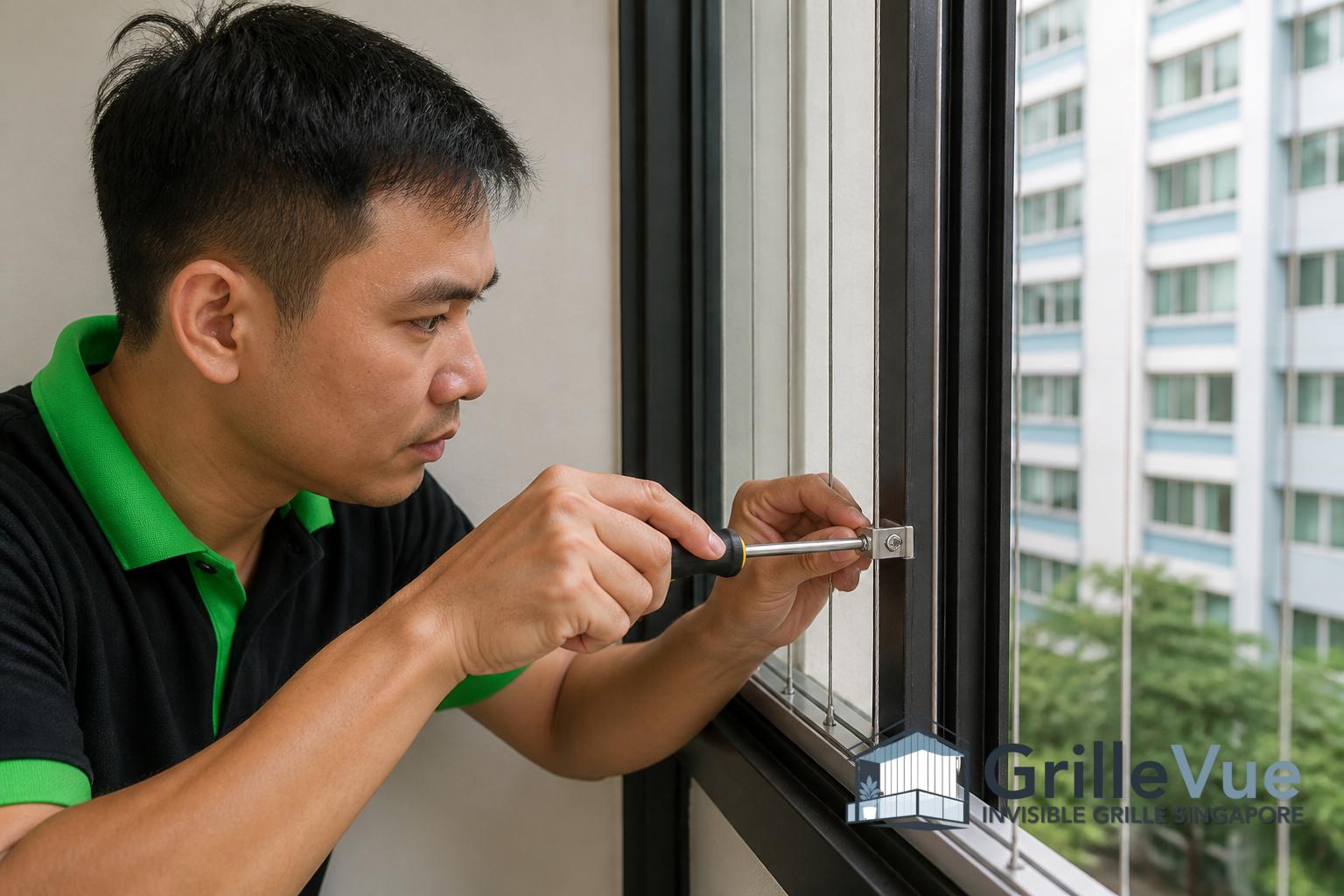
If you are replacing an existing window grille in Singapore, the process is usually more structured than many homeowners expect. Whether the opening is in an HDB flat, condominium or landed home, the installer must first assess the frame, fixing points and access before a new grille is measured, fabricated and fitted. The exact steps depend on what is being replaced, the condition of the opening and whether you are upgrading to a conventional window grille, an invisible window grille or, in some homes, a balcony grille.
What “window grille replacement” usually means
In Singapore, a window grille replacement normally involves removing an old grille and installing a new one within the same window opening or frame area. The goal may be to improve safety, refresh the appearance, change the grille style or resolve issues such as rust, loosened fixings or damaged bars. For invisible grille systems, replacement is not about bars being swapped one-for-one, but about removing the old tensioned cables and fitting a new set with appropriate anchor points and tensioning.
The first question is always what type of grille is being replaced. A conventional window grille uses a rigid frame and fixed metal bars, while an invisible window grille uses fine tensioned stainless steel cables anchored across the opening. These are different systems with different removal and installation steps, so the installer needs to identify the existing product before any work begins.
Site assessment of the window opening
The replacement process usually starts with an on-site assessment. The installer checks the window type, surrounding wall condition, existing grille condition and available clearance around the opening. In HDB flats, this includes looking closely at the frame edges and any nearby fittings that may affect access. In condominiums and landed homes, the assessment may also consider whether the opening is recessed, flush-mounted or affected by nearby architectural features.
This stage matters because a replacement grille should fit the actual opening and fixing conditions, not just the nominal window size. If the old grille was installed over a damaged or uneven surface, the new one may need adjusted fixing points or additional preparation. For invisible grilles, the installer also considers cable span, spacing and how the opening is used, such as whether the window opens inwards or outwards.
Removing the existing grille or grille components
Once the replacement plan is confirmed, the old grille is removed carefully to avoid damaging the window frame or surrounding finishes. With a conventional grille, this may involve detaching screws, brackets or frame sections. If corrosion is present, removal may take more care because older fixings can be stiff or stuck in place.
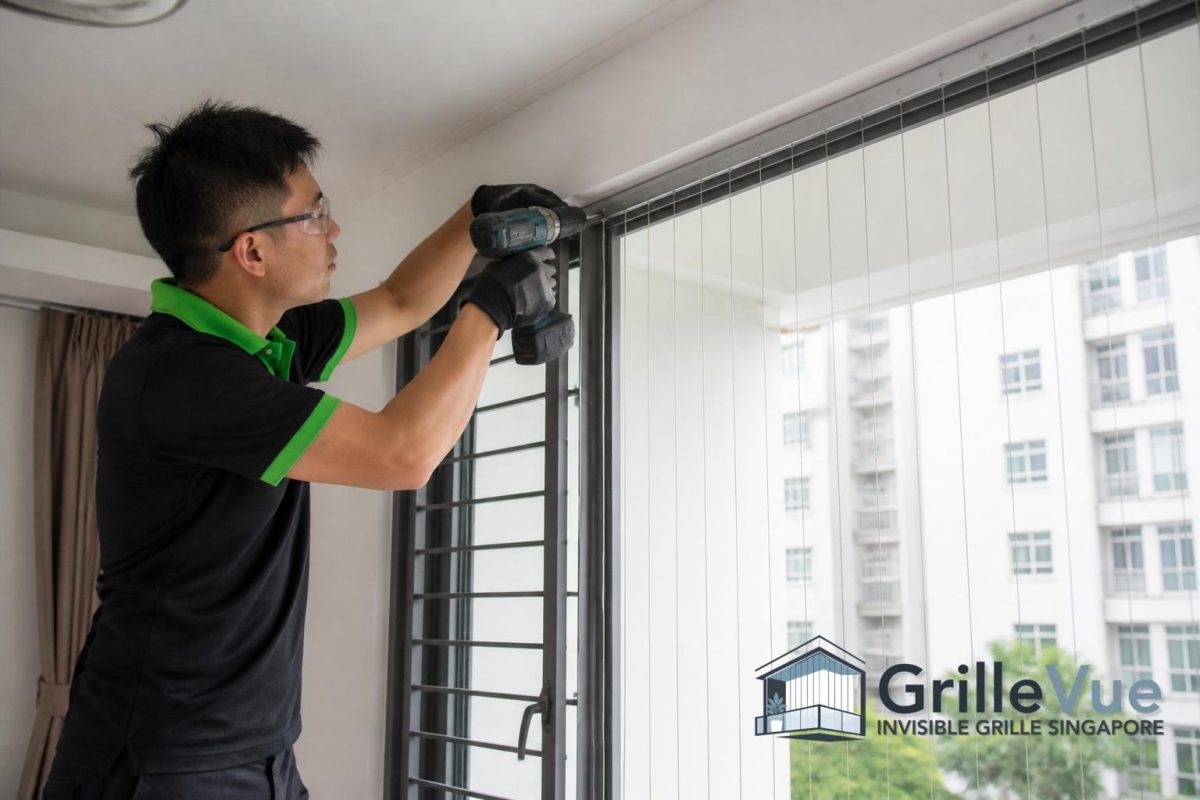
For an invisible grille replacement, the process is different. The existing cables are released from tension, then the old anchor hardware is removed if it is no longer suitable. In some cases, the installer can reuse parts of the fixing area, but that depends on the condition of the surface and whether the previous anchor positions are appropriate for the new layout.
Measuring the opening and planning the new fit
Accurate measurement is one of the most important parts of the replacement process. The installer measures the width, height, depth and usable fixing area of the window opening. This is not simply about the visible size of the window; it is about where the grille can be securely fixed without interfering with opening panels, handles, latches or window frames.
For invisible window grilles, the cable layout must be planned so that the cables run evenly across the opening and are supported by secure anchor points. The installer will also check the spacing and the orientation of the window, since a replacement for a bedroom casement window is not the same as one for a kitchen opening or a high-level service window. Good measurement helps avoid a grille that looks uneven or interferes with window operation.
Anchor points, brackets and fixing preparation
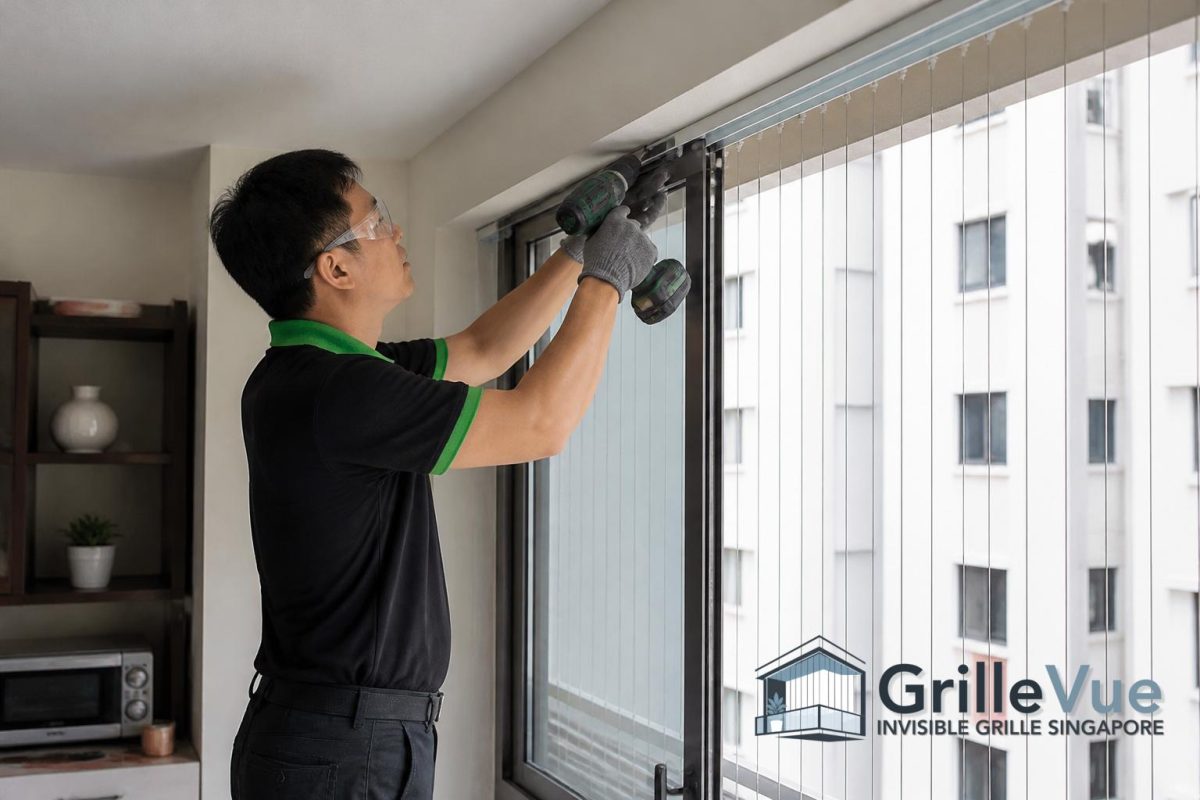
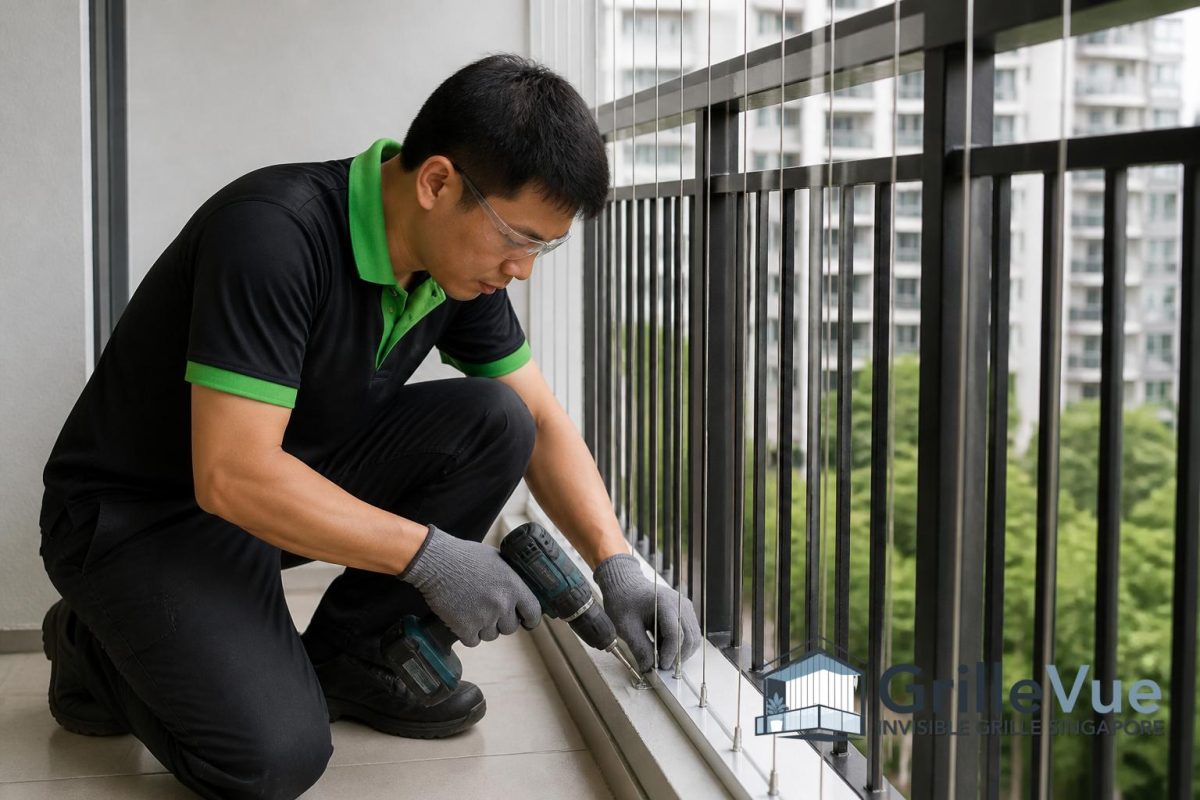
After measurement, the installer prepares the fixing locations. For invisible grilles, this means marking and drilling the positions for the anchor points or brackets that will hold the tensioned cables in place. These fixings must be positioned correctly so the cables remain aligned and taut across the opening. The fixing surface must also be suitable for the chosen hardware.
If the replacement is for a conventional grille, the installer prepares the mounting points for the frame or bars. In both cases, the condition of the existing wall or frame matters. A proper replacement should not rely on weakened old holes if they are no longer suitable. The installer may need to adjust the fixing method to suit the opening, especially where previous work has left uneven surfaces or multiple old drill points.
Installing and tensioning an invisible window grille
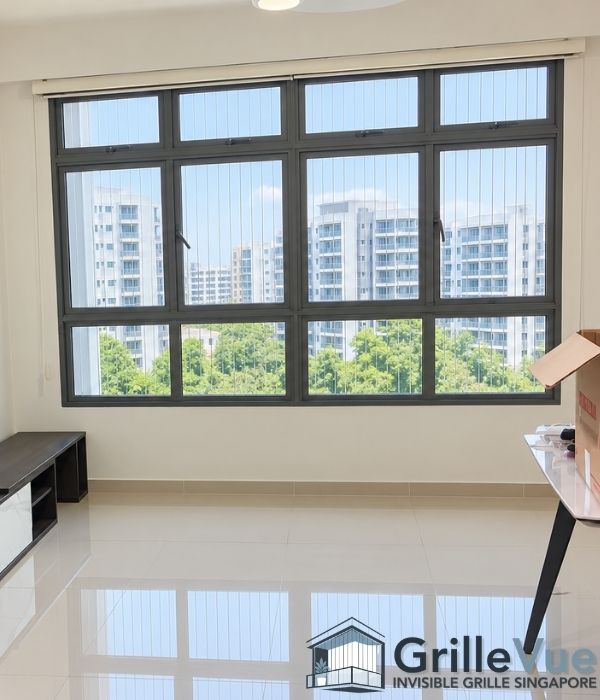
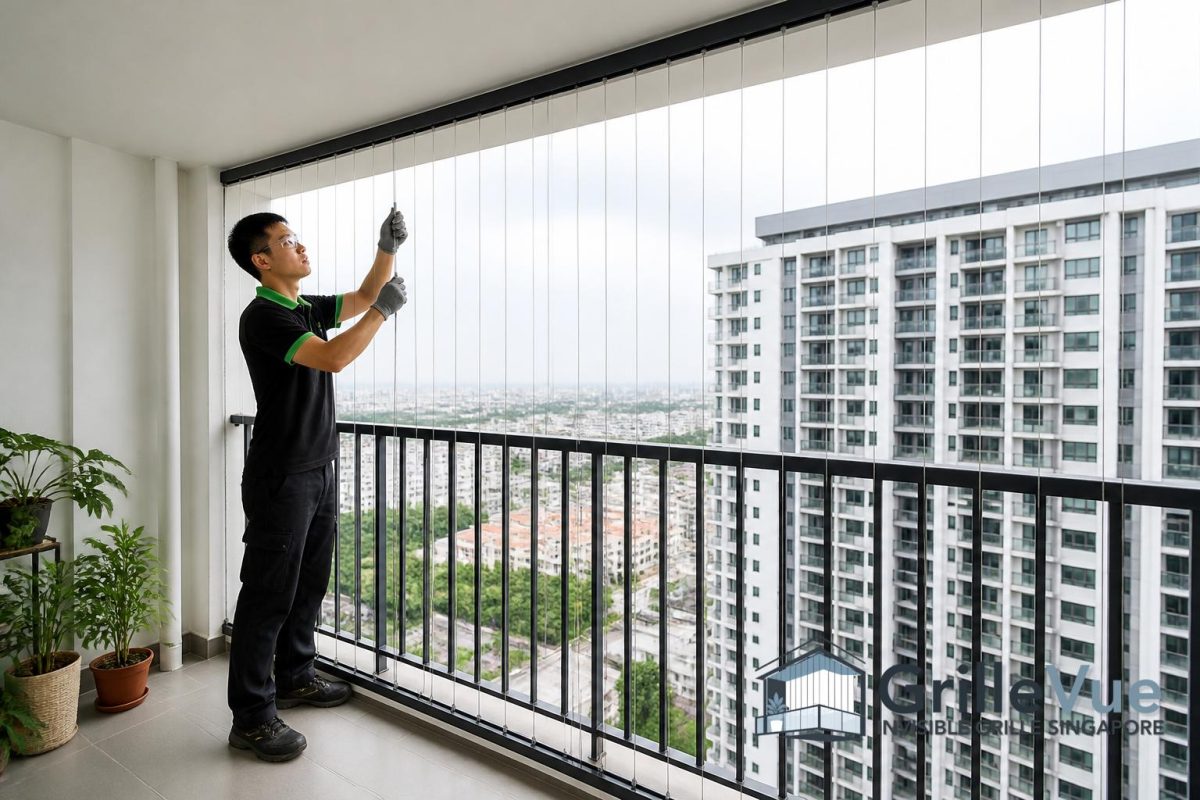
When the replacement is for an invisible window grille, the cables are threaded through the system and tightened across the opening. The aim is to create a neat set of fine metal cables that are secured at both ends and evenly tensioned. This tension is what keeps the cables stable, so it is one of the most important steps in the installation.
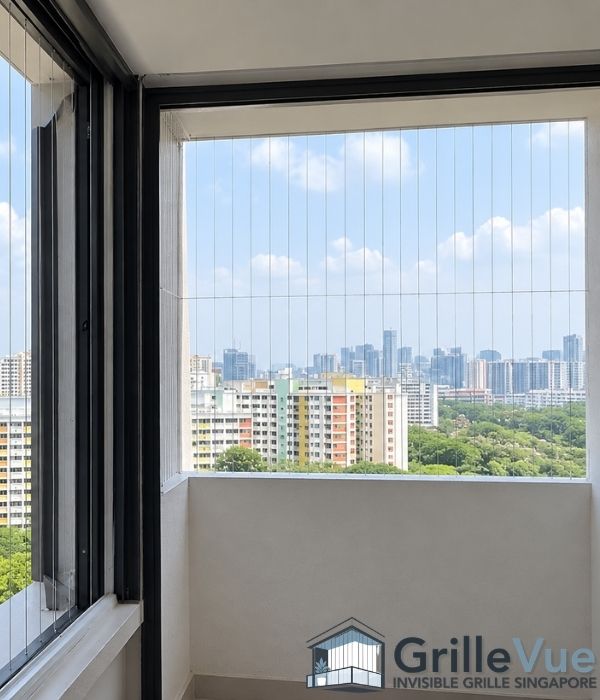
The installer then checks alignment, cable spacing and the quality of the anchoring. If the tension is not consistent, the grille may appear uneven or may not sit correctly across the opening. A proper installation also allows the window to function as intended, while keeping the grille visually discreet and less bulky than traditional bars.
What changes for balcony grilles and larger openings
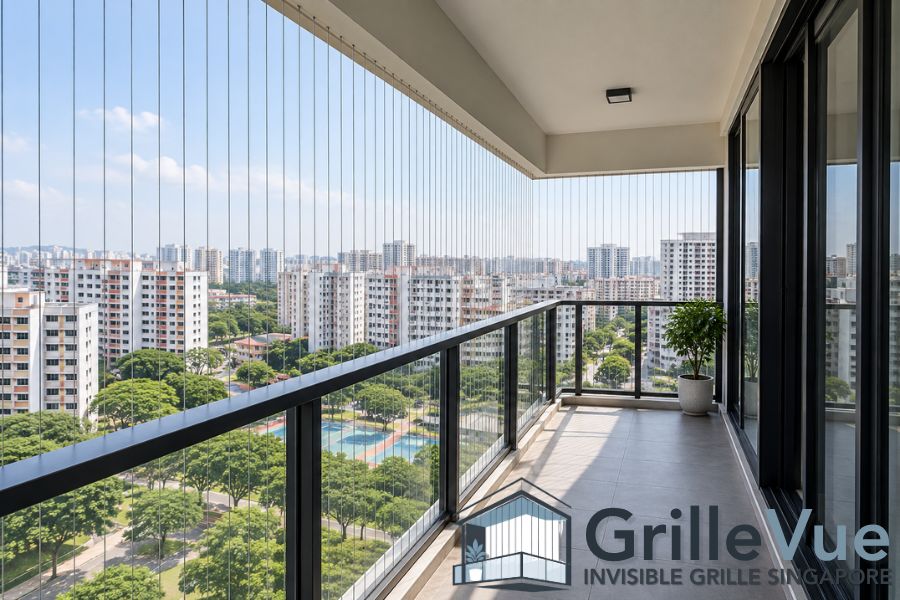
If the replacement involves a balcony grille rather than a window grille, the process becomes more about the size and use of the opening. Balcony areas may need longer spans, more anchor points and careful planning around access, sliding doors, railings or columns. The installer will assess how the grille interacts with the balcony opening and whether the fixing points are suitable for the specific layout.
An invisible balcony grille uses the same cable-based principle as a window grille, but the installation context is different. The installer must account for the larger opening and the way the balcony is used, especially if the area needs to remain visually open while still offering a safety barrier. The replacement process should respect the actual balcony structure rather than treating it like a standard window job.
Final checks, cleaning and aftercare
Once the new grille is installed, the installer performs final checks. For invisible grilles, this includes confirming cable tension, alignment and the security of all fixing points. For conventional grilles, it usually means checking the frame stability, the fit against the opening and the quality of all fastenings. The area is then cleaned up so that drilling dust and installation debris are removed.
Homeowners should also ask about routine maintenance. Invisible grilles generally need periodic visual checks for cable tension, loose fixings or surface wear around anchor points. Conventional window grilles may need rust checks, repainting or inspection of welded joints depending on the material. If the replacement was done on an HDB, condominium or landed-home opening, the owner should keep basic records of what was installed and where.
If you are considering a replacement for a specific window or balcony opening, WhatsApp GrilleVue Invisible Grille Singapore – Windows & Balconies with your property type, approximate opening dimensions, current fixture details and whether you want an invisible grille, conventional grille or balcony grille assessment.
Conclusion
The window grille replacement process in Singapore is mainly about matching the new grille to the exact opening, removing the old system safely and ensuring the new installation is fixed, aligned and suitable for the way the window or balcony is used. The steps differ depending on whether you are replacing a conventional grille, an invisible window grille or an invisible balcony grille, so the installer should always assess the opening first rather than using a one-size-fits-all approach. Accurate measurement, suitable anchor points and proper tension or fixing checks are what make the replacement work properly in practice.
Choose GrilleVue Invisible Grille Singapore – Windows & Balconies
GrilleVue Invisible Grille Singapore provides window, balcony, and outdoor space solutions for HDB, condominium, and landed homeowners across Singapore. Our invisible grille installations are designed to improve safety while maintaining a cleaner and more open appearance around the home. Depending on the area and layout, homeowners can choose from invisible window grille, invisible balcony grille, window grilles, and balcony grille solutions suited to different residential requirements.
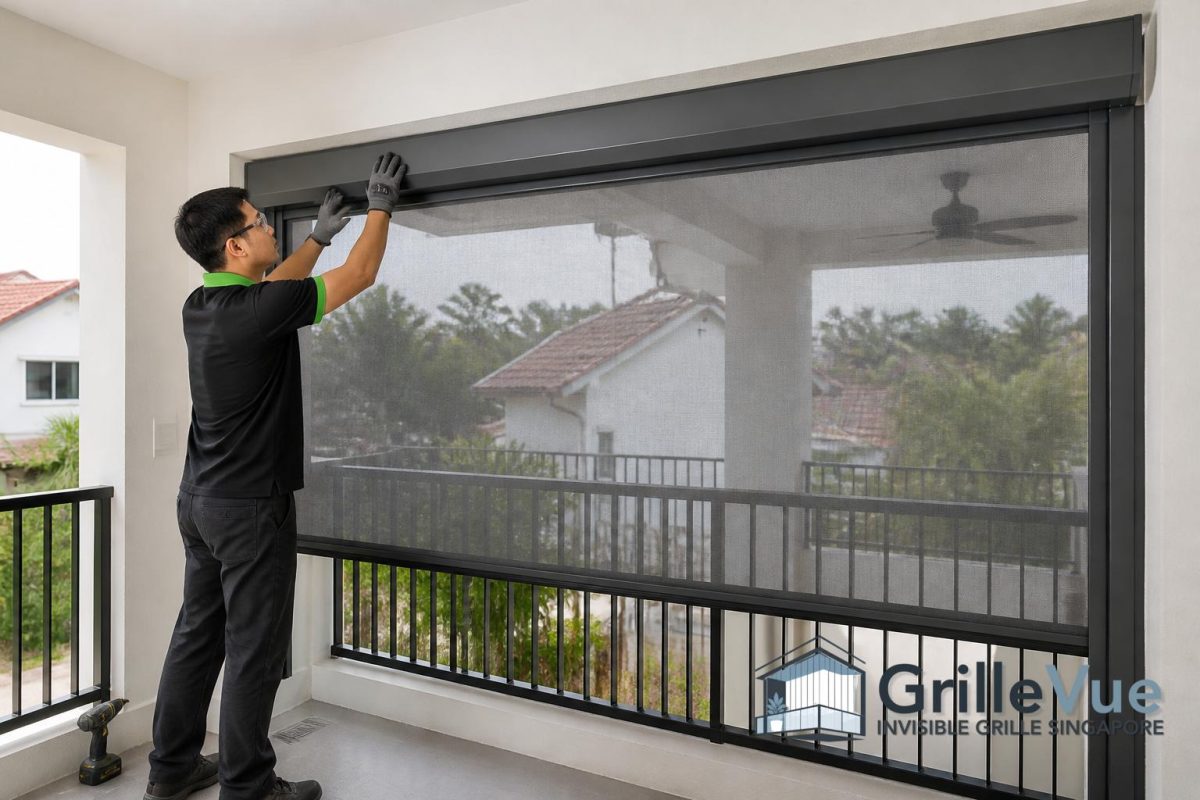
Our other services also include Zip Track and Zip Track blinds for balconies and other exposed areas where homeowners may want more flexibility in managing sun, rain, and everyday use of the space. Whether you are considering an invisible grill for balcony or practical zip track blinds, we can recommend a suitable installation based on the dimensions, layout, and intended use of the area.
If you are comparing grille and balcony solutions for your home, browse our blog for practical information or view our completed projects to see how different installations can be applied to Singapore homes. Contact us via WhatsApp at +65 8241 0032 to discuss your requirements and request a quotation.
Frequently Asked Questions
Can an invisible window grille replace an old conventional grille?
Yes, in many cases it can, provided the opening has suitable fixing areas and the new cable layout can be installed securely. The installer will first check the window frame, surrounding wall and available access before advising on the replacement approach.
Does replacing a balcony grille follow the same process as a window grille?
The overall process is similar, but balcony openings usually need a different assessment because they may be larger, more exposed and shaped differently. The installer will consider access, span, fixing positions and how the balcony is used.
What should I prepare before asking for a replacement quotation?
It helps to know your property type, the opening size if available, what grille is currently installed and whether you want an invisible grille or a conventional grille replacement. Photos of the opening and any existing damage can also make the assessment more accurate.