When planning an HDB renovation, the timing of invisible grille installation matters more than many homeowners expect. The cables need proper fixing points, the opening must be measured accurately, and the installer should be able to work around finishes that are not yet fully completed or are already in place. If the grilles are fitted at the right stage, it is usually easier to achieve neat alignment at the window or balcony opening and reduce the chance of damage to newly painted surfaces or built-in carpentry.
Why installation timing matters during an HDB renovation
Invisible grilles are not loose add-ons that can be fitted casually at any point. They rely on secure anchoring at the window frame, wall, ceiling line, or balcony structure, depending on the opening and the chosen layout. That means the installer needs clear access to the actual fixing areas, not just the visible surface finish.
In an HDB flat, renovation sequences often involve hacking, electrical work, plastering, painting, carpentry, and then final touch-ups. If invisible grilles are installed too early, they may be exposed to dust, impact, or repeated contractor movement. If they are left too late, skirting, pelmets, curtains, or built-in cupboards may obstruct the fixing points and make access more awkward.
Best stage for invisible grille installation
As a general rule, invisible grilles are best installed after the main structural and wet works are completed, but before final touch-ups that could affect the anchor points. This usually means after hacking, wall repairs, and major carpentry work, yet before the final cleaning and handover. At this stage, the installer can work on a stable opening without interfering with unfinished construction.
For a window opening, it is helpful if the frame and surrounding wall are already finalised so measurements reflect the actual finished condition. For a balcony grille, the access route, railing position, ceiling line, and any planned balcony screening should be confirmed first. If other features such as curtain pelmets, casing, or built-in ledges are being installed, these should be coordinated so they do not block the cable run or fixing points.
How the opening should be prepared before measurement
Before measurement, the opening should be close to its final form. The installer needs to see the true dimensions of the HDB window or balcony area, including any protrusions, uneven plaster edges, or nearby fixtures that could affect the line of the cables. Even a small change in wall finish can alter the usable fixing location.
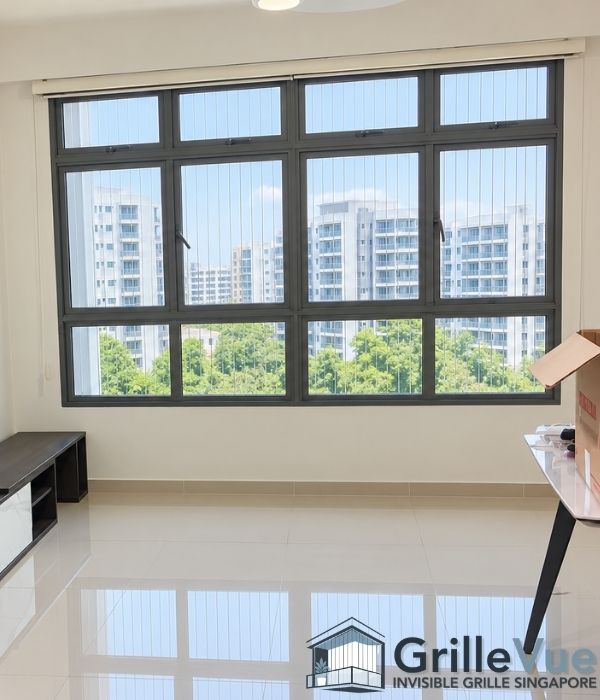
Homeowners should also check whether existing grilles, nets, curtain tracks, or old accessories have already been removed. If the installation is for an invisible window grille, the window type and opening style matter because the cable arrangement must suit the frame and leave the window workable. If it is for an invisible balcony grille, the installer should inspect the balcony access and any structural elements that may affect the spacing and tensioning of the cables.
What happens during installation of invisible grilles
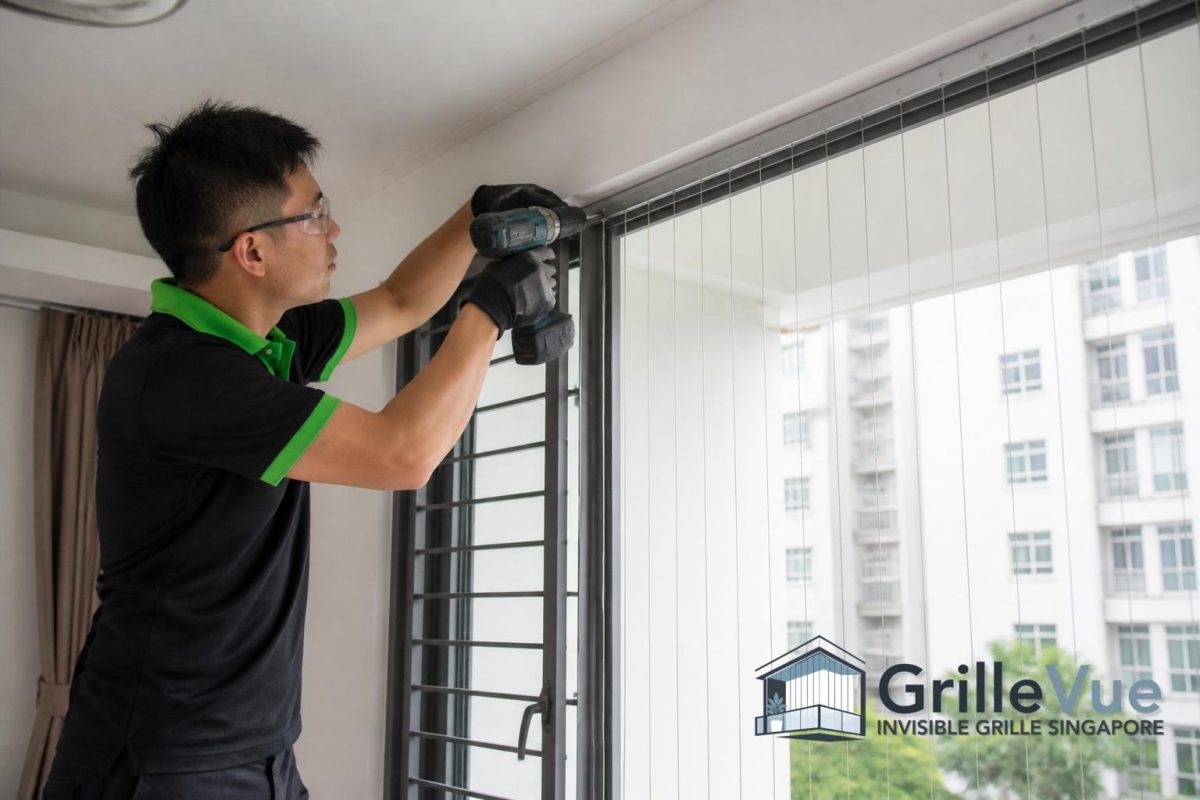
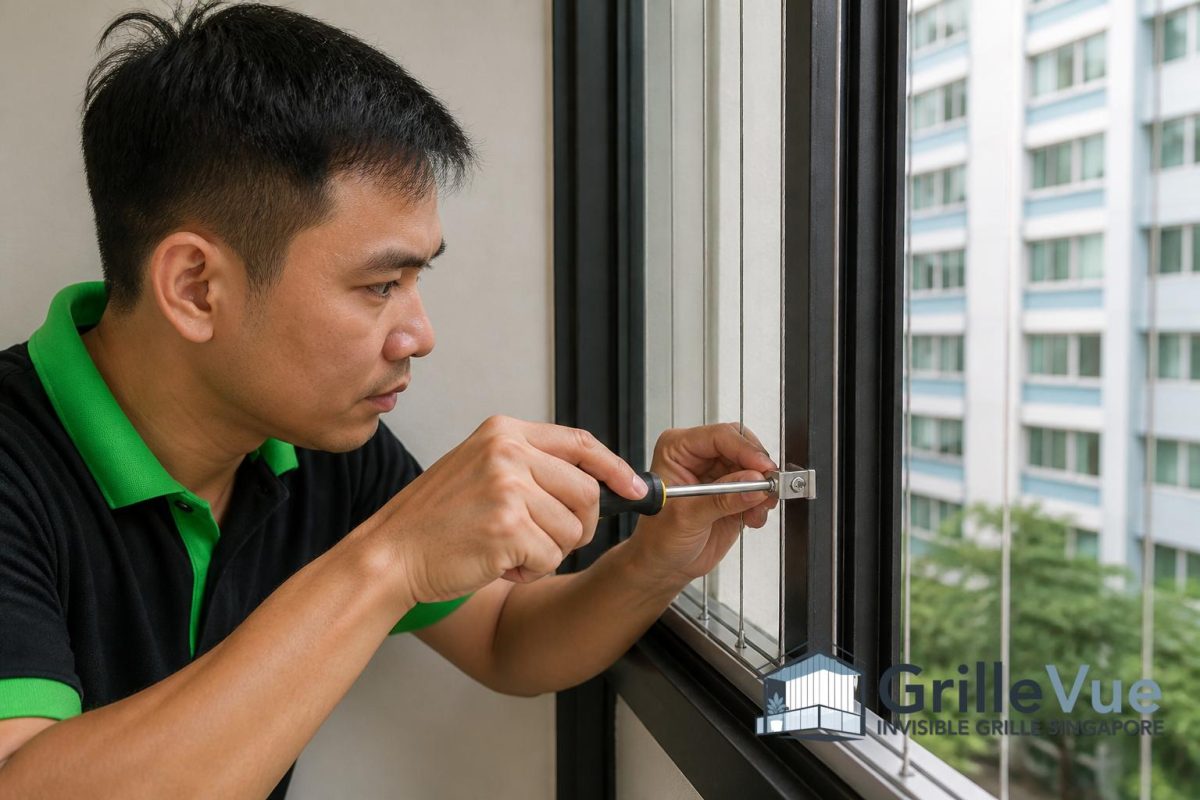
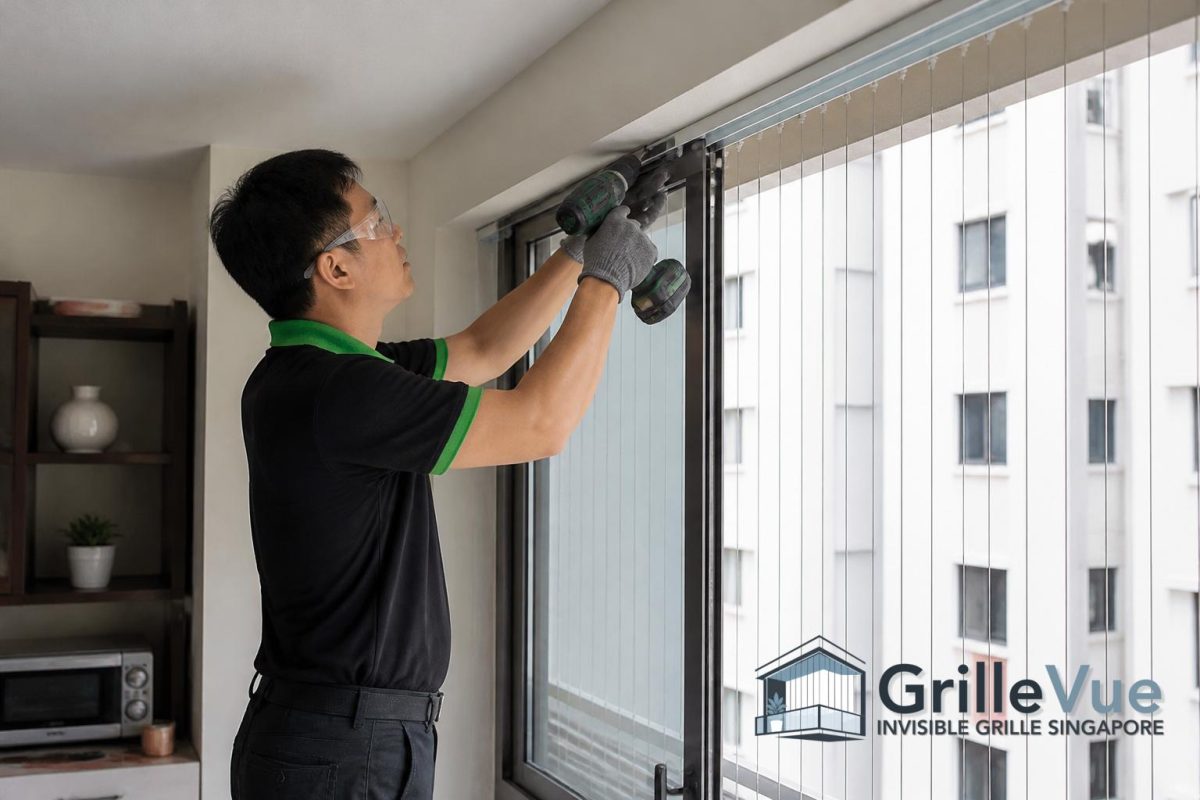
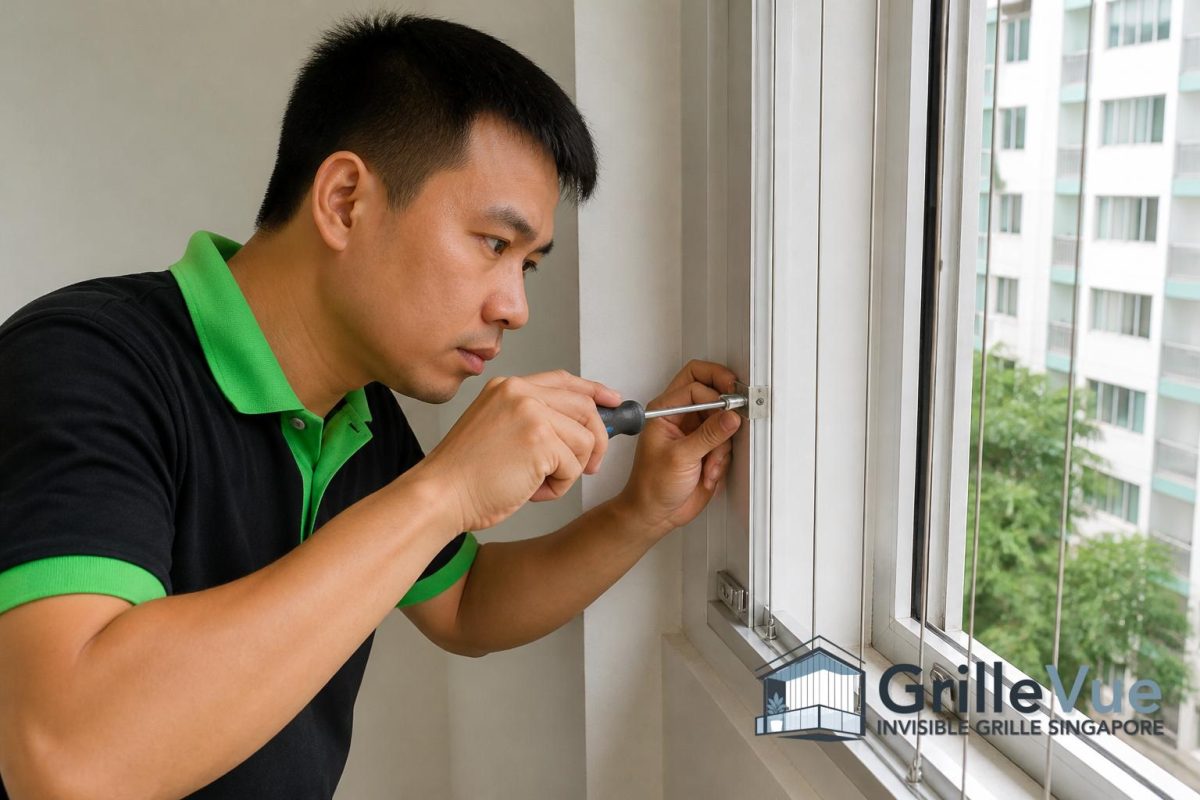
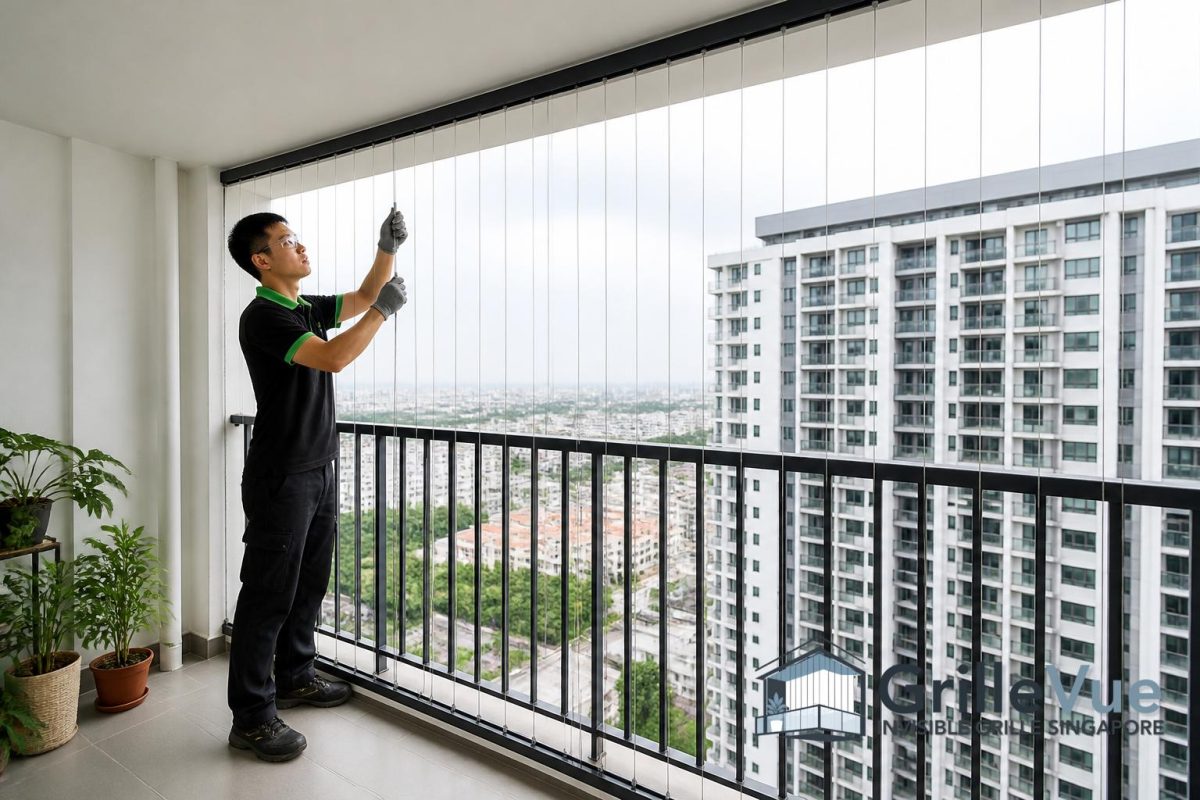
Invisible grilles are made of fine tensioned metal safety cables stretched across the opening and fixed at secure points. The installer will mark the positions, drill where needed, set the anchors, and run the cables across the window or balcony opening. The aim is to create a neat, low-visibility barrier while keeping the structure taut and orderly.
After the cables are fitted, tension checks are important. The installer should inspect whether each cable is evenly tightened, properly seated, and aligned across the opening. This is especially relevant for larger balcony spans or wider window openings, where consistent tension helps the grille look neat and behave as intended. Homeowners should ask how cable tension will be checked and whether the installer will re-adjust it if needed after settling.
Window grilles versus balcony grilles during renovation
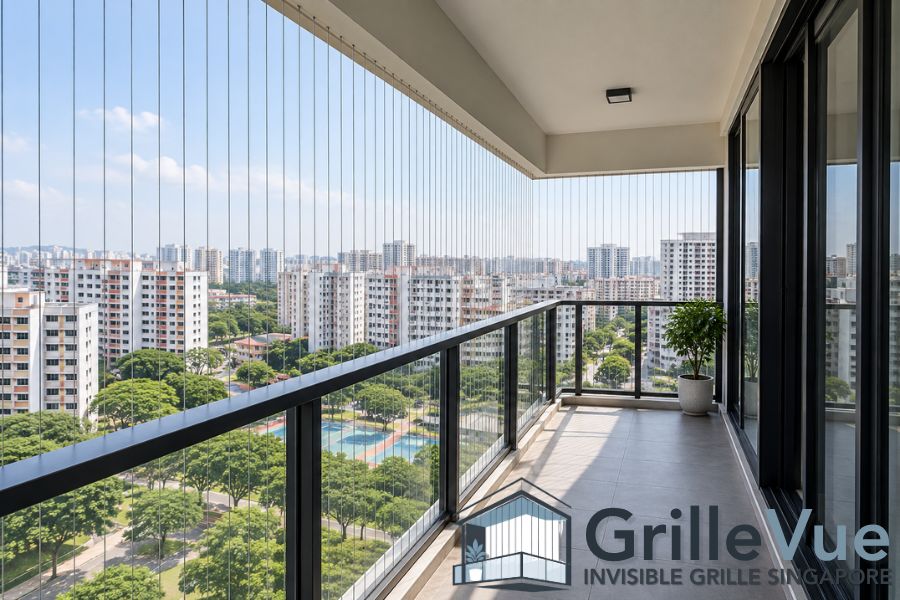
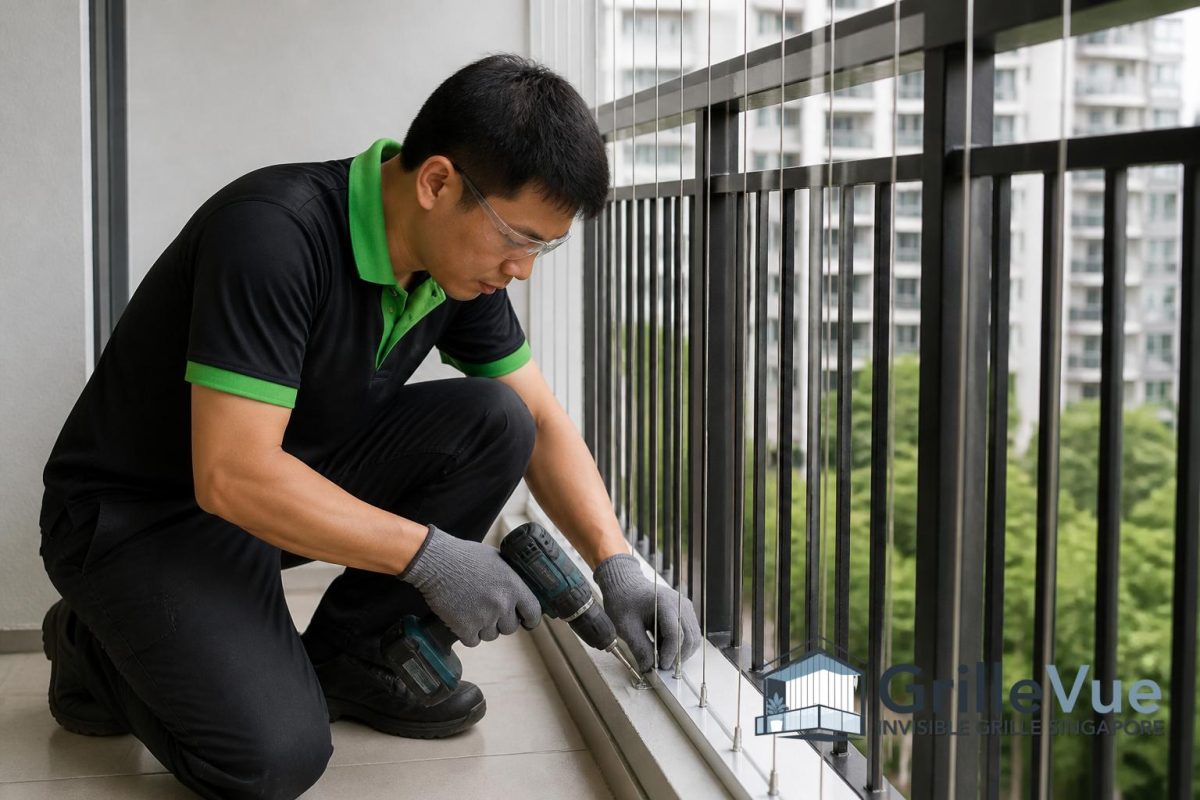
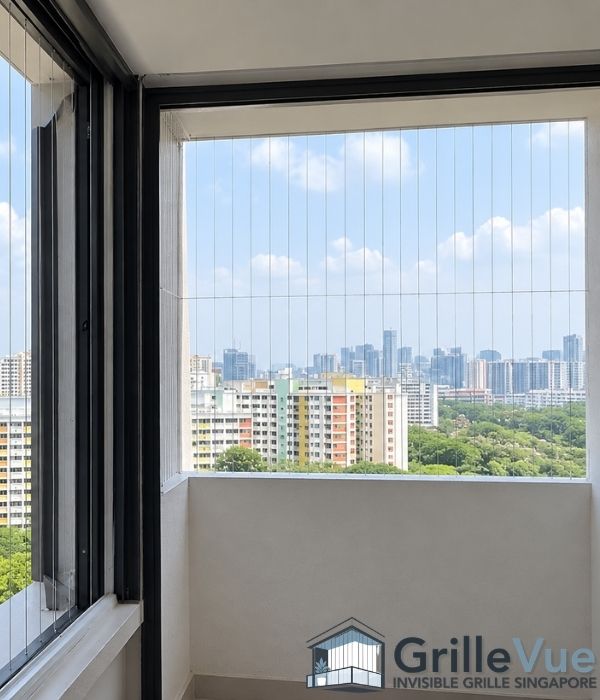
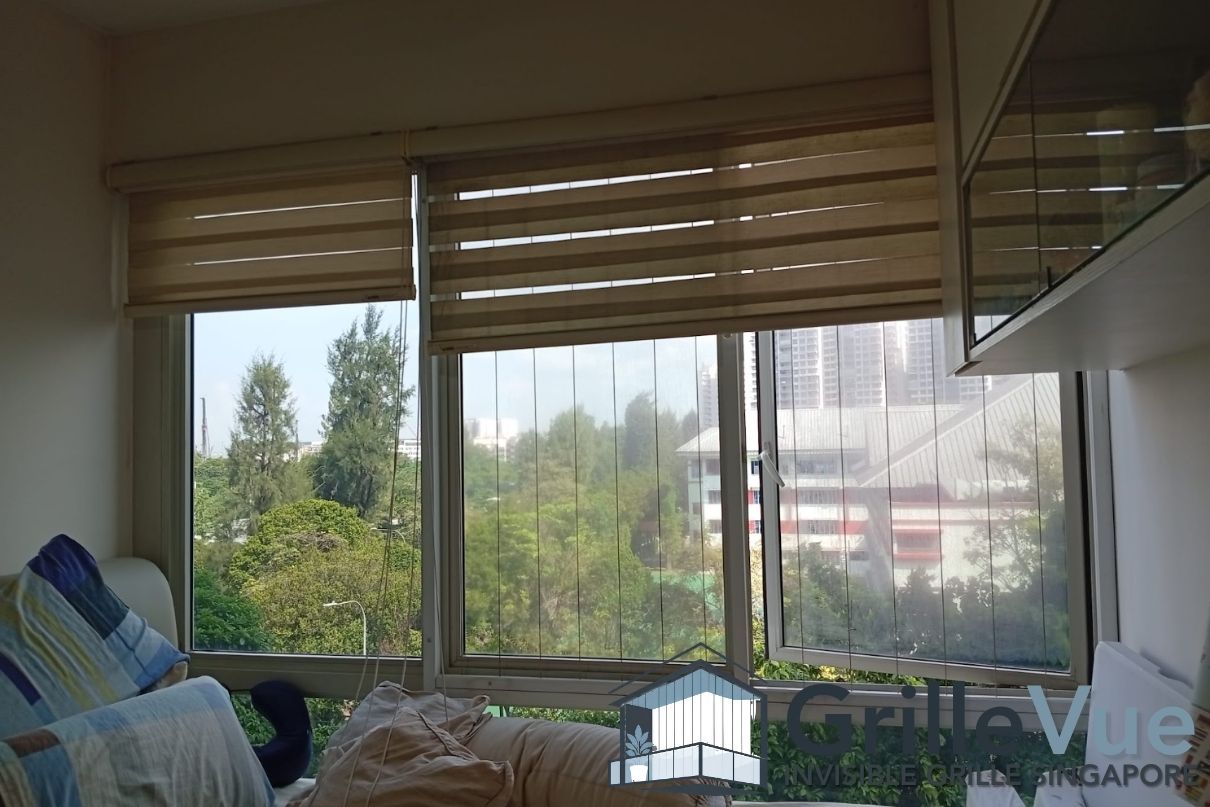
Invisible window grilles and invisible balcony grilles are not installed in exactly the same way, even though both use tensioned cables. Window openings often have tighter framing constraints and may need more careful attention around casement windows, sliding panels, or surrounding carpentry. Balcony openings usually involve wider spans and greater exposure, so the fixing points and access conditions may differ.
For a balcony, the question is not only how the cables will be installed, but also how the grille will sit within the available opening without interfering with daily use. Homeowners should clarify whether the layout is intended to preserve access to the balcony, reduce visual obstruction, or work around existing balcony fixtures. If the balcony is being renovated together with flooring or screening, the invisible balcony grille should be scheduled after the structural and surface work that could affect the final opening.
Working around other renovation items
Invisible grille installation should be coordinated with carpentry, painting, curtain installation, and any window replacement work. If the grilles are fitted too soon, drill marks or dust can affect fresh paint and finished surfaces. If they are fitted too late, newly built cabinetry or decorative frames may block the installer’s access to the intended fixing line.
For HDB renovations, it is sensible to tell the installer what other works are happening around the same area. For example, if a window grille installation is planned near a feature wall or wardrobe, the contractor should know the final thickness and edge position. This helps avoid conflict between the grille’s anchor points and the finished interior design.
What homeowners should ask before booking
When speaking with an installer, ask what the measurement will be based on, which side or surface will carry the fixing points, and whether any existing window or balcony fixtures may affect the layout. It is also useful to ask how the cables will be tensioned, whether access will be required from inside or outside, and what preparation the homeowner should complete beforehand.
If your HDB unit has a special layout, mention whether the project involves a window opening, a balcony opening, or both. Provide approximate dimensions, note any built-in furniture already planned nearby, and share photos of the opening if possible. That makes it easier to assess whether the installation should happen after carpentry, after painting, or just before final touch-ups.
If you would like help checking the right timing for your HDB window or balcony opening, WhatsApp GrilleVue Invisible Grille Singapore – Windows & Balconies with your property type, approximate dimensions, current fixtures and preferred product so they can advise on the next step: Message on WhatsApp.
Conclusion
For most HDB renovation projects, invisible grilles are best installed after the main messy works and before final touch-ups, once the window or balcony opening is close to its finished condition. This gives the installer better access to the fixing points, helps the cables align properly, and reduces the risk of damaging newly completed surfaces. The key is to coordinate the timing with the rest of the renovation so the grille fits the actual opening, not an assumed one.
Choose GrilleVue Invisible Grille Singapore – Windows & Balconies
GrilleVue Invisible Grille Singapore specialises in residential grille and balcony solutions that help homeowners improve safety and make better use of windows and outdoor areas without unnecessarily enclosing the space. We provide invisible grille, invisible window grille, invisible balcony grille, window grilles, and balcony grille installations for HDB flats, condominiums, and landed properties, with each solution planned around the opening, layout, and requirements of the home.
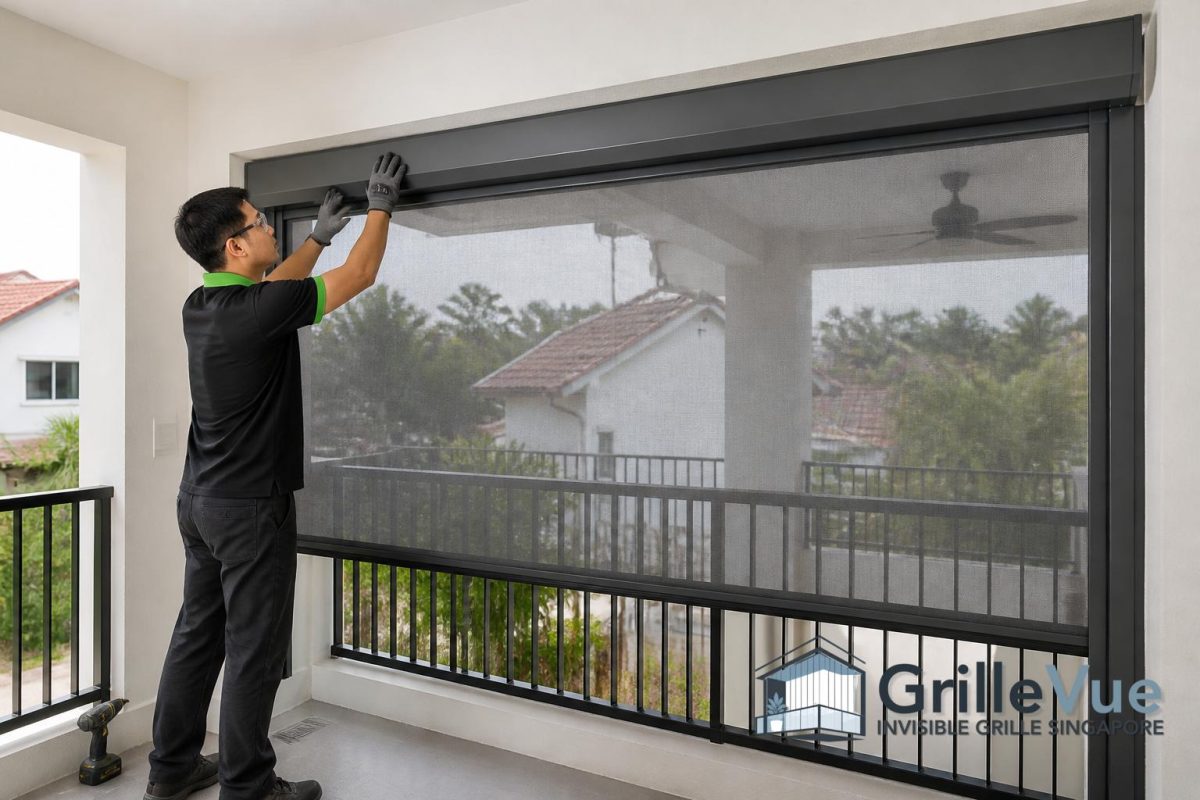
Our other services also cover Zip Track and Zip Track blinds for homeowners who want greater control over balcony and outdoor areas. An invisible grill for the balcony can help retain visibility while adding a safety barrier, while zip track blinds can provide a more sheltered and adaptable space depending on weather conditions and daily use.
For more information on suitable window and balcony solutions, explore our blog for useful guides or browse our completed projects for examples of previous installations. Contact us via WhatsApp at +65 8241 0032 to discuss your home, installation needs, and available options.
Frequently Asked Questions
Should invisible grilles be installed before or after painting?
Usually after the major painting work, but before the final clean-up and handover. That way, the installer can work on a more stable opening, and the risk of marking fresh paint is reduced. If touch-ups are still expected, it is worth coordinating the sequence carefully with the renovation contractor.
Can invisible grilles be installed after carpentry is finished?
Yes, and that is often practical, provided the carpentry does not block the intended fixing areas. The installer needs clear access to the window frame, wall, or balcony structure where the cables will be anchored. It is best to confirm the final carpentry dimensions before the grille measurement is taken.
Does an invisible balcony grille need the same timing as an invisible window grille?
Not always. A balcony grille often involves a wider opening and different access conditions, so the sequence may depend on whether the balcony is also receiving flooring, screening, or other finishing works. The safest approach is to schedule measurement only after the balcony opening is close to its final state.