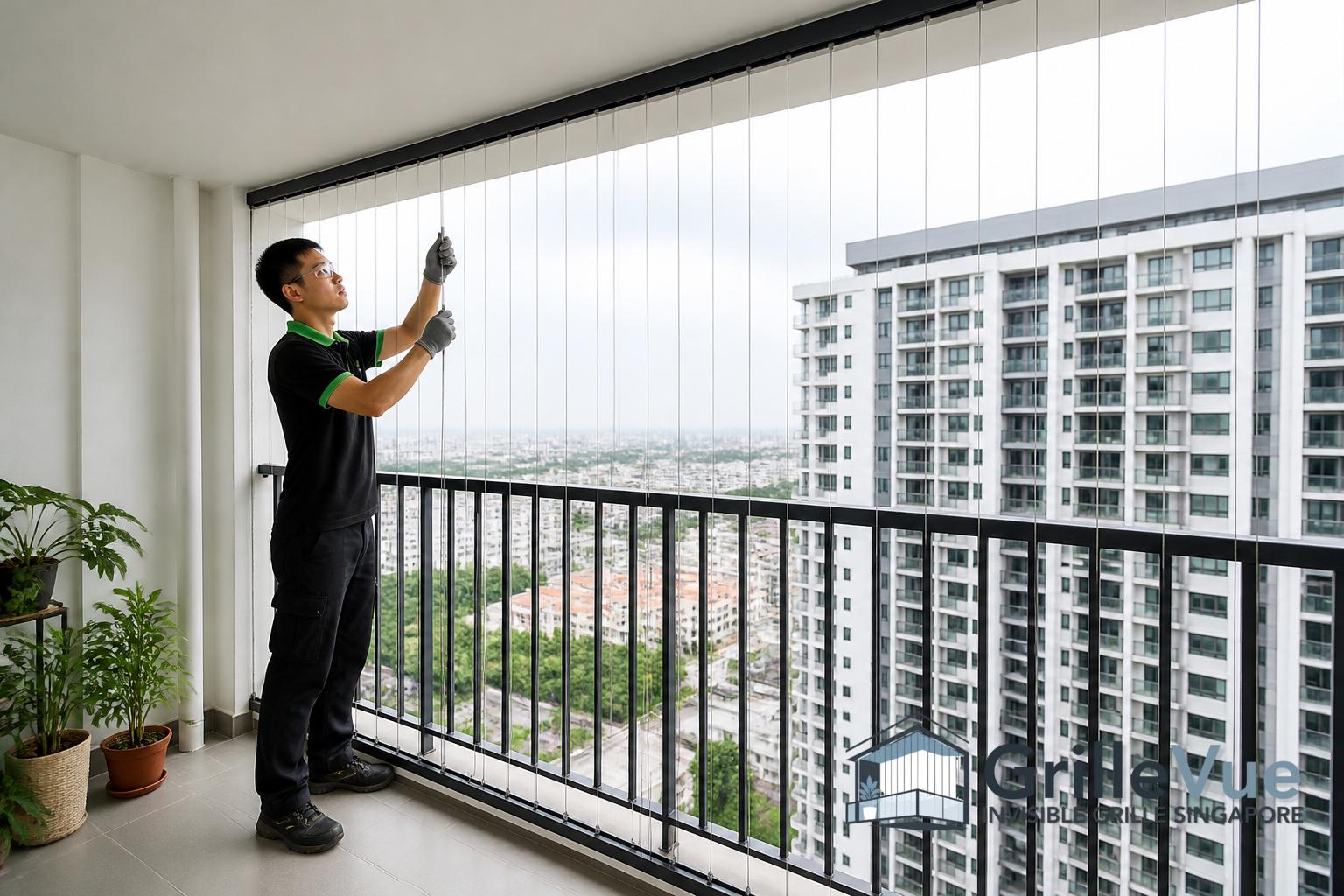
Invisible balcony grilles in Singapore are usually installed as a tensioned cable safety system, not as a rigid bar grille. The method depends on the balcony’s structure, access, and the fixing points available around the opening. For homeowners comparing options, the key is understanding what is actually anchored, how the cables are set across the balcony opening, and what checks are done to make sure the finished installation sits neatly and performs as intended.
What “installation method” means for an invisible balcony grille
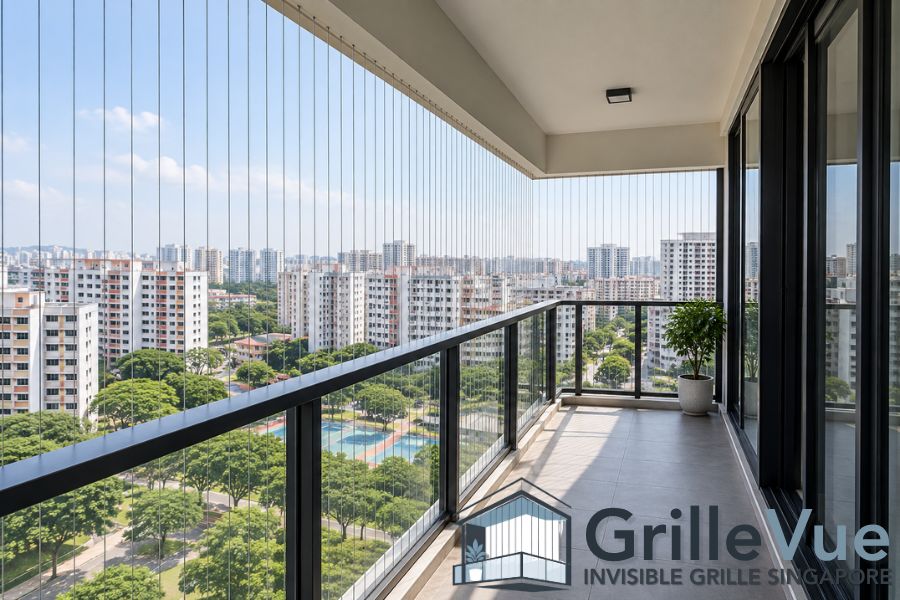
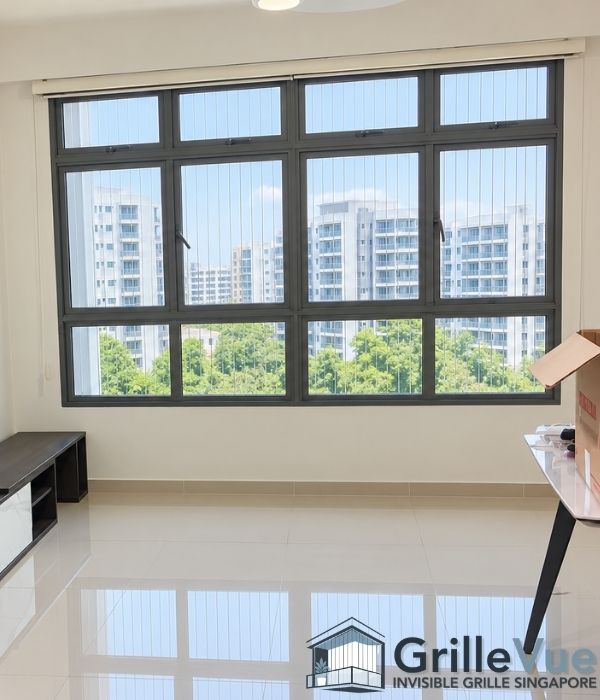
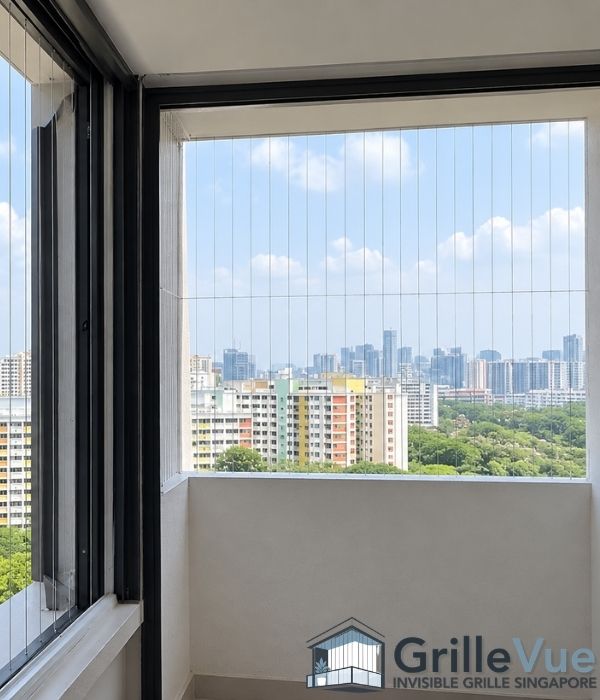
For an invisible balcony grille, the installer is typically working with fine stainless steel or metal safety cables stretched across the balcony opening. These cables are fixed to secure points on the surrounding structure, such as side walls, concrete edges, columns, or suitable framing elements, depending on the property layout. The system is designed to keep the view as open as possible while creating a safety barrier across the balcony space.
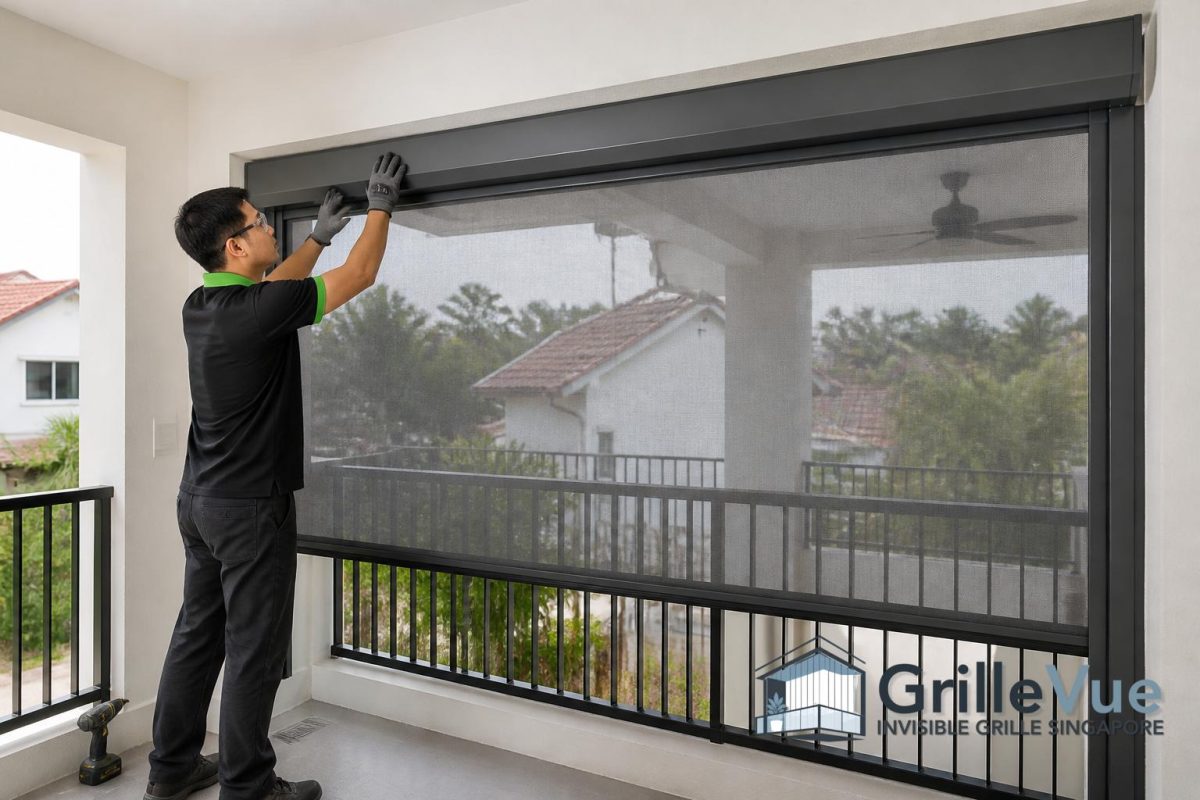
This is different from a conventional metal grille, which uses solid bars or thicker frames. It is also different from a Zip Track or Ziptrak-style blind, which uses a fabric screen moving within side tracks. An invisible balcony grille does not use fabric, tracks for a moving blind, or a motorised blind mechanism. Its installation is centred on accurate positioning of fixing points and proper cable tension.
Site assessment comes first
Before installation, the balcony is assessed to see where the grille can be anchored safely. In Singapore, balcony layouts vary widely across HDB flats, condominiums and landed homes, so installers need to check the opening width, height, access route, and whether the balcony has suitable solid edges or columns for fixing. This step matters because the grille must be aligned to the actual opening rather than guessed from drawings alone.
A proper site check also helps identify practical issues such as protruding light fittings, drainage details, sliding doors, or existing balcony finishes. These can affect where cable lines run and how neat the finished installation will look. For a balcony, the installer usually needs to consider the edge condition of the opening and the possibility of working around railings, planter boxes or architectural features.
How the cables are fixed across the balcony opening
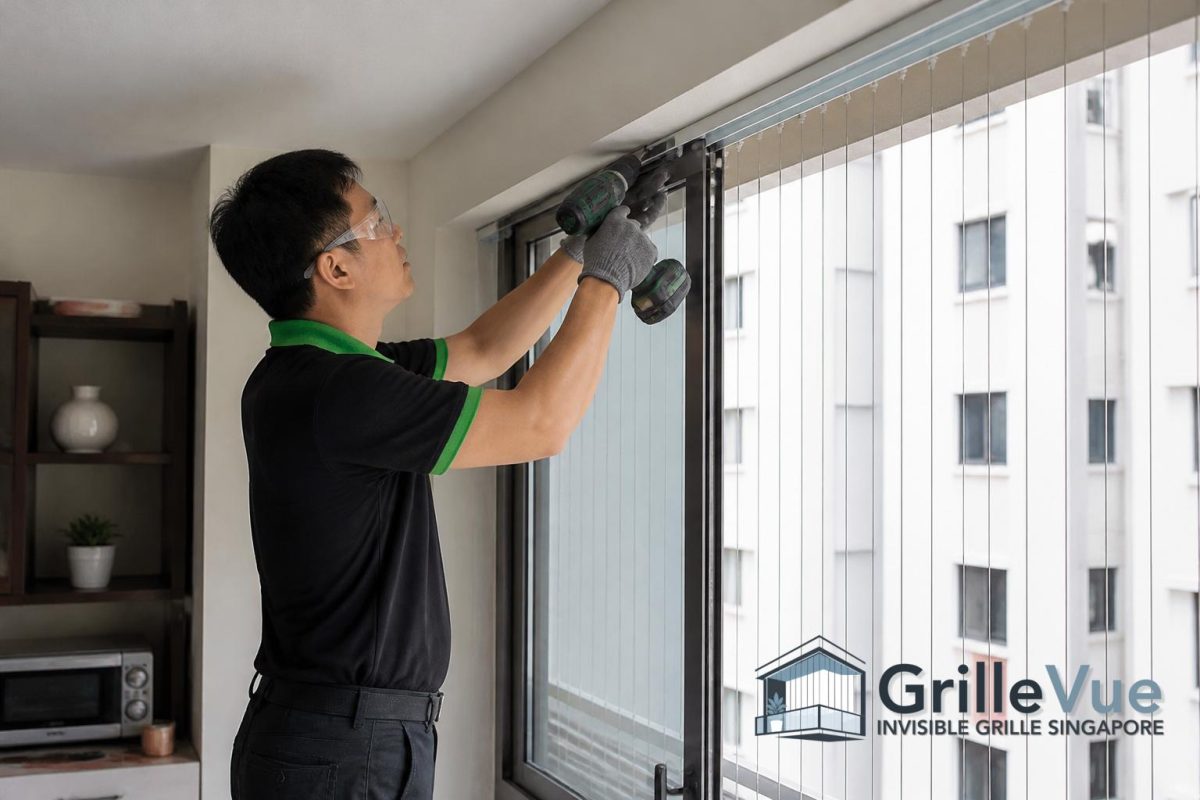
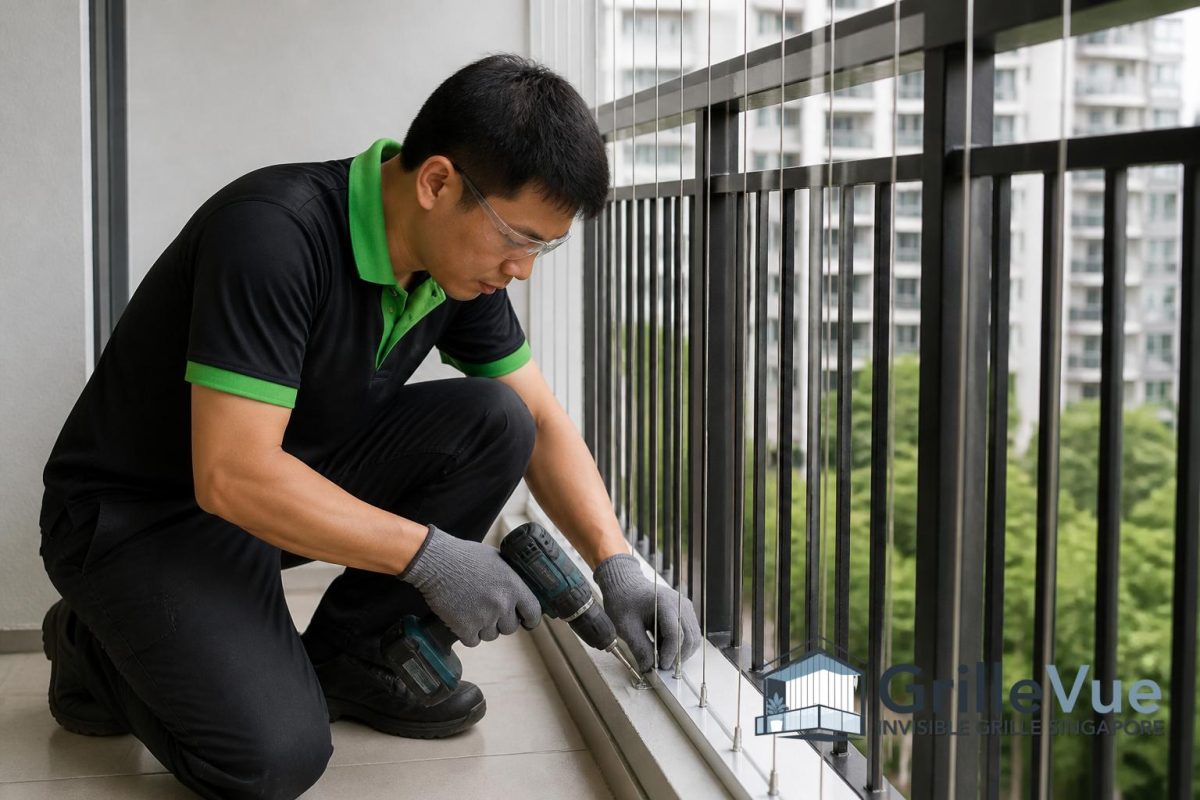
The basic installation method is straightforward in concept: fixing points are created at the sides or surrounding structure, then the safety cables are run across the balcony opening in evenly spaced lines. The spacing and cable layout are planned according to the opening dimensions and the intended coverage area. The aim is to secure the opening without blocking the view more than necessary.
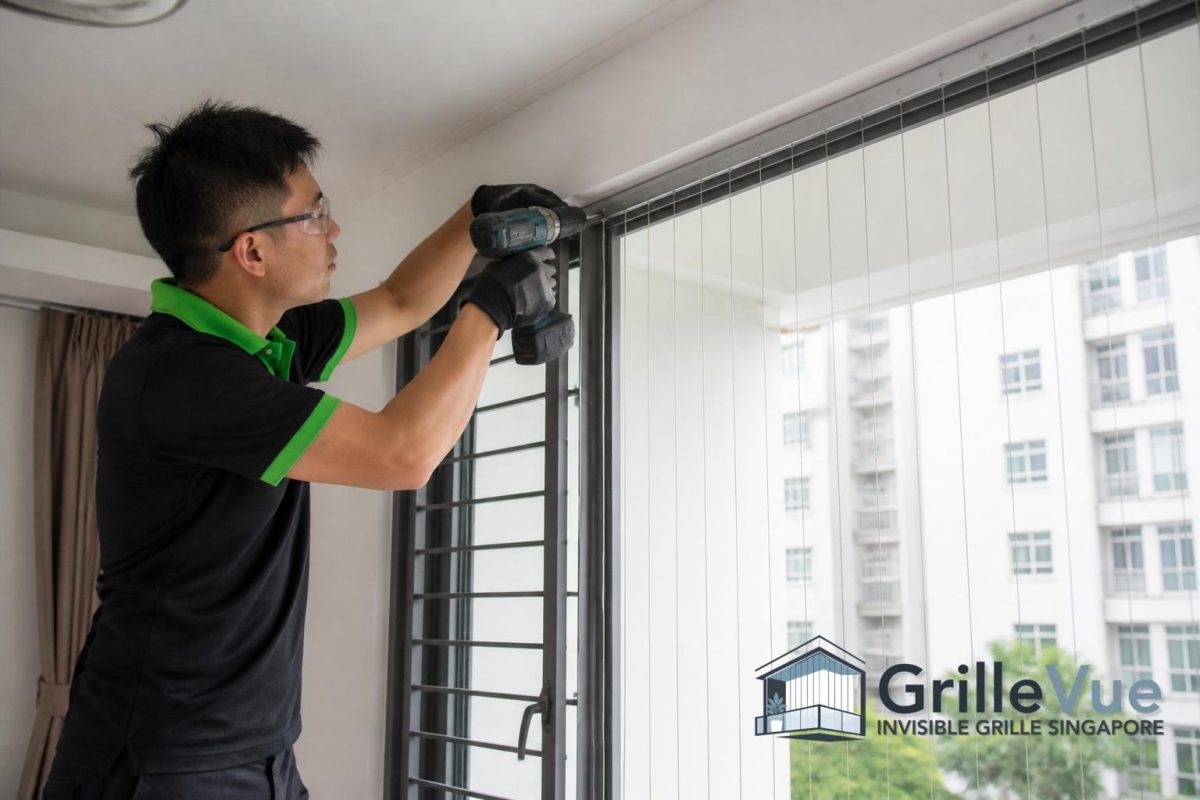
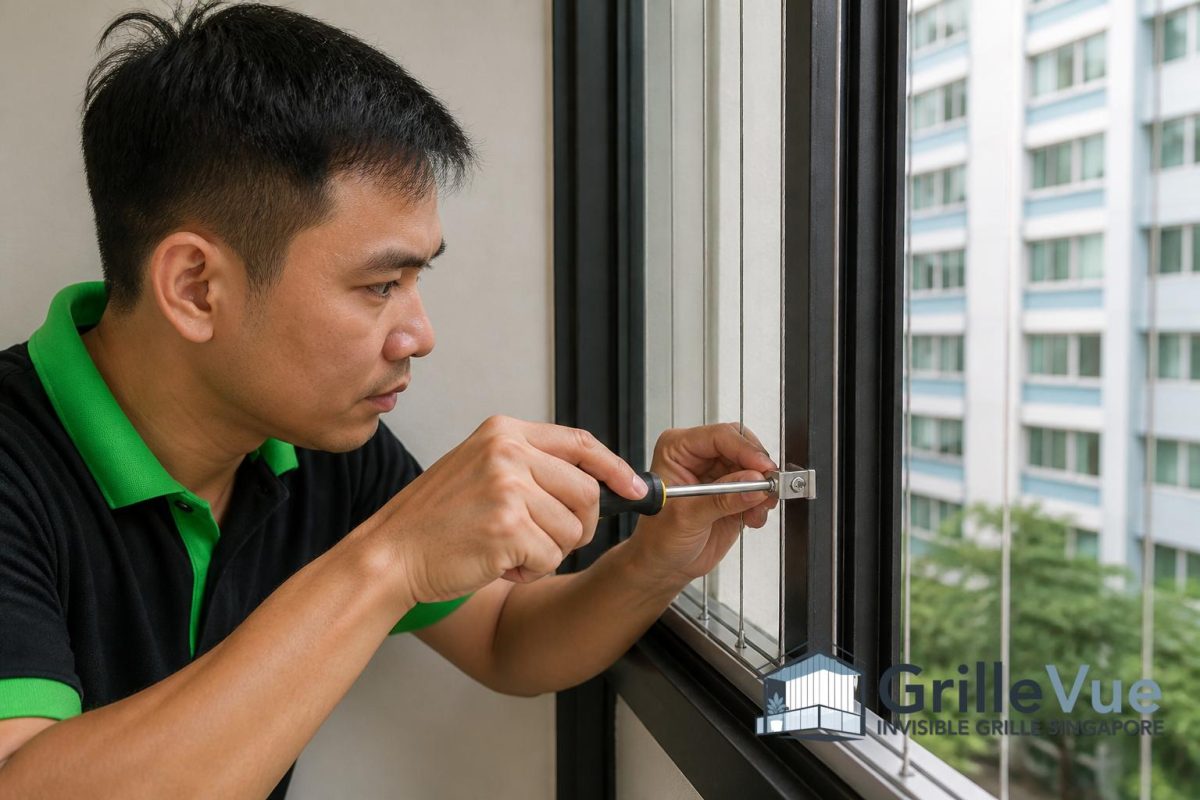
In many cases, the installer will use anchor points that are suitable for the balcony structure, then secure the cable ends and make fine adjustments so the lines are straight and evenly aligned. The visual result should appear orderly rather than loose or uneven. Because the product depends on tension rather than a rigid frame, the quality of the fixing points and alignment is essential to the finished appearance.
Tension checks are a key part of the method
Once the cables are in place, the installer checks cable tension. This is one of the most important parts of the installation method because the grille’s performance relies on the cables being taut and properly set. Loose cables can look untidy and may not function as intended, while over-tightening can place unnecessary stress on the fixings or surrounding structure.
After the initial tensioning, installers typically inspect the straightness of each line, the consistency across the whole balcony opening, and the stability of the end fixings. If the balcony has a wider span, this step becomes even more important, as the cables need to remain visually uniform across the full opening. Good installation is not only about fastening the system; it is about checking that everything stays aligned after adjustment.
Balcony-specific considerations in Singapore homes
Balcony installations are not the same as window grille installations. A balcony opening is usually larger, more exposed, and often used as a semi-outdoor living area. That means access, fixing surfaces and the overall shape of the opening need extra attention. In Singapore condos, for example, the balcony may include side walls or columns that are suitable for anchoring, while landed homes may have broader outdoor openings that require a different cable layout.
Because balconies are open to more light, air movement and weather exposure, homeowners often choose invisible balcony grilles to preserve the open feel without turning the space into a visually heavy enclosure. Still, it is important to remember that an invisible grille is a cable safety barrier, not a weatherproof screen. It does not function like an outdoor blind and should not be expected to block rain or wind completely.
What to ask the installer before work begins
Homeowners should ask how the balcony opening will be measured, where the fixing points will go, and whether the structure is suitable for the proposed cable layout. It is also sensible to ask what access is needed on the day of installation, especially if the balcony is high up, partially furnished, or difficult to reach. These questions help avoid surprises and make it easier to plan around the work.
If you are comparing invisible balcony grille options, ask whether the installer will explain cable spacing, fixing method and tension checks before starting. For homes that already have balcony railings or other fixtures, it is worth confirming how the grille will be integrated around those elements. The goal is a secure, neat installation that suits the actual balcony opening rather than a generic one-size-fits-all approach.
How this differs from Zip Track blinds and other balcony screening
It is easy to confuse invisible balcony grilles with Zip Track, Ziptrak or zip blind systems because both are used in balcony areas. However, the mechanisms are entirely different. Invisible grilles use tensioned cables across the opening, while Zip Track blinds use guided fabric panels, side tracks, a headbox and a bottom bar. The latter is designed more for screening, shade and rain protection, depending on fabric choice and site conditions.
If your main need is safety with an unobstructed view, the invisible balcony grille method is usually the relevant one. If your priority is glare reduction, outdoor screening or a more enclosed balcony feel, then a Zip Track system may be the better discussion. The important thing is not to mix the two, because they are installed differently and serve different purposes.
If you would like advice on the most suitable installation method for your balcony opening, WhatsApp GrilleVue Invisible Grille Singapore – Windows & Balconies with your property type, approximate dimensions, current fixtures and access details for an assessment and quotation.
Conclusion
The installation method for an invisible balcony grille in Singapore is based on fixed anchor points and properly tensioned safety cables across the balcony opening. The quality of the work depends on accurate measurement, suitable structural fixing, neat alignment and final tension checks. For balcony spaces in HDB flats, condominiums and landed homes, the right approach is to match the cable layout to the actual opening and the surrounding structure, rather than treating every balcony the same.
When comparing options, it helps to keep invisible grilles distinct from conventional grilles and from Zip Track blind systems. Each product serves a different purpose, and each is installed differently. For homeowners who want to keep the view open while adding a safety barrier, understanding the installation method is the best starting point.
Choose GrilleVue Invisible Grille Singapore – Windows & Balconies
GrilleVue Invisible Grille Singapore specialises in residential grille and balcony solutions that help homeowners improve safety and make better use of windows and outdoor areas without unnecessarily enclosing the space. We provide invisible grille, invisible window grille, invisible balcony grille, window grilles, and balcony grille installations for HDB flats, condominiums, and landed properties, with each solution planned around the opening, layout, and requirements of the home.
Our other services also cover Zip Track and Zip Track blinds for homeowners who want greater control over balcony and outdoor areas. An invisible grill for the balcony can help retain visibility while adding a safety barrier, while zip track blinds can provide a more sheltered and adaptable space depending on weather conditions and daily use.
For more information on suitable window and balcony solutions, explore our blog for useful guides or browse our completed projects for examples of previous installations. Contact us via WhatsApp at +65 8241 0032 to discuss your home, installation needs, and available options.
Frequently Asked Questions
Is an invisible balcony grille installed with a frame or with cables?
It is typically installed with tensioned metal cables anchored to suitable fixing points around the balcony opening. The system is not a rigid bar grille and does not rely on fabric tracks like a Zip Track blind.
Can an invisible balcony grille be used on any balcony opening?
Not every balcony is the same, so the installer needs to assess the structure, access and available fixing points first. The method must suit the actual opening, whether it is in an HDB flat, condominium or landed home.
Does an invisible balcony grille provide weather protection?
No, it should be treated primarily as a safety barrier that preserves the view. It does not provide the same screening or weather protection as a Zip Track blind, and performance will depend on the product type and installation conditions.