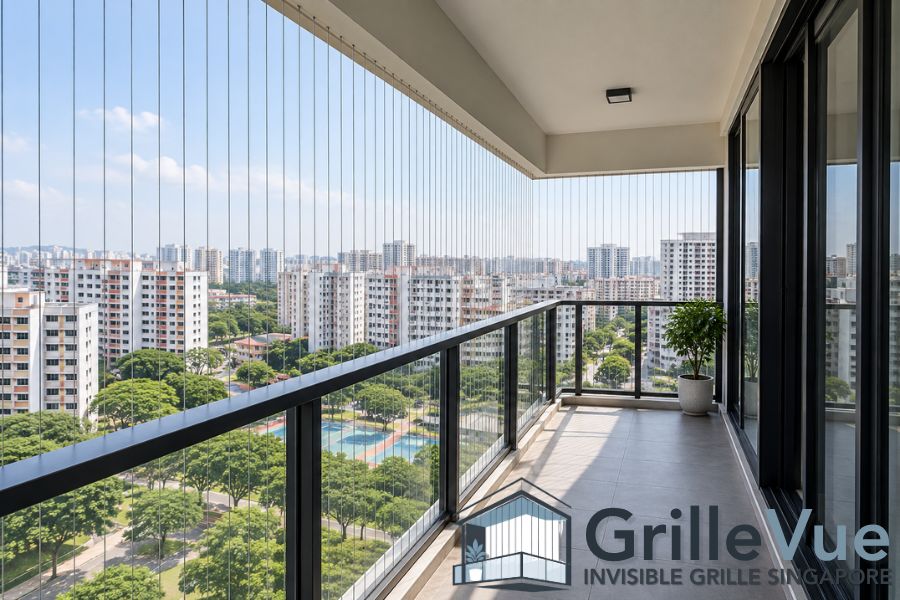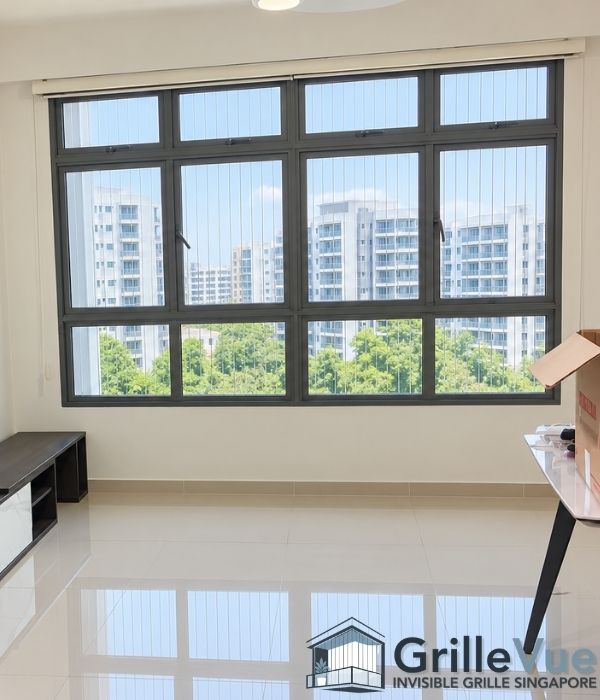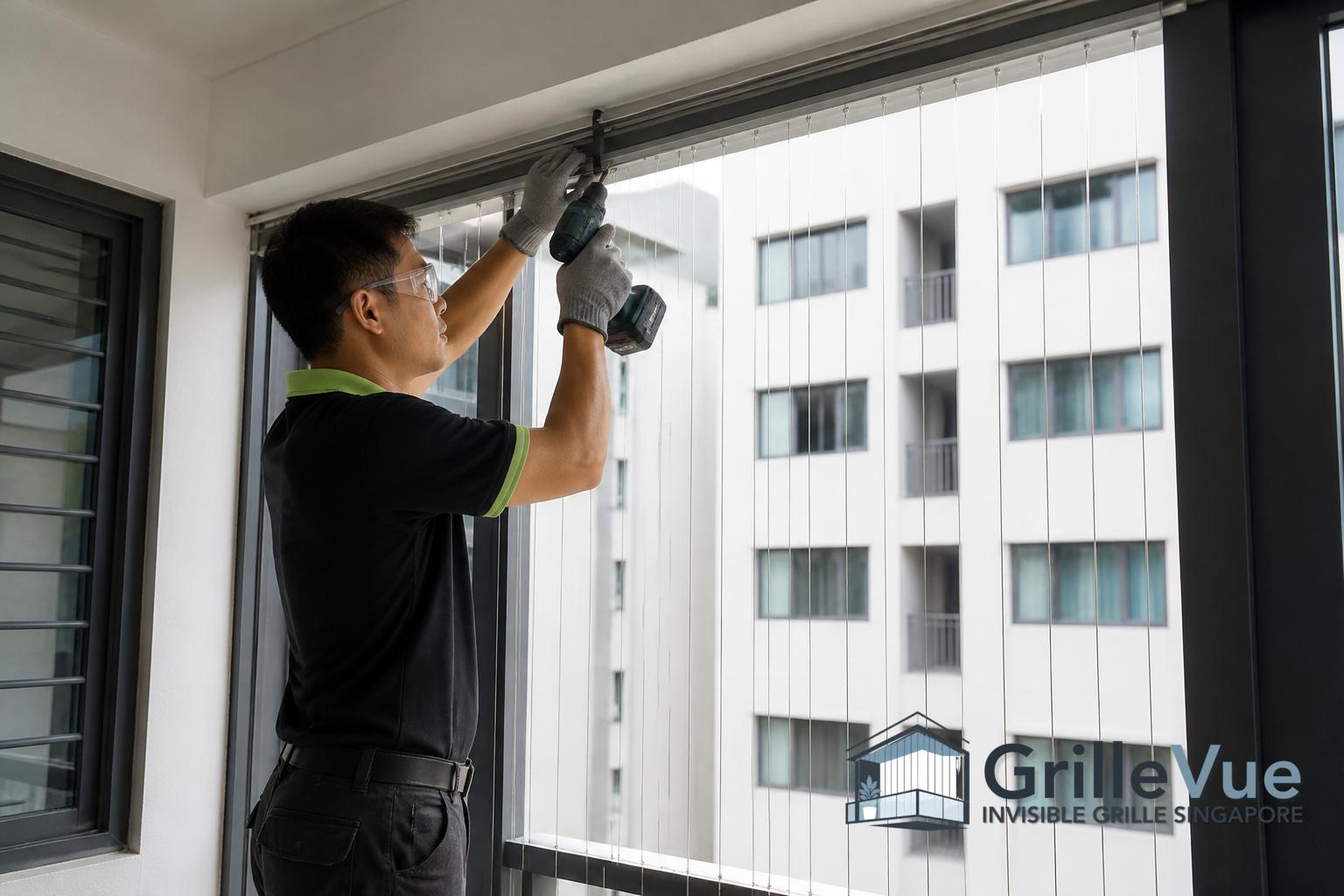
Installing an invisible grille in a Singapore home is usually a measured, fixed process rather than a one-size-fits-all job. Whether it is for an HDB window, a condominium balcony opening or a landed-home service area, the installer first assesses the opening, then fixes the cables to suitable anchor points and checks that the tension is even and secure. The aim is to create a discreet safety barrier that preserves the view while fitting the opening properly.
What an invisible grille installation actually involves
An invisible grille is made from fine tensioned metal cables, normally arranged across a window or balcony opening. These cables are anchored at the sides, top or other suitable fixing points depending on the structure, then pulled to the correct tension so they remain neat and stable. The system is designed to be visually light, which is why it is often chosen for homes that want safety without the look of conventional grilles.
For Singapore homes, the installation method depends on the opening itself. A window grille installation in an HDB flat is different from an invisible balcony grille installation in a condo, because the available framing, depth and access are not the same. The installer has to work with the actual dimensions and the surrounding structure, rather than forcing a standard layout onto every site.
Initial site assessment and opening measurement
The process normally starts with an on-site assessment. The installer looks at the type of opening, the material around the frame, the access available for drilling or fixing, and any existing fittings such as window locks, balcony doors, metal frames or architectural ledges. This is especially important for invisible window grille and invisible balcony grille installations, because the fixing method must suit the structure and the way the opening is used.
Accurate measurement is essential. The width, height and usable fixing areas are recorded so the cable layout can be planned properly. In some homes, the opening may not be perfectly square, so the installer needs to check for variations and obstructions. If the home already has a screen, shutter, awning or railing, that can affect where the cables and anchor points can be installed.
For balcony openings, the measurement stage should also consider how people move in and out of the space. The grille should not interfere with door opening, cleaning access or daily use of the balcony. In a landed-home outdoor area, access points and surrounding finishes matter just as much as the opening itself.
Fixing points, frames and cable layout
Once the measurements are confirmed, the installer plans the fixing points. Invisible grilles rely on secure anchors, because the cables need to stay tensioned over time. The installer may work with the existing window frame, balcony framing or other suitable structural areas, depending on what the site allows. The goal is to keep the layout neat while ensuring the points are strong enough for the intended use.
The cable spacing and direction are then determined according to the opening and the intended function. For a window grille installation, cables are usually arranged to cover the opening evenly without making the room feel enclosed. For a balcony grille, the layout may need to account for a wider opening and the practical need to keep access comfortable. The installer should explain where the cables will run, how visible they will be, and whether any special corners or sections are needed.
This stage is also when homeowners should ask about how the grille will be fixed around existing conditions. If there are tiles, waterproofed surfaces, metal frames or limited edge space, those details can affect the choice of fasteners and the final appearance. Good planning at this stage helps avoid awkward cable runs or unnecessary drilling.
Installation of the cable system
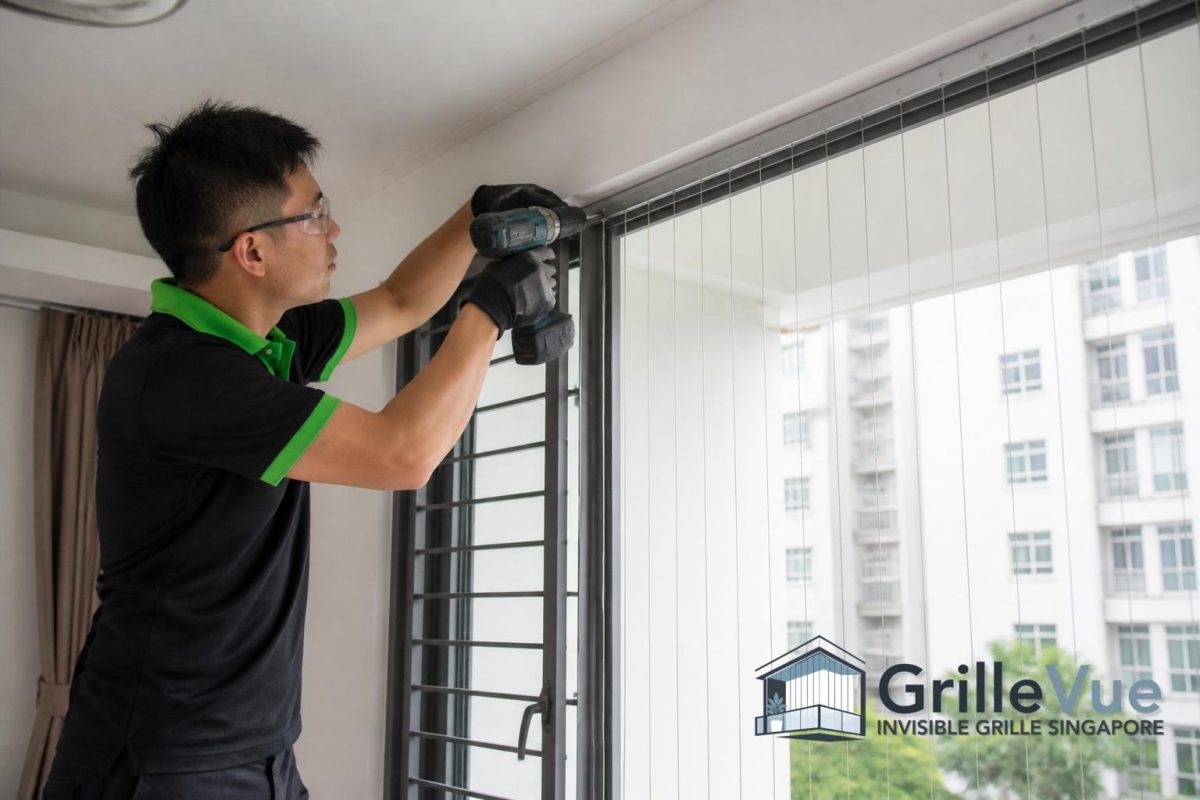
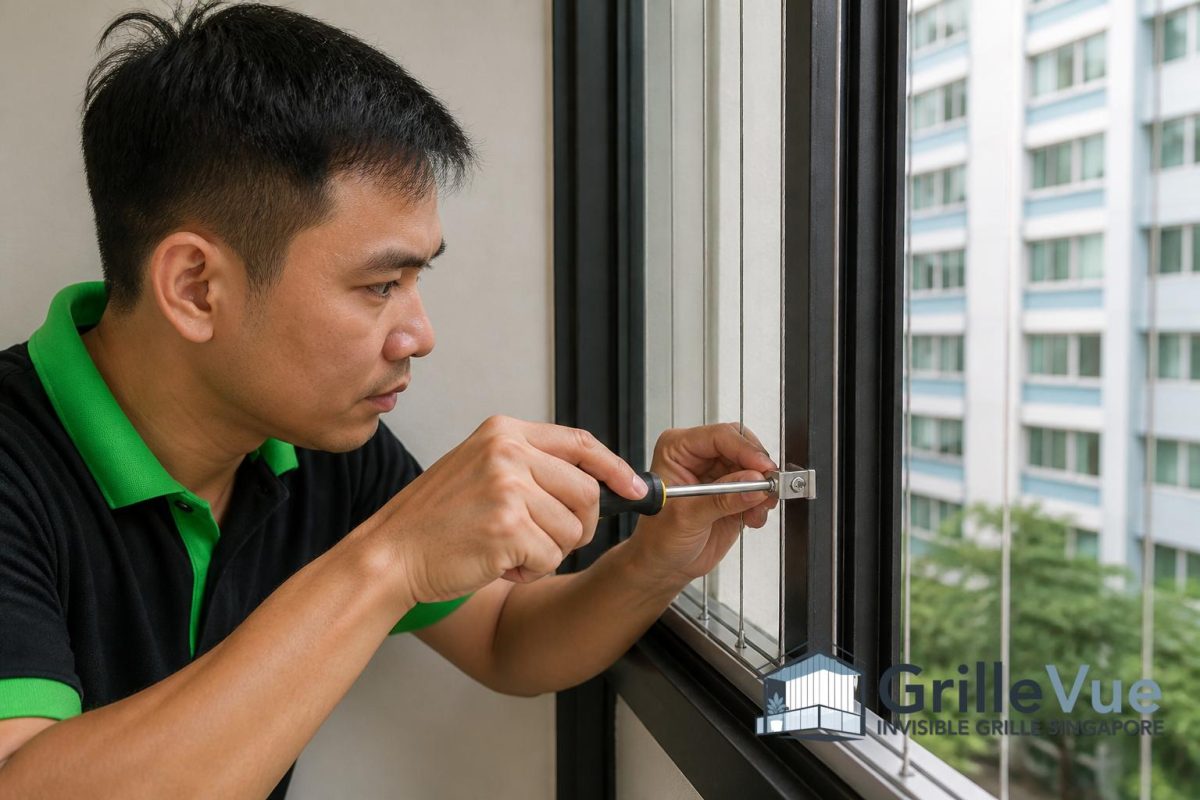
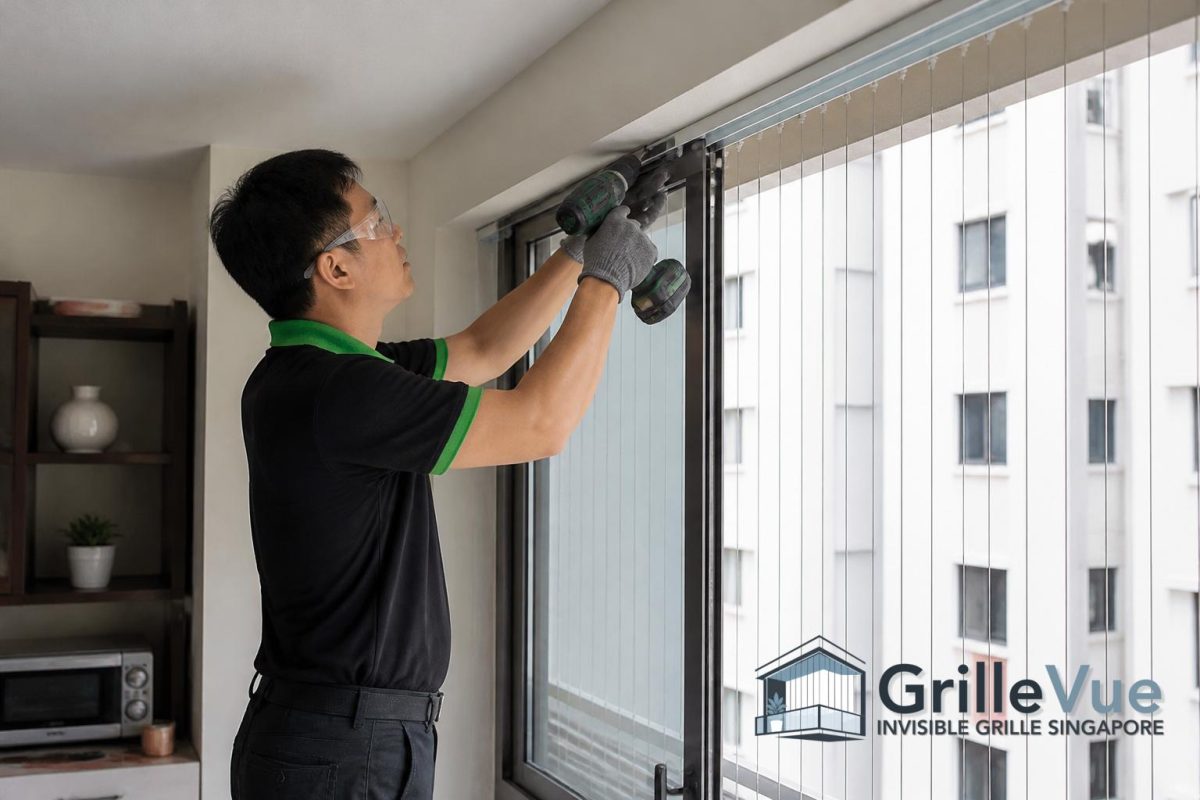
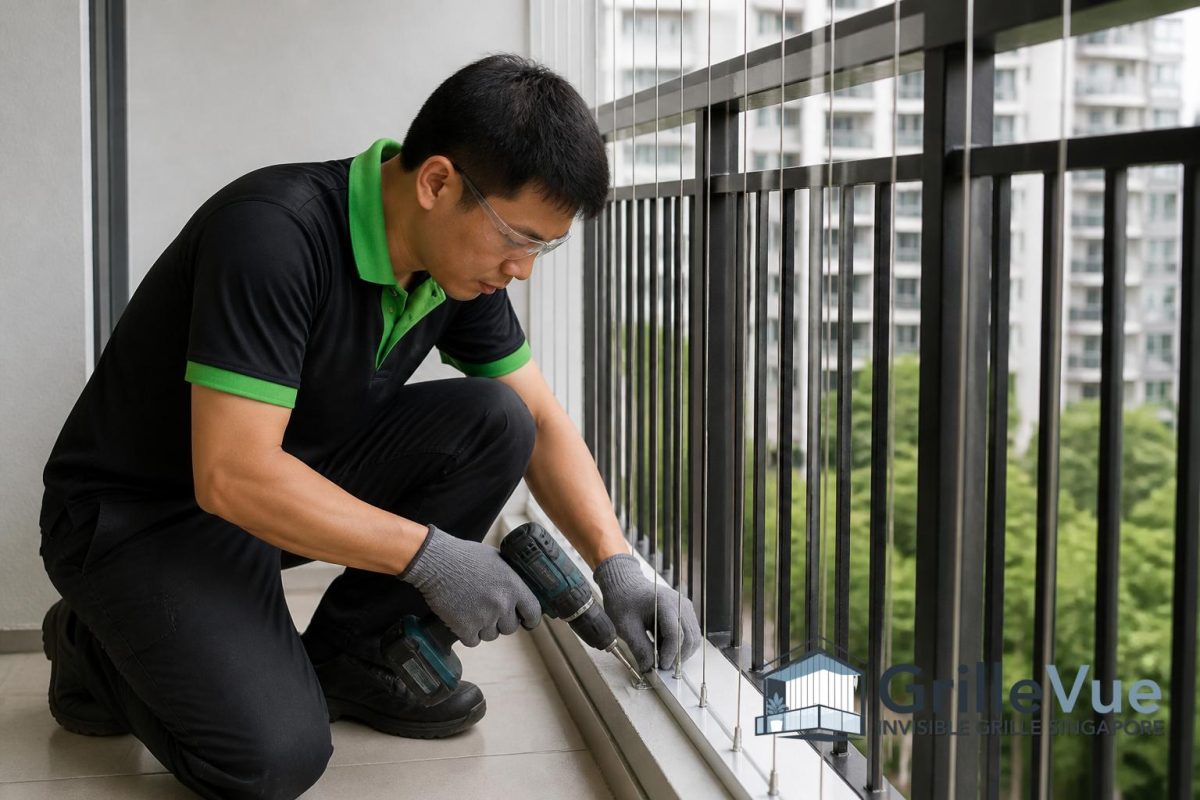
After the layout is agreed, the physical installation begins. The installer typically marks out the anchor positions, drills where required, and secures the fixing hardware. The invisible grille cables are then installed across the opening and attached to the anchors. The process is precise because the visual finish depends on straight alignment and consistent spacing.
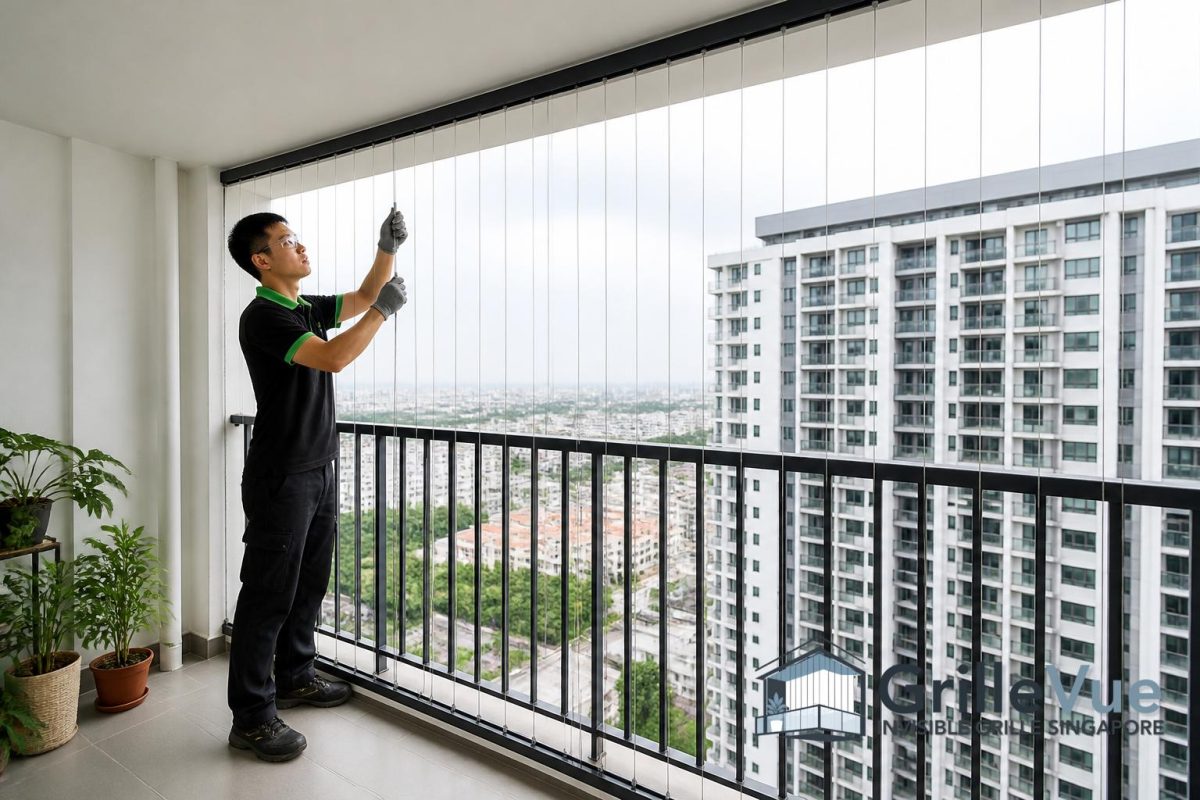
Next comes tensioning. The cables must be tightened so they remain firm and straight, but not so tight that the fixings are stressed unnecessarily. This is one of the most important parts of invisible grille installation in Singapore homes. Proper tension helps the system look tidy and perform as intended, while uneven tension can lead to sagging or an untidy finish.
After tensioning, the installer checks the cables again to make sure the spacing and alignment are uniform. This is especially important for balcony grille installations, where a larger opening can make any inconsistency more noticeable. Final checks usually include inspecting the anchor points, cable straightness and the overall fit against the opening.
Differences between window and balcony installations
An invisible window grille and an invisible balcony grille may look similar at first glance, but the installation considerations are not the same. Windows are often smaller, more enclosed and easier to access from inside the home. Balcony openings can be wider, more exposed and more dependent on the building layout. That changes the fixing approach, the amount of cable required and the installer’s access to the work area.
For HDB invisible window grille installations, the focus is usually on fitting the cables neatly within the window opening while preserving ventilation and view. For a condo balcony grille, the aim may be to keep the balcony usable and visually open while still adding a safety barrier. In landed homes, the opening may involve patios, terrace edges or service areas, which can require more site-specific planning.
In all cases, the installer should explain what is being fitted to the exact opening named in the job. An invisible grille for a balcony should not be planned like a window-only installation, and a window grille should not be treated like a larger outdoor screening job. The opening, access and intended use should drive the method.
What homeowners should check before installation
Before work begins, it helps to ask a few practical questions. Homeowners should confirm what type of invisible grille is being installed, which opening is covered, where the anchor points will go, and whether any existing fixtures will need to be removed or worked around. It is also sensible to ask how the installer handles uneven surfaces, frame limitations and access challenges.
If the project is for a balcony or an exposed area, ask how the grille will affect cleaning and day-to-day use. If the home has young children or pets, discuss the intended purpose clearly so the installer can recommend a suitable layout for the opening. It is better to be precise about the use case than to assume every installation serves the same function.
Homeowners should also ask about post-installation checks. A proper job should include a final inspection of cable tension, anchor security and overall alignment. If there is any future maintenance requirement, such as checking for loosening or wear, it should be explained clearly at the start.
Maintenance after the grille is installed
Invisible grilles are generally straightforward to maintain, but they still need occasional attention. A light cleaning to remove dust and surface dirt helps keep the cables neat and visible only as intended. Homeowners should avoid using harsh cleaning methods that could affect the cable finish or the surrounding frame.
Over time, it is sensible to look out for changes in tension or alignment, particularly in openings that are used often. If the home is exposed to more moisture, salt air or strong sun, the installer’s advice on care becomes even more relevant. Regular visual checks can help spot issues early, especially around anchor points and the edges of the opening.
Maintenance is also about use. Avoid hanging heavy items on the cables or treating them like load-bearing rails. An invisible grille is a safety installation across an opening, not a substitute for structural support.
If you are planning an invisible grille installation for a window, balcony or other opening in Singapore, WhatsApp GrilleVue Invisible Grille Singapore – Windows & Balconies with your property type, approximate dimensions, existing fixtures and preferred product type so the opening can be assessed properly.
Conclusion
Installing an invisible grille in a Singapore home is a careful process of assessment, measurement, fixing and tensioning. The exact method depends on whether the project is for an HDB window, condominium balcony or landed-home opening, as well as the framing, access and daily use of the space. When the installation is planned around the actual opening, the result is usually neat, discreet and practical.
The most important point for homeowners is to understand what is being installed and how it suits the specific opening. Clear measurements, suitable anchor points and proper tension checks all matter more than a standardised approach. By asking the right questions before installation, you can make sure the grille works with the home rather than against it.
Choose GrilleVue Invisible Grille Singapore – Windows & Balconies
GrilleVue Invisible Grille Singapore specialises in residential grille and balcony solutions that help homeowners improve safety and make better use of windows and outdoor areas without unnecessarily enclosing the space. We provide invisible grille, invisible window grille, invisible balcony grille, window grilles, and balcony grille installations for HDB flats, condominiums, and landed properties, with each solution planned around the opening, layout, and requirements of the home.
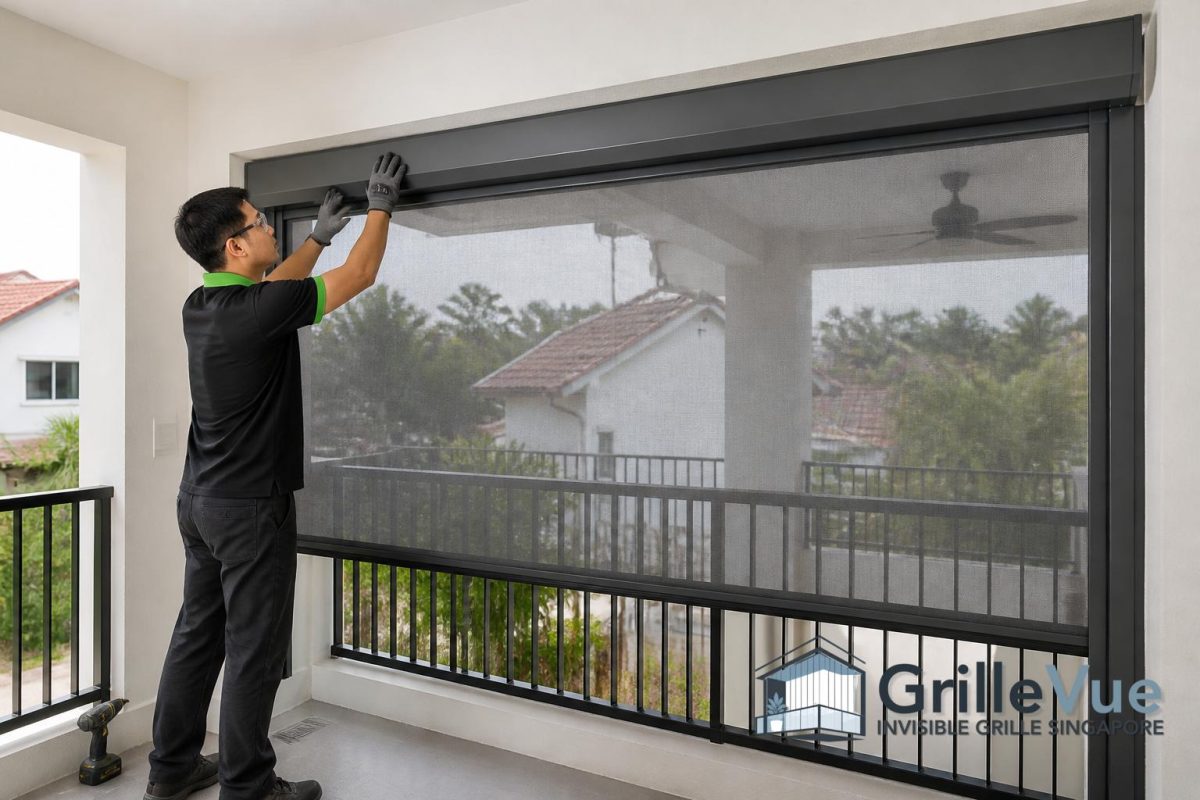
Our other services also cover Zip Track and Zip Track blinds for homeowners who want greater control over balcony and outdoor areas. An invisible grill for the balcony can help retain visibility while adding a safety barrier, while zip track blinds can provide a more sheltered and adaptable space depending on weather conditions and daily use.
For more information on suitable window and balcony solutions, explore our blog for useful guides or browse our completed projects for examples of previous installations. Contact us via WhatsApp at +65 8241 0032 to discuss your home, installation needs, and available options.
Frequently Asked Questions
How long does an invisible grille installation usually take?
The time needed depends on the size of the opening, site access and the complexity of the fixing points. A simple window opening is generally less involved than a larger balcony or outdoor area. The installer should assess the site first before giving any estimate.
Can invisible grilles be installed on both windows and balconies?
Yes, but the installation method should suit the specific opening. Windows, balcony openings and landed-home outdoor areas can each require different measurement points, anchor placement and cable layout. The installer should plan for the exact space rather than using a generic setup.
What should I prepare before the installer arrives?
It helps to know the property type, the opening to be covered, the approximate dimensions and whether any fixtures already exist around the area. If you have a preference for a particular invisible grille layout, share that in advance so the installer can assess whether it suits the opening.